How Do You Keep Lunch Cold Until Noon Without a Refrigerator?
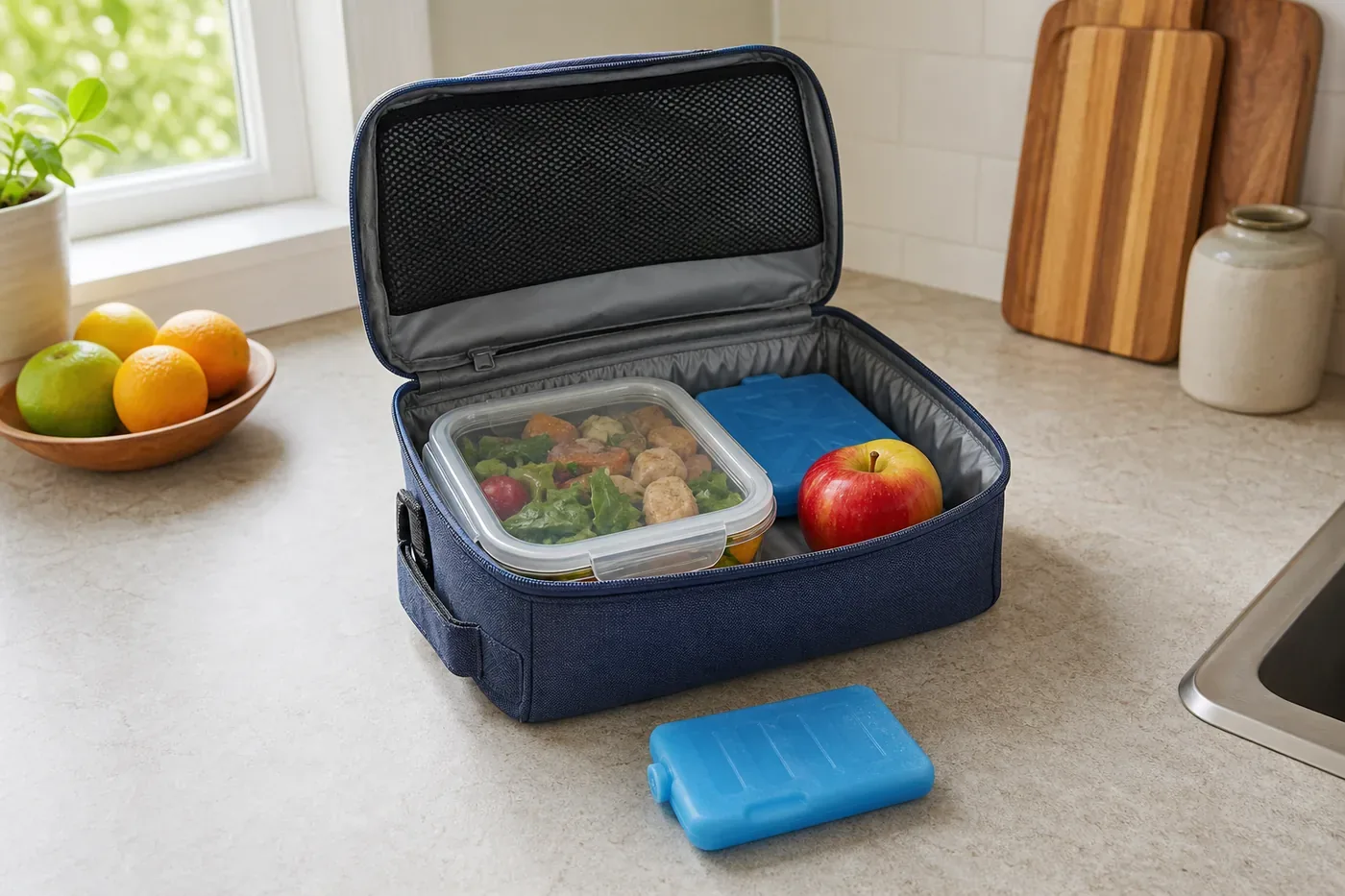
A packed lunch can spend four or five hours away from a refrigerator before anyone opens it. That is long enough for a chilled sandwich, yogurt, leftover pasta, cut fruit, meat, eggs, or dairy to need more than a decorative lunch tote.
The goal is not to make the food feel slightly cool. It is to keep perishable food at a safe cold temperature until it is time to eat. The good news is that this usually requires a better packing routine, not an expensive gadget.
Start with the food-safety target
The U.S. Department of Agriculture says perishable food should be kept at 40 degrees F (4.4 degrees C) or below. Its bag-lunch safety guidance recommends an insulated soft-sided bag and at least two cold sources for lunches that cannot go straight into a refrigerator.
The familiar two-hour rule still matters. Perishable food should not remain in the temperature danger zone for more than two hours, or more than one hour when the surrounding temperature is above 90 degrees F (32.2 degrees C). Smell and appearance cannot reliably tell you whether food is safe, so do not use a sniff test to rescue a lunch that was packed warm or left in a hot car.
If a school, office, or day-care program has its own food-storage rules, follow those as well. Medication, infant feeding supplies, and food for someone with medical needs may require more specific instructions than an ordinary lunch.
Do these free steps before buying another ice pack
- Cool everything before packing. Refrigerate the prepared meal overnight. A cold source has less work to do when the container, drink, and food begin cold.
- Freeze a drink when appropriate. A sealed water bottle or juice box frozen overnight can serve as one cold source while it thaws. Leave expansion space only when the container maker says freezing is safe.
- Choose shelf-stable food when cold storage is uncertain. Whole fruit, unopened shelf-stable foods, crackers, nut or seed spreads, and other foods labeled for room-temperature storage can reduce the amount that must stay chilled. Check allergy rules and product labels.
- Use the refrigerator if one exists. USDA advises placing the open lunch bag in the refrigerator so cold air can circulate. Remove the cold sources only when it is time to eat.
- Keep the bag out of hot places. A car seat in direct sun, a warm windowsill, or a spot beside a heater can overwhelm a modest cold pack.
- Pack only what will be eaten. A tightly packed bag with fewer empty spaces is easier to cool, but do not compress containers until they leak.
If those steps solve the problem, you do not need a special pack. Two frozen bottles or the cold packs already in your freezer may be enough.
Why two cold sources work better than one
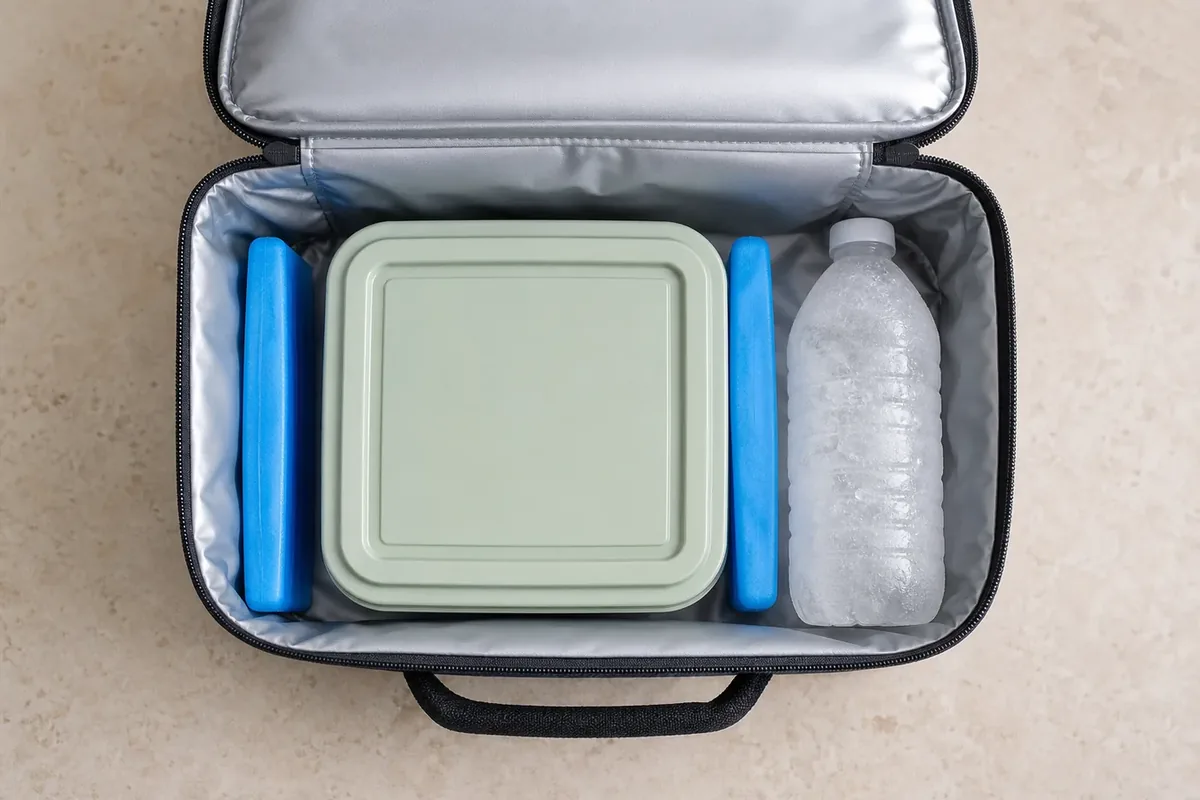
Cold air settles, but a lunch bag is opened, carried sideways, set upright, and moved throughout the morning. One small pack at the bottom may leave the top and sides warmer. USDA suggests placing cold sources above and below perishable food. Its Ask USDA answer gives two examples: two frozen gel packs, or one gel pack plus a frozen bottle or juice box.
Keep food in sealed containers so condensation and leaks do not reach the meal. Put one cold source beneath or beside the main container and the second above or on the opposite side. Close the bag fully. The arrangement does not need to look perfect; it needs broad, close contact without crushing the food.
How to tell whether your current setup is enough
A single successful morning does not prove the routine will work in hotter weather. If you want a practical check, place a refrigerator thermometer next to the perishable container and test the packed bag under the same conditions it normally experiences. Do not put the bag in a hot vehicle just to stress-test food you plan to eat.
Check the thermometer at the usual lunch time. If the reading is above 40 degrees F, improve the setup before trusting it: pre-chill more thoroughly, add a second cold source, reduce empty space, change the bag, or use a refrigerator. A thermometer check is more useful than touching the container and deciding that it feels cool.
When a reusable cold pack actually helps
A dedicated cold pack makes sense when frozen bottles do not fit, when a rigid container needs cold contact on two sides, or when you pack lunch often enough to keep a pair frozen in rotation. Thin flat packs fit beside rectangular containers; contoured packs may be better around bottles or cans. The shape matters more than a claim such as “long lasting.”
Before buying, measure the interior of the lunch bag and the space left after the food container is inside. Check whether the pack is pre-filled or must be filled, whether the cap can leak, whether the material is intended for food-cooler use, and how the maker says to clean and freeze it. Do not place a leaking pack directly against food.
A current reusable cold-pack example
Affiliate disclosure: This section contains an affiliate link. If you buy through it, GadgetPickLab may earn a commission at no extra cost to you. The listing below is a marketplace example, not a hands-on-tested endorsement.
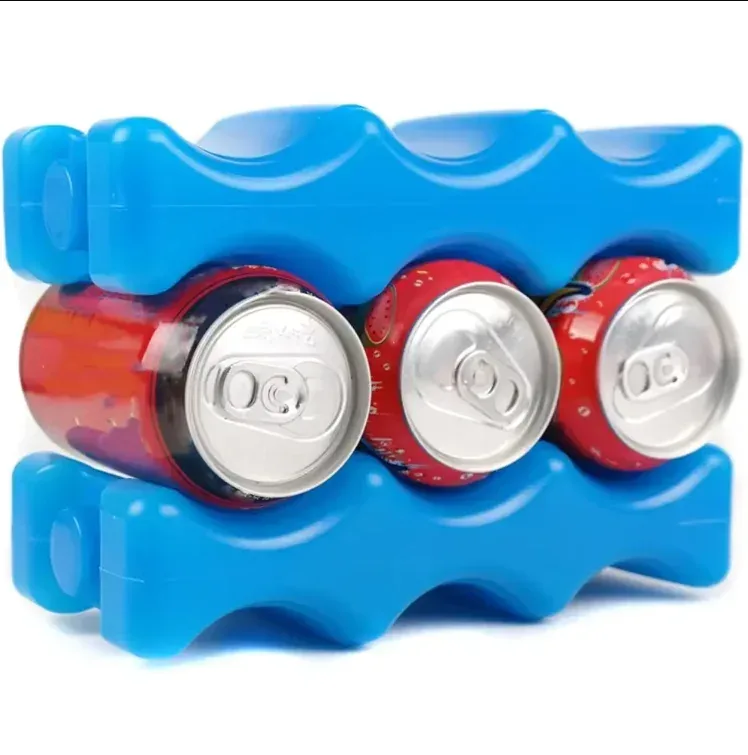
Contoured reusable cooler packs
The listing image shows two blue rigid packs shaped to sit around bottles or cans. That contour may suit a drink-heavy lunch, but it can waste space beside a wide rectangular meal container. Cooling duration and food-safety performance were not independently verified.
- Listing snapshot checked: August 2, 2026
- Marketplace signals displayed: 714 orders and a 98.0% positive rating
- Still verify: selected quantity, dimensions, fill method, leak resistance, freezer instructions, shipping, taxes, returns, and current seller rating
- Do not assume: one pack is enough; USDA guidance calls for at least two cold sources when no refrigerator is available
Check current sizes and options
Options, dimensions, availability, order count, rating, price, shipping, and included parts can change after the research date.
This example is useful only if its shape fits the packed bag. A flat pack with fewer orders may be the better choice for a flat lunch container. Do not choose by sales count before checking fit.
Common mistakes that warm a packed lunch
- Packing hot leftovers: cool cooked food safely in the refrigerator before the morning rush instead of asking the ice pack to chill it from hot.
- Using an insulated bag with no cold source: insulation slows temperature change; it does not create cold.
- Leaving the zipper partly open: close the bag after every check.
- Using one tiny pack for a large bag: match the amount and placement of cold mass to the packed volume.
- Keeping the bag in a parked car: move it indoors whenever possible.
- Saving warm leftovers: discard perishable leftovers that were not kept cold rather than taking a second chance.
Frequently asked questions
Can I use only a frozen water bottle?
USDA recommends at least two cold sources. A frozen bottle can be one of them, but pair it with another frozen bottle or gel pack around perishable food.
Does an insulated metal container replace an ice pack?
Not for cold perishable food unless the container maker provides a suitable cold-storage method and the food stays at 40 degrees F or below. A thermos designed for hot food follows a different routine: preheat it and fill it with food heated to a safe temperature according to USDA guidance.
Can the lunch be prepared the night before?
Yes, when the ingredients are stored safely in the refrigerator. Keep the cold packs in the freezer and assemble the bag in the morning so the insulation does not spend the night open in a warm room.
The simplest reliable routine
Refrigerate the meal, freeze two cold sources, pack them around the sealed container, close the insulated bag, and keep it away from heat. Use a refrigerator on arrival if one is available. That routine matters more than the color, brand, or marketing language on the cold pack.
Buy another pack only when the cold sources you already own do not fit or do not keep the tested lunch at a safe temperature. The product should support the routine, not replace it.