Home Chores Get Easier When the Setup Is Simple
Quick Answer
If you are checking whether a led car motion sensor night solves a real household problem, start by fixing the setup first: improve reach, clear the path, and add a simple light source only where your hand actually needs it. A motion sensor light helps in small rooms, storage nooks, and tight daily living spaces when you want hands-free light in a dark spot. Skip it if the area already gets enough light, if the surface fit is awkward, or if the real issue is clutter, not visibility.
- Best for: Small cabinets, closets, shelves, and narrow room corners.
- Skip if: The space is already well lit or the surface is hard to mount.
- Check first: Reach distance, mounting surface, battery/charging access, and obstruction clearance.

Best Fit for This Setup
This is for the everyday lighting problem that shows up in small rooms, storage areas, and cramped corners where one extra light makes a task easier. The issue is usually not the room itself; it is the way the setup forces you to search, reach, or fumble in a tight area.
- You open a closet or cabinet and have to lean in to see anything.
- You keep a cleaning caddy, spare linens, or household tools in a shallow shelf with poor visibility.
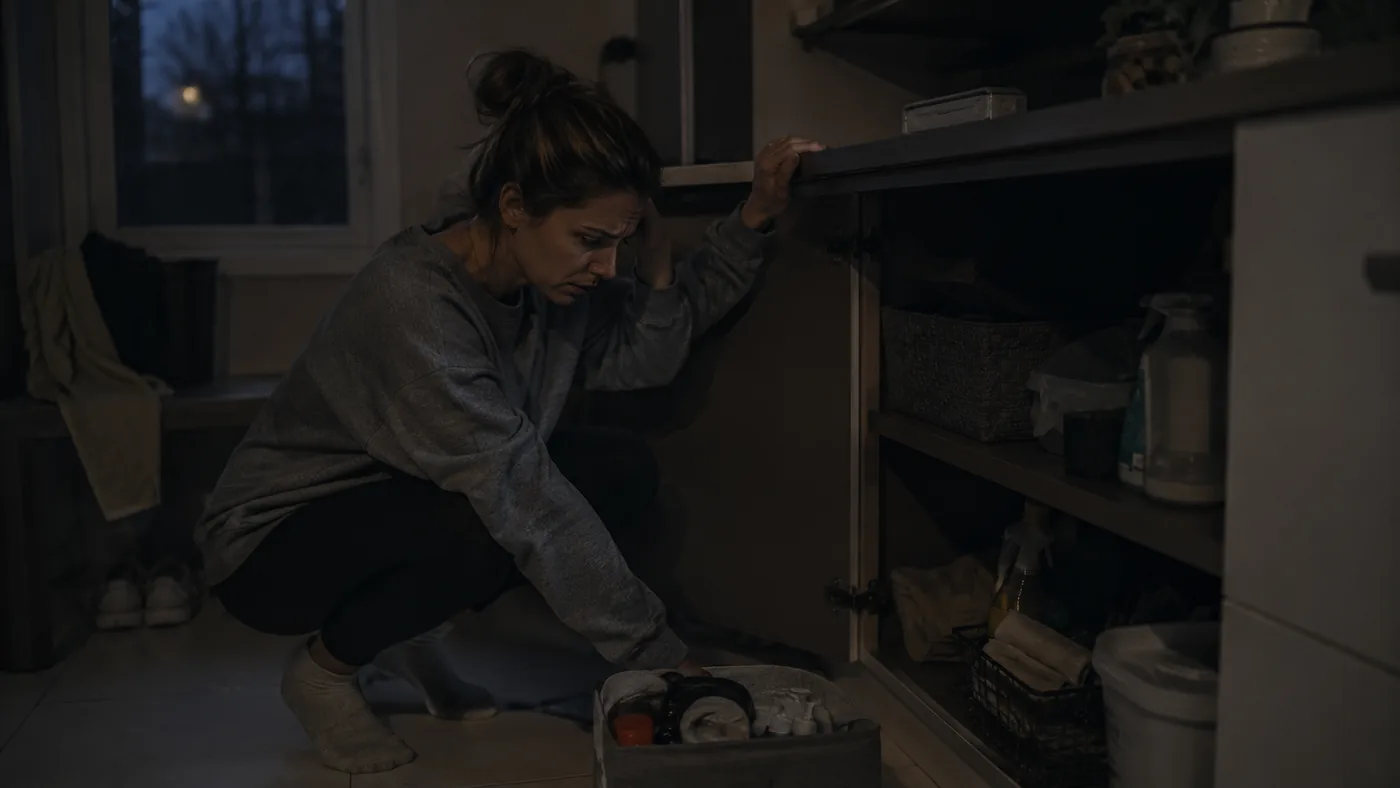
- You use a narrow hallway, pantry, or under-sink area that stays dark until you stand inside it.
- You want a light that turns on without using both hands.
- You need a simple fix for a small room where a full lighting change would be too much.
What Usually Causes the Problem
The annoyance usually comes from a mismatch between the space and the task. Small rooms and storage areas often have light that misses the exact spot you need, or the switch is too far away to be useful when your hands are full.
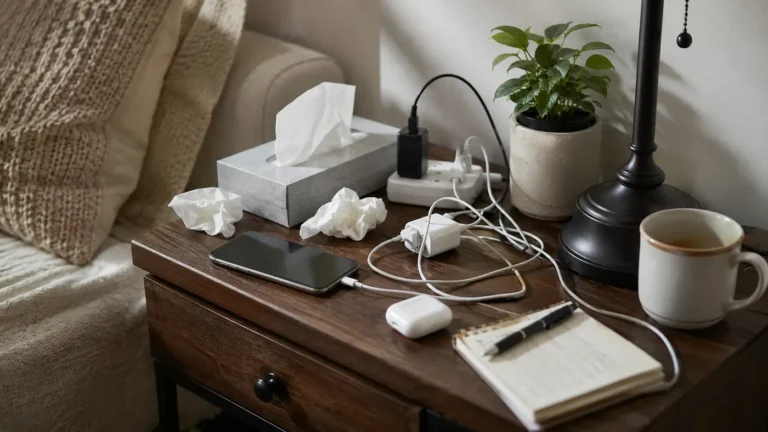
That is why a motion sensor light starts to make sense in some homes. It is not solving clutter or bad storage by itself; it is reducing the friction of finding and using a dark space. A charger falling behind a shelf, a pouch that is too shallow for a cable coil, or a clip that blocks a port are all signs the setup is already working against you.
Simple Setup Steps
- Measure the dark zone you actually use, not the whole room.
- Clear the access path so doors, shelves, and stored items do not block light.
- Check the surface fit: metal, painted wood, plastic, or uneven trim each behave differently.
- Place the light where your hand reaches first, not where it looks centered.
- Test whether the sensor triggers from your normal entry distance.
- Adjust the routine before buying extras: move items, shorten clutter, and keep often-used objects forward.
A short checklist helps: open the door, reach in, watch where your hand goes, and note the first blind spot. If that blind spot is the real annoyance, a small automatic light can help. If the blind spot disappears after you rearrange the shelf, that is usually enough.
Simple Option Comparison
| Option | Best for | Watch out for |
|---|---|---|
| Rearrange storage | Cluttered shelves, tight access | Needs discipline, not hardware |
| Motion sensor light | Dark cabinets, closets, corners | Bad fit on rough surfaces |
| Fixed wall light | One permanent dark spot | May need wiring or drilling |
| Portable lamp | Temporary or changing spaces | Takes up storage space |
Before You Choose a Setup
Choose the simplest setup that matches the space and the routine. A gadget only helps when the problem is repeatable, the placement is stable, and the light can turn on without getting in the way.
- Check whether the surface is flat enough for secure mounting.
- Check whether the light reaches the working area, not just the door edge.
- Check whether you can recharge, replace, or maintain it easily.
- Check whether the sensor location avoids false triggers from hallway traffic.
- Check whether storage items can still open fully without blocking the light.
Helpful Tools That Fit This Problem
Gadgets help most when the space is small, the access is frequent, and the lighting problem is recurring. In those cases, a motion sensor light can be a practical reference point for a low-effort setup, especially in cabinets, closets, and narrow household storage areas.
The optional example here is a LED car motion sensor night light style product, such as the kind marketed as a USB rechargeable, magnetic, automatic induction lamp. That is only one practical example, not a recommendation or a claim about any specific listing.
Who should skip this: If the area is already bright enough, if the mounting surface is awkward, or if you mostly need better organization, skip the gadget and fix the layout first.
One AliExpress example that matches this tool type is included below. Use it as a reference point, then check the listing details, compatibility, and fit yourself.

Mistakes That Make This Harder
- Placing the light too high or too low. It should cover the working zone, not the ceiling or floor.
- Buying before checking the surface. Smooth metal and rough paint do not behave the same.
- Ignoring door swing and shelf depth. A light can be blocked by the very item it is meant to help.
- Expecting hardware to solve clutter. If storage is packed too tightly, the light only exposes the problem.
- Using a gadget for a one-time annoyance. If the issue happens rarely, a simpler change is better.
Common Questions
Does checking whether a led car motion sensor night solves a real household problem come down to room size?
Room size matters, but access matters more. A small room with good layout may not need anything extra, while a tiny storage nook with poor visibility may benefit from a motion sensor light.
When is a gadget worth adding?
A gadget is worth adding when the same dark spot causes repeated friction and you can mount it cleanly without blocking storage or movement. That is where this type starts to make sense.
Who should skip it?
Skip it if the real problem is too much clutter, a poor shelf layout, or an unstable mounting surface. In that case, the setup needs attention before any light does.
What is the first thing to check before buying?
Check the surface fit and the reach distance. If the light cannot stay put or cannot illuminate the exact task area, it will not solve the household problem well.
Disclosure Note
This article may mention product types as practical examples. If a reader chooses to buy through a link on GadgetPickLab, the site may earn a commission at no extra cost to the reader. The advice above stands on its own, even without any purchase.