Storage Bag Vacuum Pump: Will It Fit Your Bags and Hold the Seal?
Quick Answer
Bulky clothes and linens should first be sorted, folded consistently, and placed in intact compression bags with working valves. A storage bag vacuum pump helps when several bags must be resealed often and manual air removal is the slow part. Skip it if the bags leak, the valve does not match, or the listing does not clearly limit the pump to suitable storage materials.
- Try first: Remove unused items, test each bag seal, and compress one bag with the vacuum or hand method already available.
- Consider one when: Multiple seasonal clothing or linen bags need repeat compression in a closet or storage area.
- Skip if: The bag itself leaks, the valve is incompatible, or compression would hide rather than solve excess belongings.
Start With the Real Bottleneck
A full closet can result from too many items, poor folding, oversized packaging, or failed vacuum bags. Pump speed matters only after the storage system is sound.
- Excess volume: Items that are no longer used occupy space no tool can meaningfully organize.
- Leaking seal: Dust, fabric, or damage along the zipper lets air return.
- Valve mismatch: The pump nozzle cannot seal against the bag valve.
- Wrong contents: Rigid, sharp, damp, or delicate items may not suit strong compression.
Seal one bag without the new pump and leave it for a day. If it expands again, repair or replace the bag before changing the air-removal tool.
Start With the No-Buy Fix
- Sort out clothing and linens that should be donated or stored differently.
- Dry every item completely before sealing it.
- Clean the zipper track and keep fabric away from the closure.
- Test the valve with the vacuum or hand method already available.
- Label the bag and leave enough shape to stack it without stressing the seal.
Try before buying: A household vacuum or hand-roll compression bag is enough when only one or two bags are sealed a few times a year.
A Practical Decision Check
One seasonal bag
- Start here: Use existing vacuum
- Product decision: Usually no
- Check before deciding: Valve adapter
Several bags resealed
- Start here: Test all seals first
- Product decision: Small pump may save time
- Check before deciding: Duty cycle and nozzle
Bag reinflates
- Start here: Repair or replace bag
- Product decision: Pump will not fix it
- Check before deciding: Zipper and valve
Closet still overfull
- Start here: Reduce contents
- Product decision: Compression is temporary
- Check before deciding: Actual storage capacity
The Point Where Gear Becomes Useful
A dedicated pump becomes useful when the bags hold a seal, the contents genuinely belong in storage, and repeated compression is the remaining tedious step. A compact tool can avoid moving a full household vacuum into a closet each time.
The example listing uses broad wording around clothes storage bags and food organization. Do not assume food-contact suitability or vacuum-sealing performance for food unless the exact product instructions and compatible bags explicitly support that use. This guide treats it as a clothes and linen storage tool.
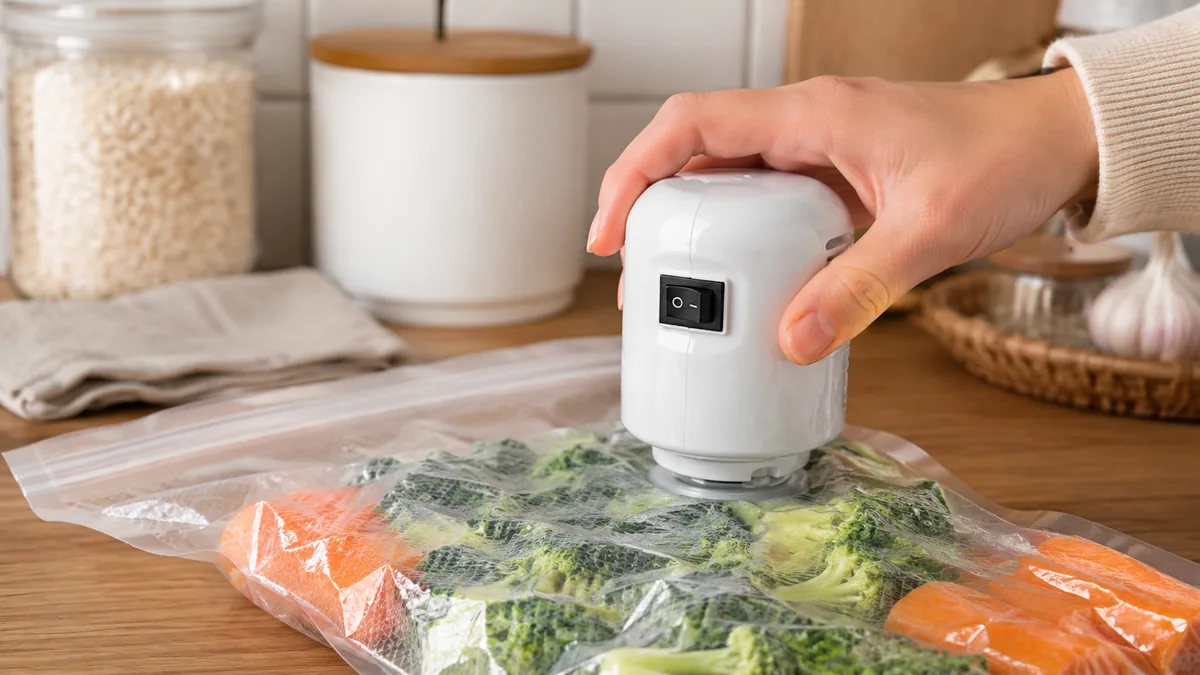
The single AliExpress listing below is one example of this tool type, not a best pick or a hands-on recommendation. Use it only as a reference, and verify the current specifications, compatibility, recent reviews, shipping, returns, and price yourself.

Skip the product if: you need food-safe sealing, the bags do not hold vacuum, or an existing vacuum already reaches the storage area easily.
Verify These Details First
Valve fit and operating limits matter more than the smallest product photo or the most dramatic compressed-bag image.
- Valve interface: Compare nozzle shape and diameter with the storage bags you already own.
- Power method: Confirm plug, voltage, cable, or battery requirements for the room where it will be used.
- Operating cycle: Look for guidance about continuous use and cooling between several bags.
- Bag purpose: Use only bags and contents named in the instructions; do not infer food safety.
- Packed storage: The pump and nozzle should have a dry, visible place so they are available for reopening and resealing.
If valve compatibility and intended bag type are not clear, keep using the known method rather than gambling on fit.
Mistakes That Make This Harder
- Compressing before decluttering. Smaller bundles still occupy space if the items are never used.
- Packing damp fabric. Sealed moisture can create odor or damage.
- Overfilling the zipper. Fabric caught in the seal lets air return.
- Running continuously. A small pump may need cooling between bags.
- Assuming food use. Storage-bag language does not automatically establish food-contact safety.
Quick Questions
When is a storage bag vacuum pump worth adding?
It is useful when several compatible bags hold their seal and need to be compressed repeatedly.
Who should skip a mini vacuum pump?
Skip it if bags leak, the household vacuum is convenient, or the intended bag and valve are not supported.
Can this type of pump vacuum-seal food?
Do not assume so. Use it for food only when the exact instructions, materials, and compatible food bags explicitly permit that purpose.
Affiliate Disclosure
This article includes one affiliate listing as an optional example. GadgetPickLab may earn a commission at no extra cost if you buy through the link. Confirm valve compatibility and intended storage use before ordering.