Why Do Adhesive Hooks Keep Falling Off the Wall?
When an adhesive hook falls, the timing tells you more than the word “strong” on its package. A hook that drops in ten minutes usually has a surface-preparation or compatibility problem. One that lasts for days and then peels may be overloaded, pulled outward, exposed to moisture, or installed before the adhesive finished bonding.
Start with the surface, not a stronger hook
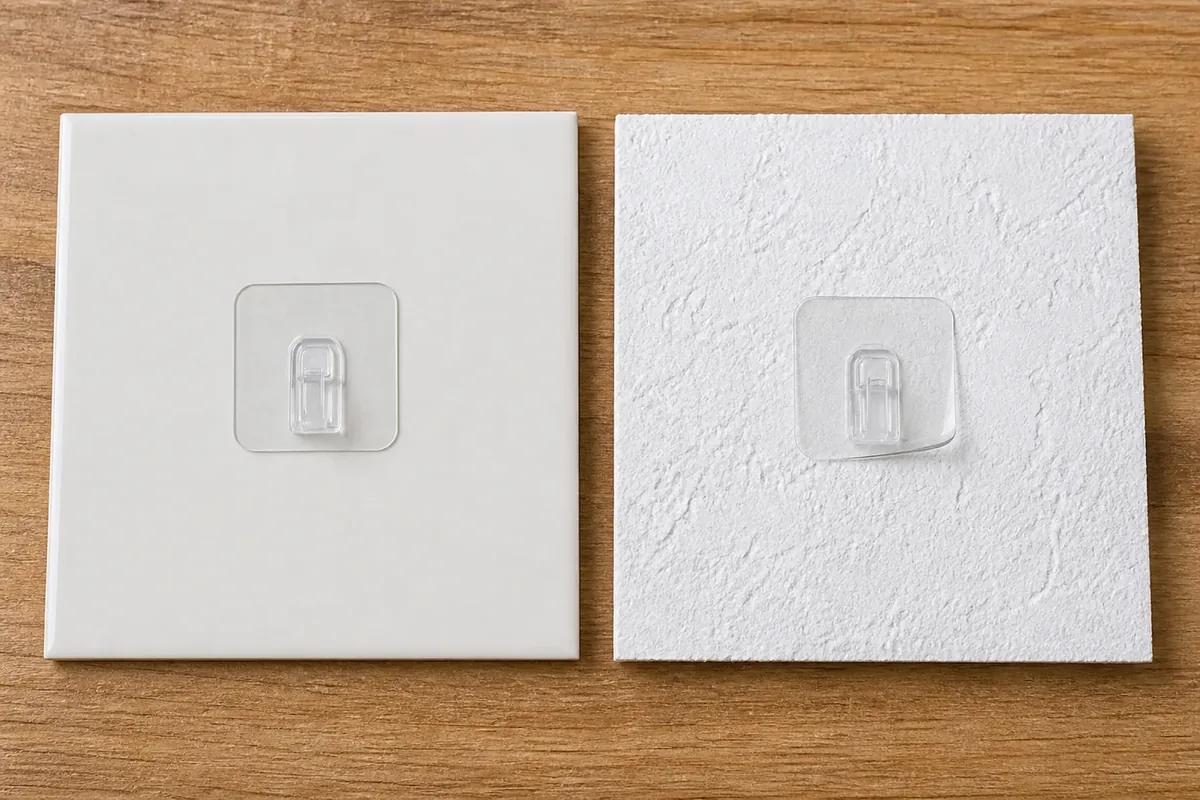
Adhesive needs broad contact. Smooth sealed tile, glass, metal, and some finished surfaces give it more area than textured paint, dusty plaster, brick, soft wallpaper, or a wall with flaking paint. Even a strong adhesive cannot bridge deep texture consistently. In a rental or dorm, the wall finish and housing rules also matter because removal can pull paint or leave residue.
As one manufacturer example, 3M’s Command clear-hook instructions say the strips work best on smooth surfaces and recommend gently cleaning with isopropyl rubbing alcohol rather than household sprays that can leave slippery residue. Generic marketplace hooks may use different adhesives, so follow their own instructions rather than borrowing a waiting time or load limit from another brand.
Match the failure to the correction
- It falls immediately: check dust, moisture, cleaner residue, cold surfaces, and incompatible texture.
- The strip peels from the wall: the load may pull outward, the adhesive may be too small, or the finish may be weak.
- The hook separates from its pad: inspect the hook-to-pad connection and make sure the parts were pressed together as instructed.
- It fails only in the bathroom: moisture, condensation, heat, and frequent load changes may exceed what that adhesive is designed to handle.
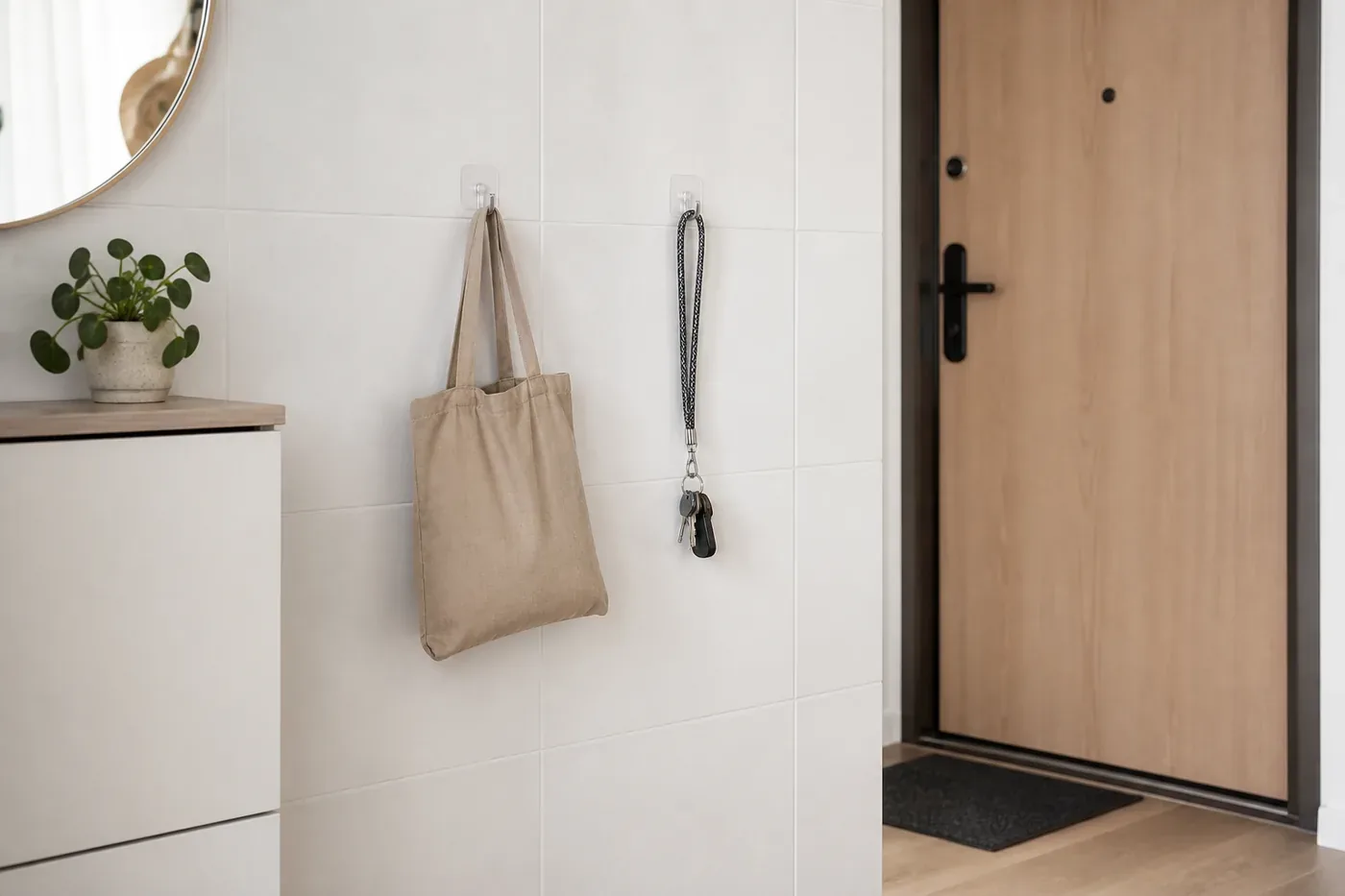
- It fails after a bag is grabbed: a quick sideways tug creates a different force than a stationary lightweight item.
Reset the installation properly
- Remove the failed strip using its stated method. Stop if paint begins to lift.
- Choose a fresh hook and fresh adhesive. A contaminated pad rarely resticks reliably.
- Clean and dry the compatible surface as the manufacturer directs.
- Press the entire adhesive area evenly for the stated time, not only the hook body.
- Wait the full curing period before adding weight.
- Begin with a light, nonbreakable item and check the edges over the next day.
Do not hang glass, framed art above a bed, heavy cookware, valuables, sharp tools, a plant with water, or anything whose fall could injure someone. The printed load rating is a controlled claim, not permission to ignore surface condition, aging, and dynamic force.
When a paired adhesive hook can help
Some transparent systems use two interlocking pieces: one pad adheres to the wall and the other to a small organizer or device. This can spread the load over a larger area and let the object slide off the wall piece. It also creates two adhesive interfaces, so both surfaces must be compatible and the object should not cover heat vents or cables.
This format is better for a lightweight router shelf, remote holder, or small smooth-backed organizer than for a swinging tote. Measure the object’s flat contact area and check that the interlocking direction will not let it slide loose during normal use.
A current paired-hook example
Affiliate disclosure: This section contains an affiliate link. GadgetPickLab may earn a commission at no extra cost to you. The listing is shown as an example, not a hands-on-tested load recommendation.
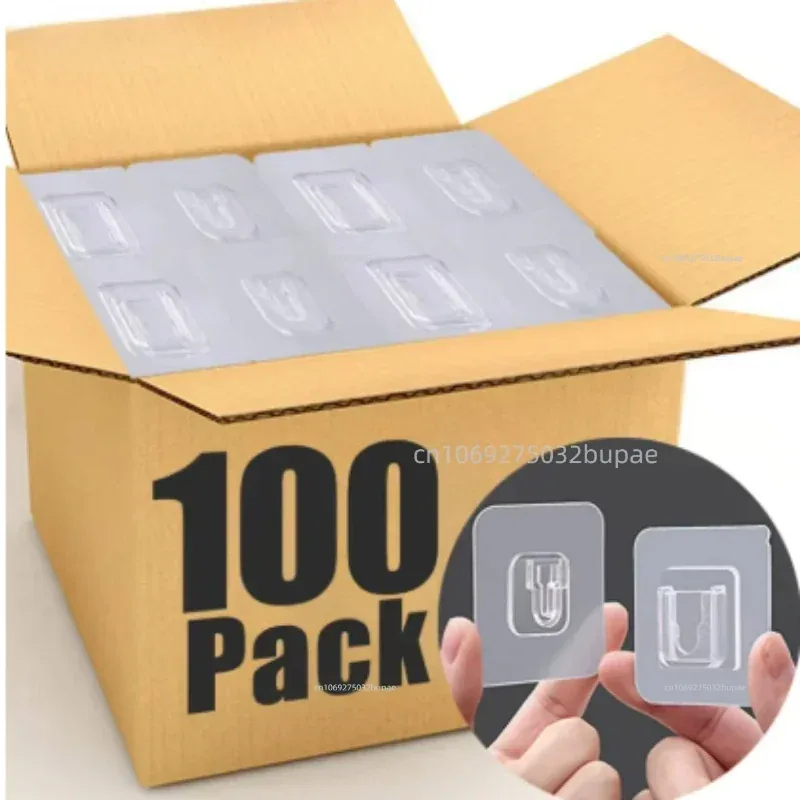
Transparent interlocking adhesive hook pairs
The listing shows clear square adhesive pads with interlocking hooks and multiple pack quantities. The seller uses words such as strong and traceless, but load capacity, paint safety, humidity resistance, and residue-free removal were not independently verified.
- Listing snapshot checked: August 5, 2026
- Marketplace signals displayed: 1,222 orders and a 98.0% positive rating
- Still verify: selected pack count, pad size, compatible surfaces, curing time, removal method, temperature and humidity limits, shipping, and returns
- Do not assume: that the large pack shown in an image is the selected option or that “traceless” protects every painted wall
Review hook styles and pack sizes
Options, specifications, price, order count, rating, availability, shipping, and included parts can change after the research date.
Know when adhesive is the wrong method
If the wall is rough, the item is valuable, the load swings, or repeated failures continue, stop buying stronger stickers. Ask the property owner whether an approved screw, picture hook, rail, or freestanding organizer is allowed. A small repairable hole can be more predictable than a wide patch of peeled paint, but only use a mechanical fastener after checking for wiring, plumbing, wall type, and rental rules.
The expert move is not finding the stickiest pad. It is choosing a mounting method whose surface, load direction, removal method, and failure consequence all make sense.