How Do You Keep Your Phone Dry at the Beach?
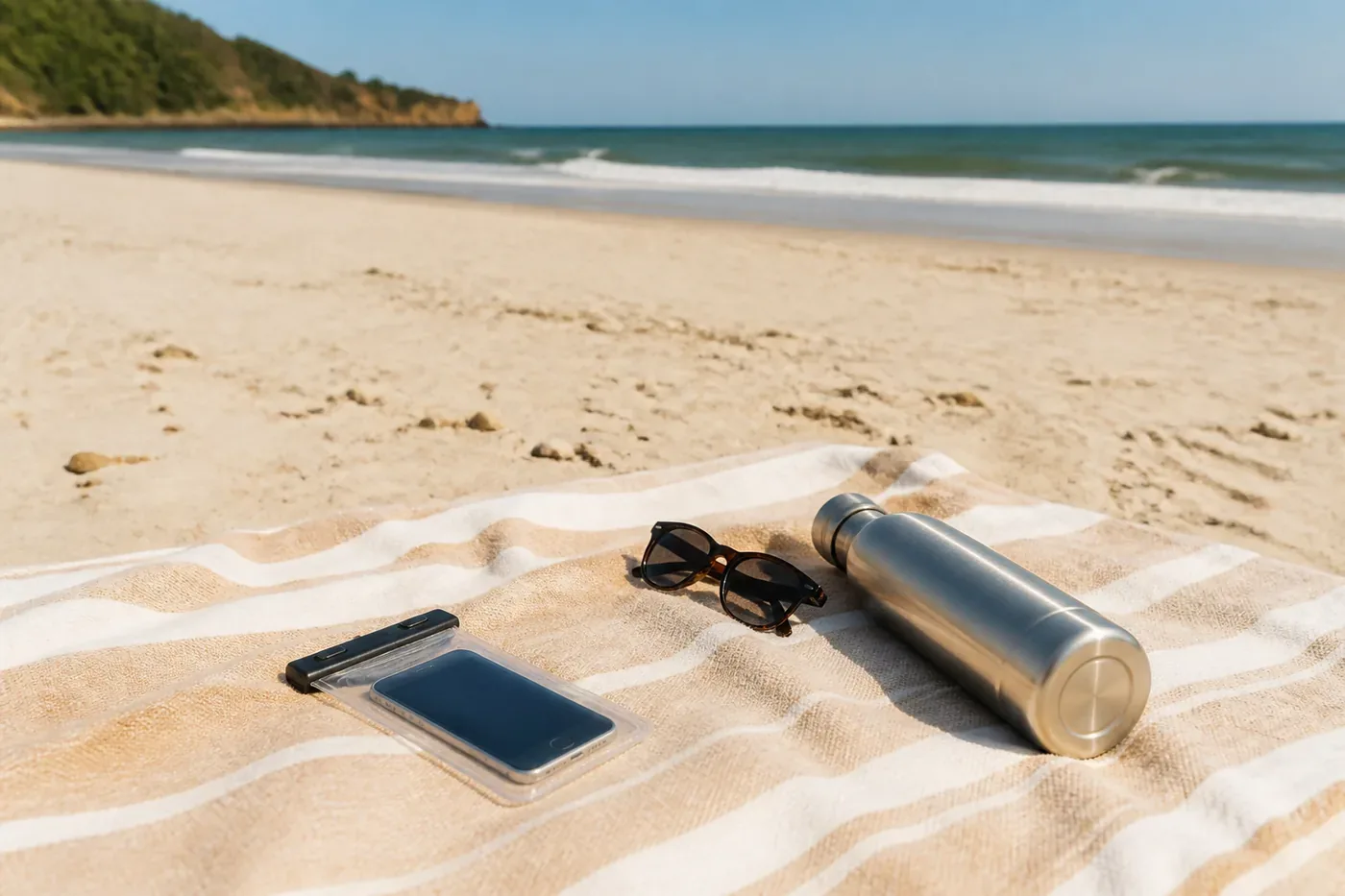
The safest phone at the beach is the one that stays away from the water, off the sand, and out of direct sun. A waterproof pouch can add a useful barrier, but it should never turn an expensive phone into a swimming accessory.
Apple states that splash, water, and dust resistance are not permanent conditions and can decrease with normal wear. Its guidance also says to avoid swimming or bathing with an iPhone and intentionally submerging it. Other phone makers publish model-specific limits, so check the support page for your exact device instead of relying on a general “waterproof phone” label.
Build protection in three layers
1. Reduce exposure
Keep the phone in a shaded bag that closes. Do not leave it on a towel where wind can carry sand over it or where someone can step on it. Handle sunscreen before the phone, then wipe and dry your hands. Salt water, fine sand, sunscreen, and heat create different problems, so staying dry is only part of the plan.
2. Add a simple barrier
A clean resealable bag may be enough when the phone will remain in a closed beach bag and you only need protection from sand or a wet towel. It is not a certified underwater case. Use a purpose-built pouch only when you need a stronger closure, a lanyard, touchscreen access, or flotation—and verify each of those features separately.
3. Keep a failure consequence small
Back up important photos before the trip. Do not store the phone, passport, and car key in one untested pouch. Wear a lanyard across the body or attach it to a secure point instead of leaving a loose loop around the neck during active water sports. Follow local safety rules and the pouch maker’s instructions.
Test the empty pouch every trip
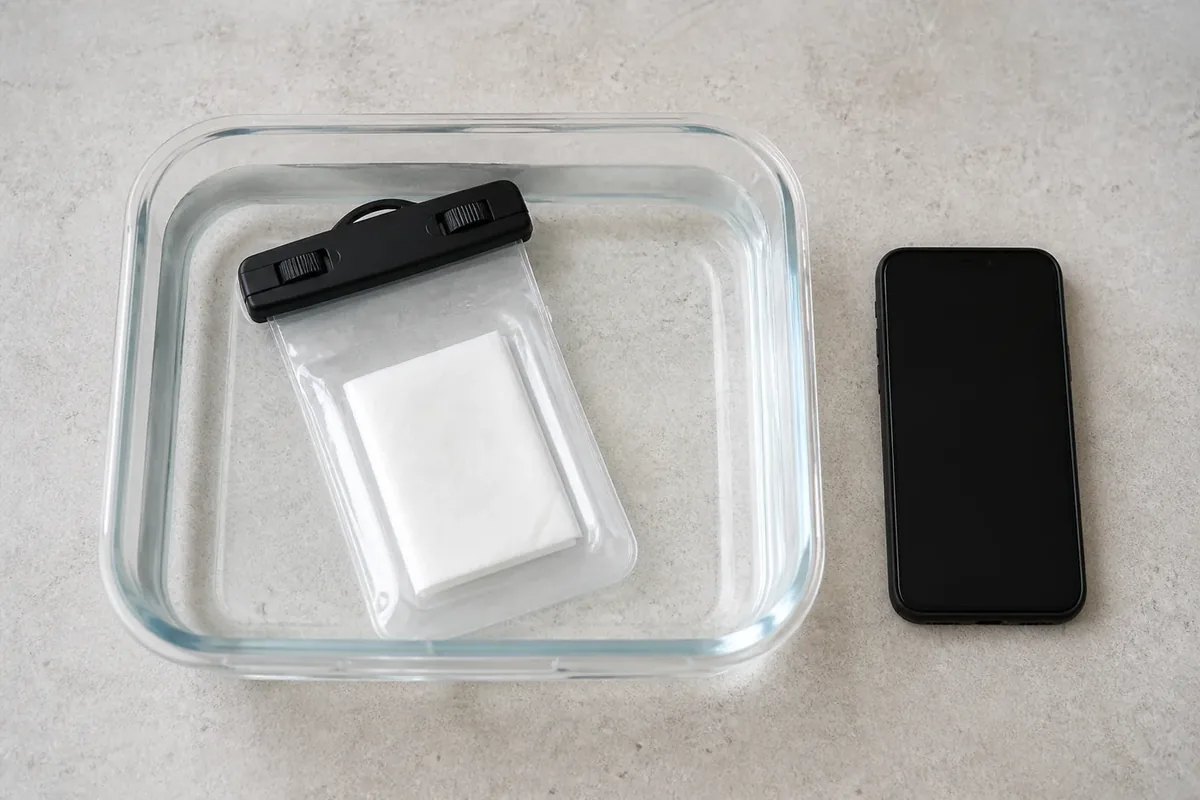
- Inspect the clear film, seams, closure rails, and lanyard points in bright light.
- Place folded dry tissue inside and close the pouch exactly as instructed.
- Submerge only to the depth and duration allowed by the maker, using a sink or shallow basin where you can retrieve it immediately.
- Dry the outside before opening it. If the tissue is damp, retire the pouch.
- Repeat the test after storage, impact, visible wear, or sand contamination.
A passing tissue test only shows that the pouch held during that test. It does not certify a marketplace depth claim, guarantee the next seal, or account for a trapped grain of sand. Keep the closure clean and avoid opening it with wet hands.
What to check before buying a pouch
Measure the phone with its case installed. Check the usable internal dimensions, not only the advertised screen size. Confirm whether the camera area stays clear, whether face or fingerprint unlocking will work through the material, and whether the closure can be operated without forcing it. A floating design may help retrieval, but test buoyancy with a safe substitute that matches the phone’s weight.
Be skeptical of an IP number shown only in a promotional image. Ask what standard was used, which configuration was tested, the test depth and time, and whether there is independent documentation. A pouch that is merely useful for splashes can still be worthwhile; it just should not be sold to you as a diving guarantee.
A current floating-pouch example
Affiliate disclosure: This section contains an affiliate link. GadgetPickLab may earn a commission at no extra cost to you. The product was assessed from its listing, not submerged or hands-on tested.
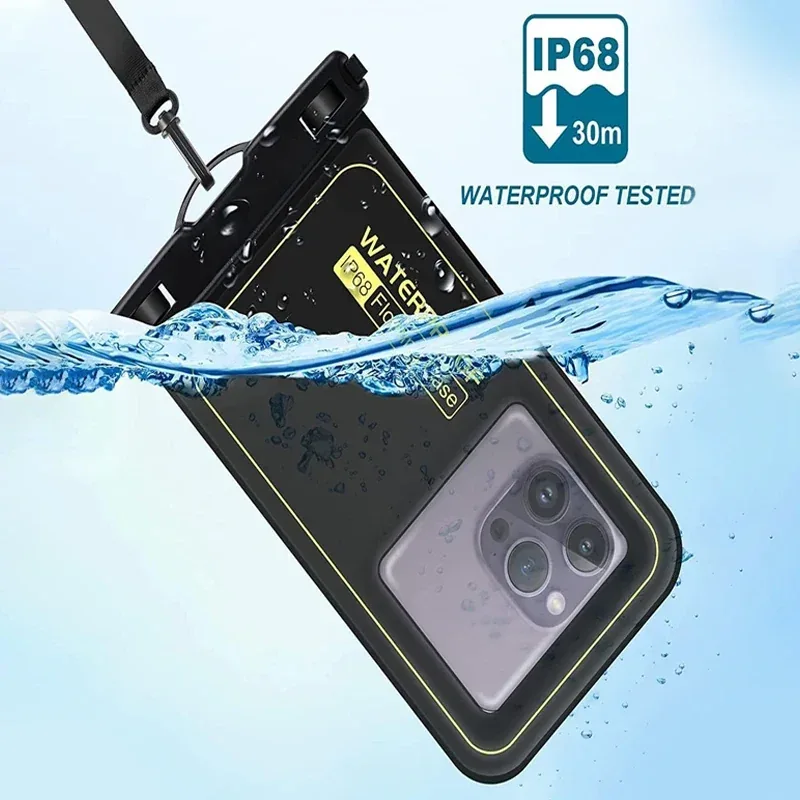
Floating phone pouch with locking closure
The listing presents a black clear-window pouch with a strap and displays an IP68 claim. The image also shows a 30-meter figure, but that depth, the test method, touchscreen performance, and flotation with a phone installed were not independently verified.
- Listing snapshot checked: August 5, 2026
- Marketplace signals displayed: 446 orders and a 98.0% positive rating
- Still verify: usable internal size, closure instructions, documented test standard, lanyard attachment, camera clearance, return terms, shipping, and current seller rating
- Do not assume: that the IP68 graphic makes intentional swimming, diving, or a 30-meter descent safe for your phone
Compare pouch size and closure details
Options, specifications, price, order count, rating, availability, shipping, and claims can change after the research date.
After the beach
Brush or rinse sand from the closed pouch according to its care instructions, then dry the exterior before opening it. Remove the phone in a dry place. If the phone itself gets wet, disconnect cables and follow the device maker’s drying guidance; do not use heat or put objects into the charging port.
The practical hierarchy is simple: distance from water first, a tested barrier second, and cautious handling throughout the day. A pouch earns its place when it reduces exposure without encouraging you to take a risk you would otherwise avoid.