How Do You Stop a Small Rug From Sliding on Tile?
A small rug on smooth tile is not merely untidy when it creeps or bunches. It can create a moving surface at the exact place where someone is stepping through a doorway, turning a corner, or getting out of a shower.
The first decision is whether the rug needs to stay. The National Institute on Aging’s home fall-prevention guidance advises against throw rugs and small area rugs, and recommends nonskid materials on surfaces that may get wet. In a high-risk walkway, removing the rug can be the best fix.
Check which part is moving
Mark the rug’s position with a small piece of painter’s tape beside one corner, then walk across it normally. If the whole rug shifts, the backing lacks grip. If the center forms a wave while the corners stay put, the rug may be too flexible or the pad beneath it may be undersized. If only one corner rises, you have an edge-curl problem rather than a full-rug sliding problem.
Also inspect the tile. Dust, cooking oil, bathroom products, floor polish, and cleaner residue can reduce friction. Clean the floor with the method recommended by the tile or flooring maker and let it dry completely. Do the same for the rug backing according to its care label. Sometimes that free reset is enough.
Try the least permanent solution first
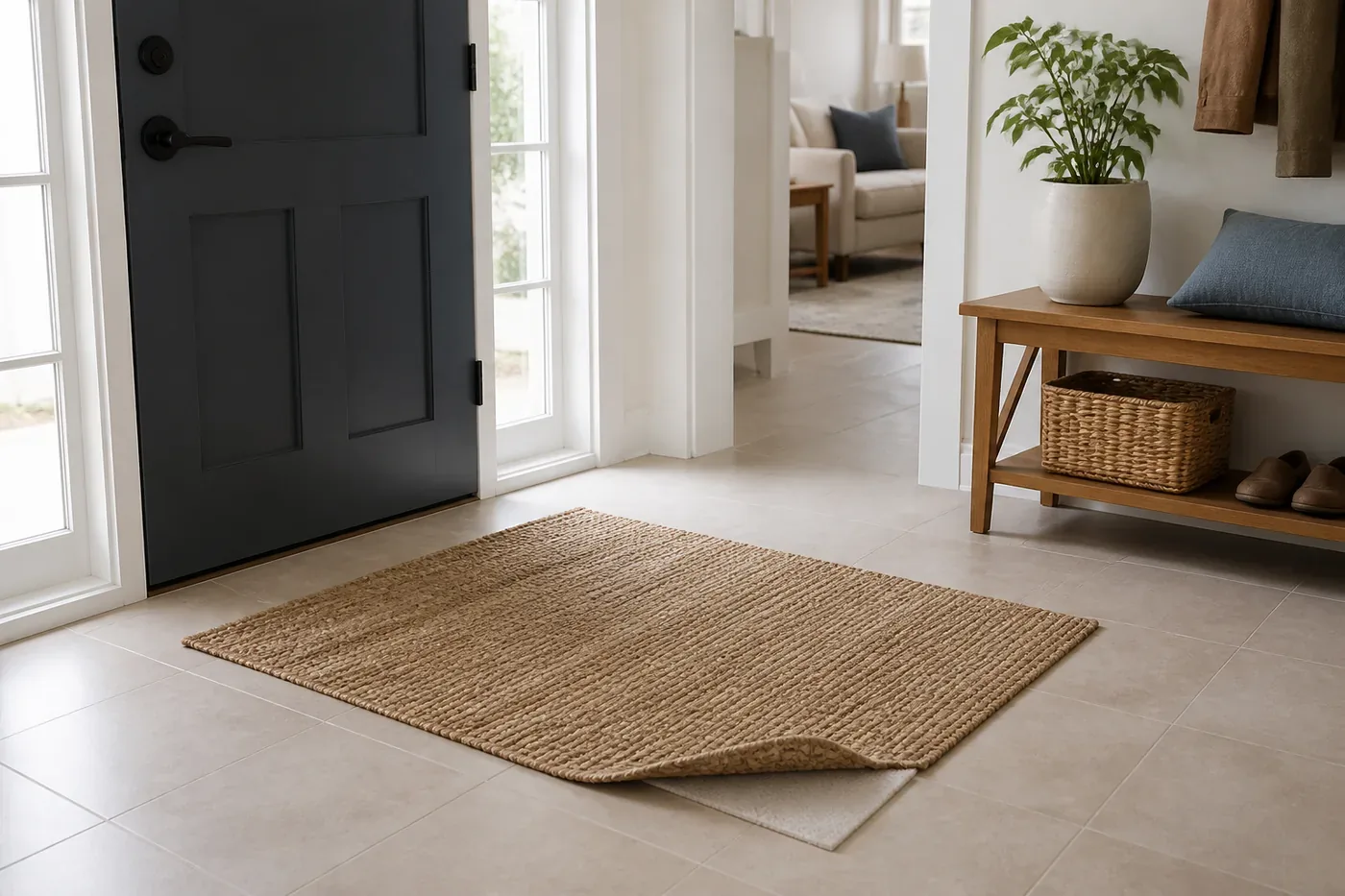
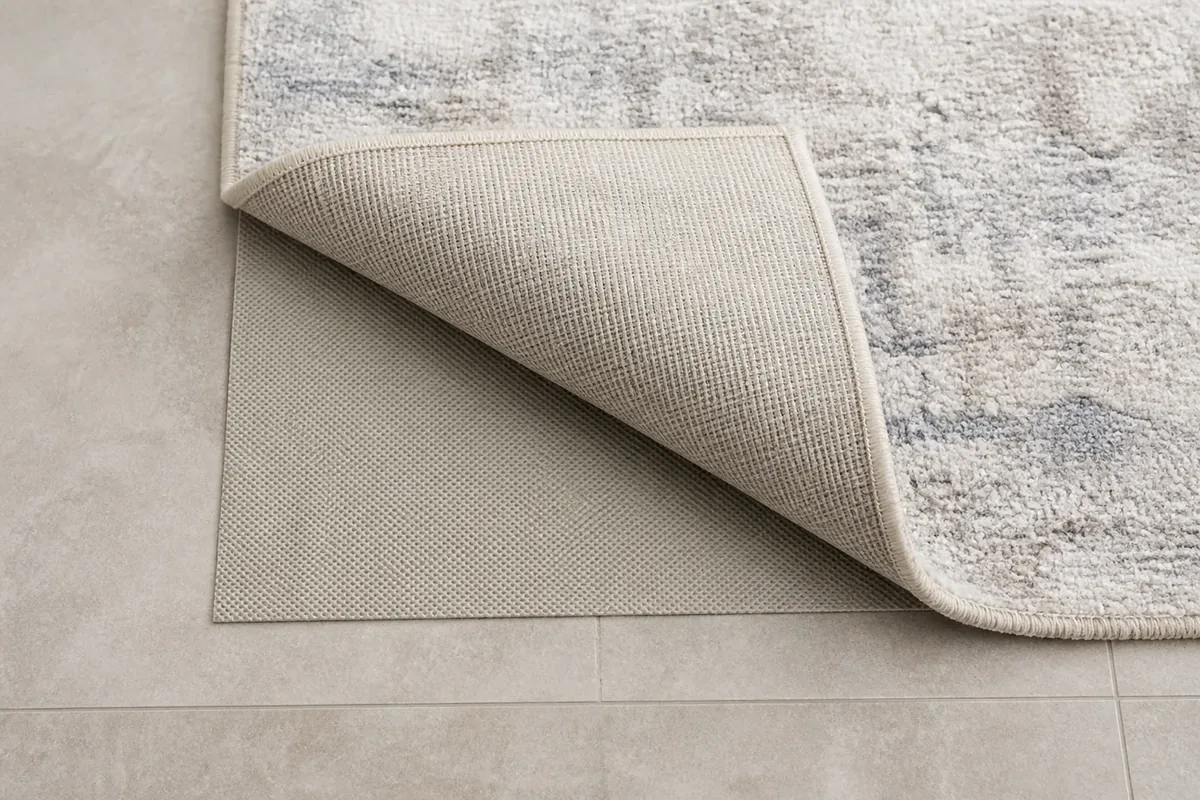
A full nonslip rug pad is often easier to evaluate than adhesive tape. Cut or buy it slightly smaller than the rug so it stays hidden but supports most of the surface. The pad should lie flat, remain compatible with the tile finish, and not transfer color or residue. Check it after cleaning and during humid weather because materials can change as they age.
Furniture can stabilize part of a larger rug, but do not create a raised edge in the walking path. Double-sided floor tape may hold strongly, yet it can leave adhesive or react with some finishes. Use it only when the flooring and tape manufacturers say they are compatible, and test an inconspicuous area first.
When corner grippers make sense
Reusable corner grippers can help when a light rug slides and its corners also lift, but they work only if the adhesive is compatible with both the floor and the rug backing. They are less suitable for loose fibers, crumbling latex, wet bathroom floors, valuable handmade rugs, heated floors without explicit compatibility, or finishes that can be pulled up by adhesive.
Measure the flat area available at each corner. A triangular pad should sit entirely within the rug outline. Install it on clean, dry surfaces, follow the stated waiting time, and test the rug with gentle hand pressure before anyone walks on it. Never rely on a sales-page weight claim as a fall-safety certification.
A current corner-gripper example
Affiliate disclosure: This section contains an affiliate link. GadgetPickLab may earn a commission at no extra cost to you. This is a listing example reviewed from available marketplace information, not a hands-on test.
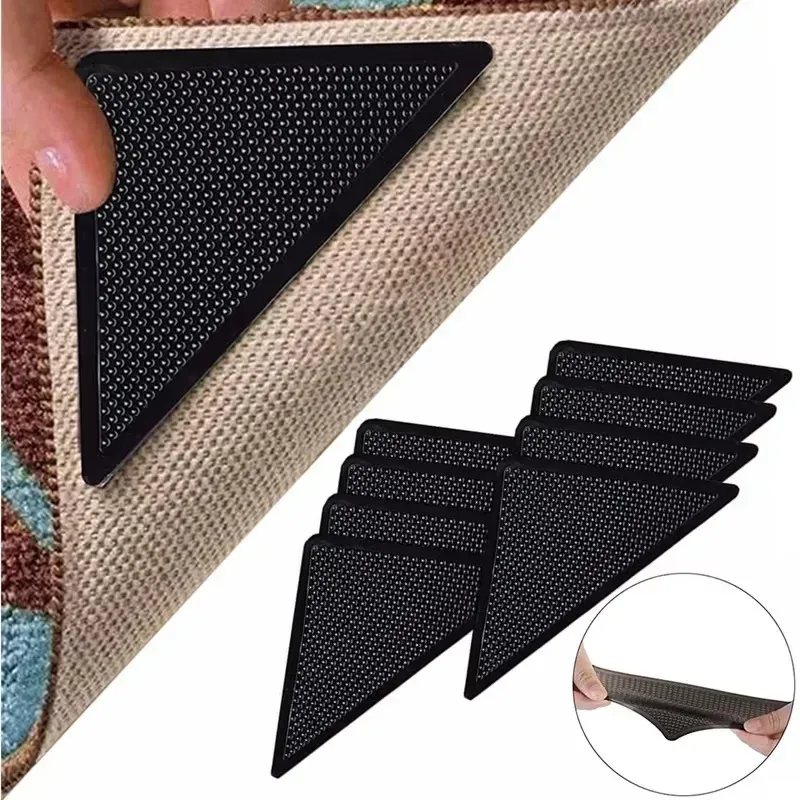
Triangular washable rug gripper pads
The listing image shows thin black triangular pads placed at rug corners. The format may address both corner lift and small-rug movement, but the seller’s descriptions of reusability, washability, and floor compatibility were not independently verified.
- Listing snapshot checked: August 5, 2026
- Marketplace signals displayed: 1,289 orders and a 98.0% positive rating
- Still verify: selected quantity, triangle dimensions, adhesive sides, floor and rug compatibility, removal method, cleaning instructions, shipping, and returns
- Do not assume: that a high order count proves the product is safe for every tile finish or rug backing
Check gripper sizes and pack options
Options, dimensions, price, order count, rating, availability, shipping, and included parts can change after the research date.
Recheck instead of installing and forgetting
- Press each corner after the first day and again after the first floor cleaning.
- Lift and inspect if the rug begins to creep, curl, or feel uneven.
- Remove a pad that leaves residue, discolors the tile, traps moisture, or stops lying flat.
- Keep the floor dry and the doorway fully clear.
- Replace the rug or remove it if repeated fixes fail.
The right outcome is a flat, stable walking surface, not preserving a particular rug at all costs. Clean the surfaces, test a compatible full pad, and use corner grippers only when they solve a clearly identified edge problem without creating another one.