How Do You Stop Toiletry Bottles From Leaking in Luggage?
A bottle that never leaks in the bathroom can still open, seep around its threads, or be squeezed under packed clothes. The useful fix is not one travel hack. It is a short inspection followed by a second layer that keeps any failure away from clothing.
Find the leak path before you pack
Fill each reusable bottle with water at home, close it, dry the outside, and leave it on a paper towel for several minutes. Then turn it on its side and apply only the kind of light pressure it may receive in a packed bag. Replace a cracked bottle, stretched flip cap, missing gasket, or cap that jumps its threads. Do not keep adding tape to a container that is already unreliable.
Squeeze tubes deserve a separate check. Air trapped in a nearly empty tube can push product toward the opening when the tube is compressed. After closing it, wipe residue from the hinge and rim so the cap can seat cleanly. Pump bottles should be locked according to their own instructions; a removable cap over the pump is better than trusting a piece of loose tape.
Use the free containment layer first
- Reduce the amount. Carry only what the trip requires instead of packing a full, heavy bottle.
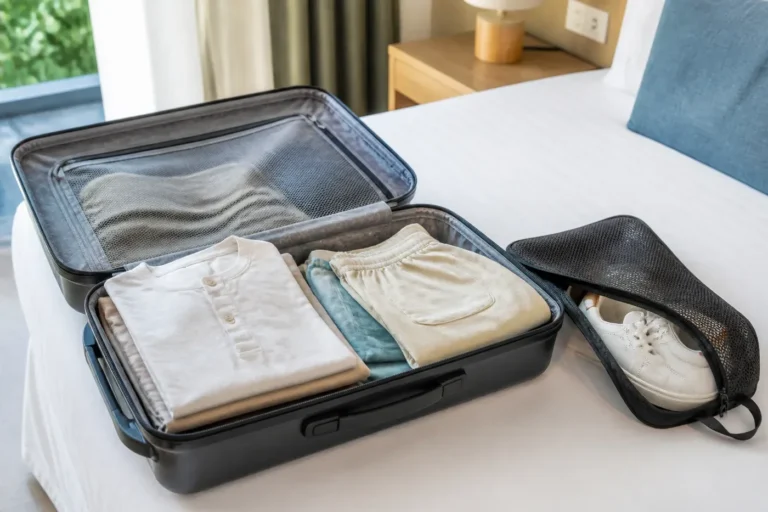
- Separate liquids from absorbent items. Do not place shampoo beside a sweater, passport, or electronics just because the space is convenient.
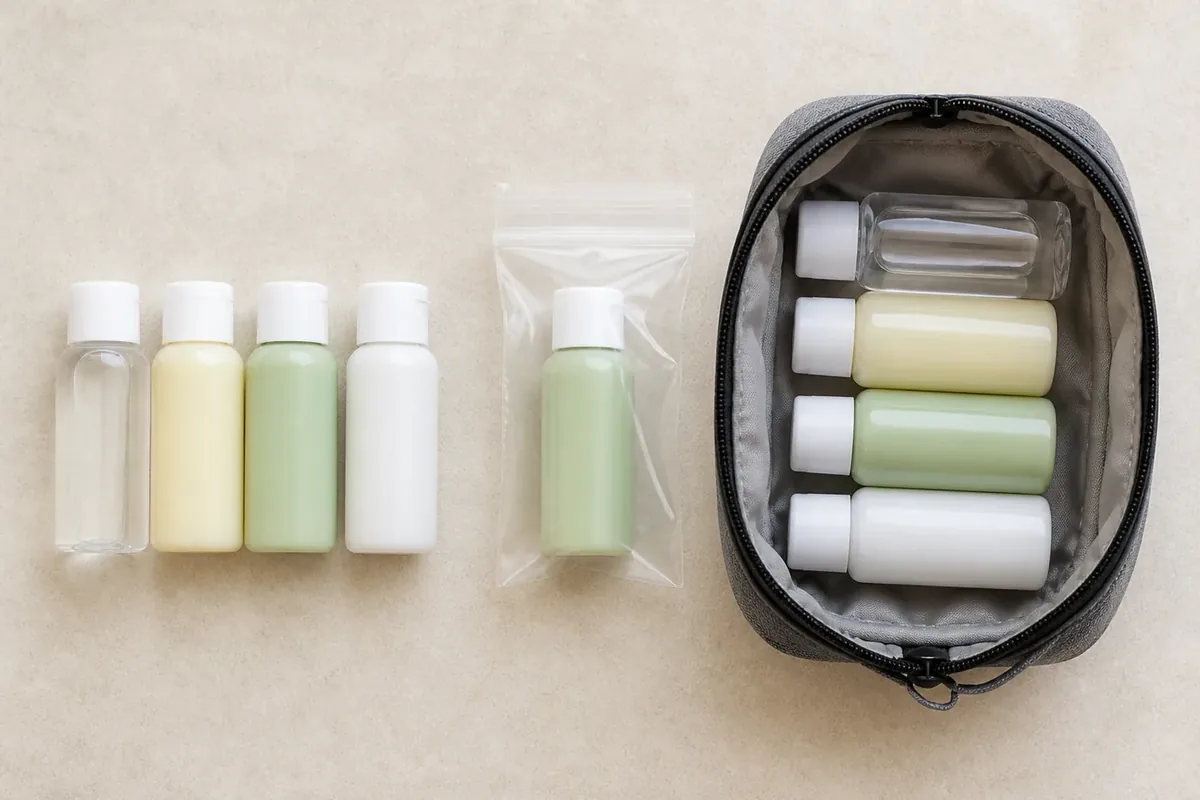
- Use a resealable bag you already own. It should close without being stretched by too many bottles.
- Keep caps away from hard edges. A shoe heel, charger block, or suitcase frame can press directly on a flip top.
- Pack upright when the layout allows it. This does not guarantee a seal, but it keeps liquid away from the cap during normal handling.
For U.S. carry-on screening, the Transportation Security Administration says liquids, aerosols, gels, creams, and pastes generally follow the 3-1-1 liquids rule. Check the current rules for the airport and country you are using; a leakproof pouch does not change container-size or screening requirements.
When a dedicated toiletry case is worth the space
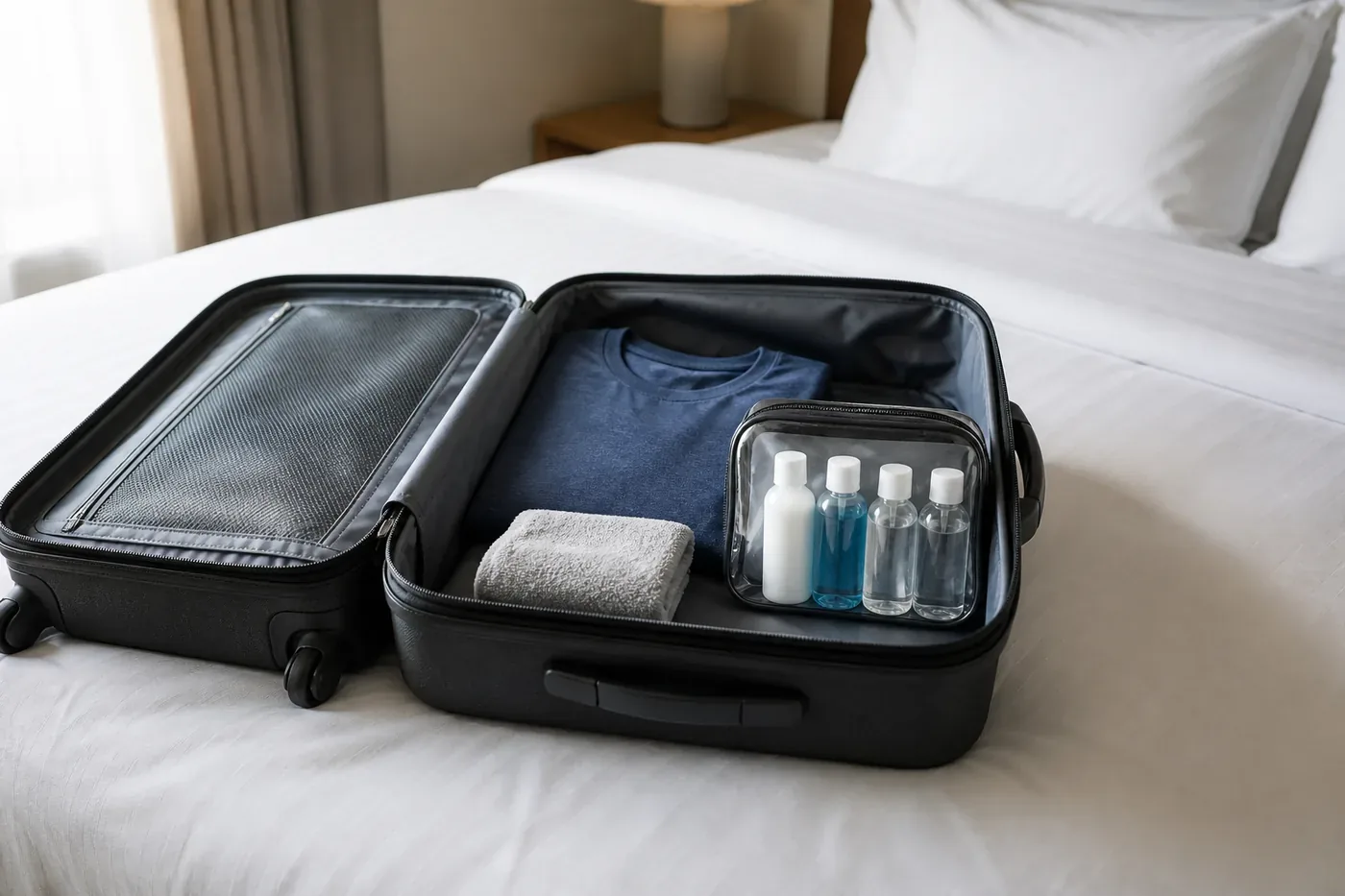
A washable case becomes useful when you carry liquids often, need a shape that protects flip caps from pressure, or want to lift the entire group out of a suitcase without rearranging clothes. A transparent top can make airport or hotel checks quicker, while a structured edge may reduce crushing. Neither feature makes the case watertight unless the construction and zipper are specifically tested for that purpose.
Measure your largest bottle and the available suitcase space. Look for a zipper that closes without forcing the case, seams that can be wiped clean, and an interior that does not trap a spill in an absorbent lining. If the seller calls a fabric case “waterproof,” treat that as a listing claim until the material, seams, and closure are independently verified.
One current case example
Affiliate disclosure: This section contains an affiliate link. GadgetPickLab may earn a commission at no extra cost to you. The listing is a research example, not a hands-on-tested endorsement.
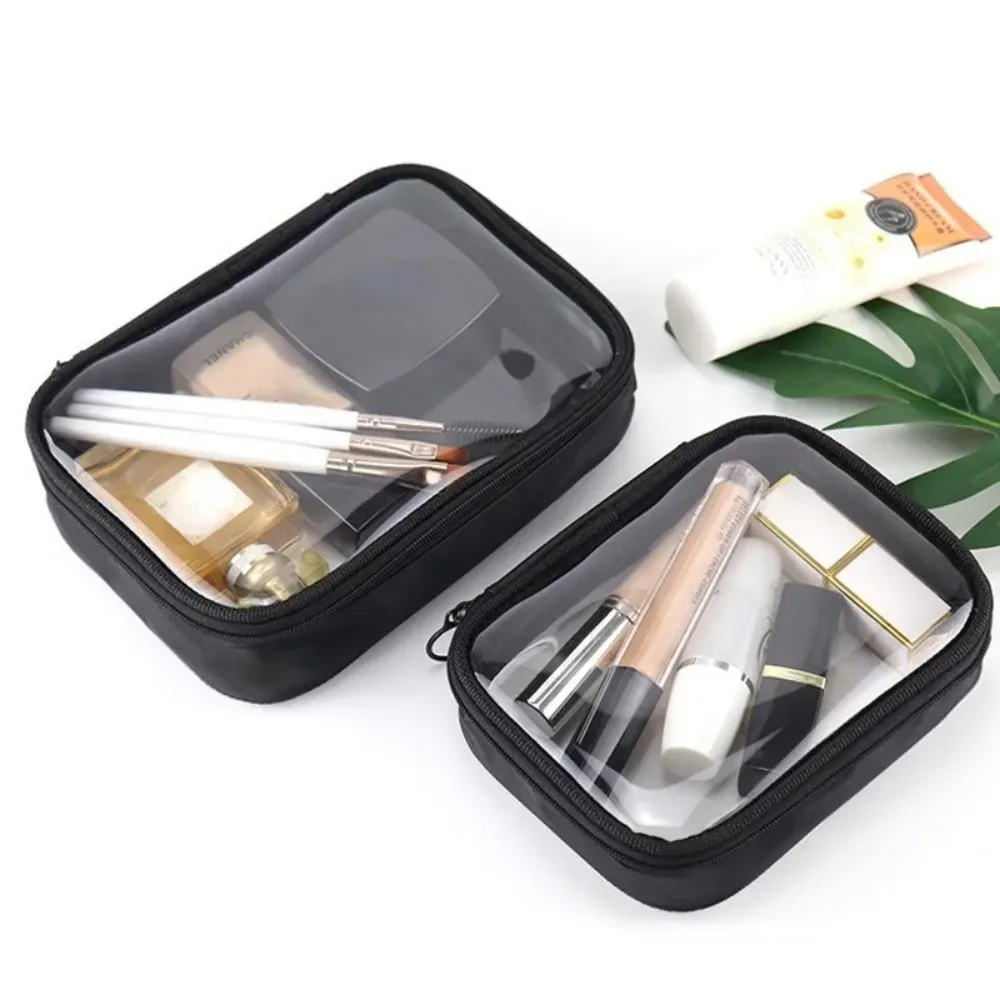
Transparent zip toiletry case
The listing image shows two structured black cases with transparent tops and zip closures. That layout can separate small bottles from clothing and resist light pressure, but the image does not prove that the zipper or seams will contain a full liquid spill.
- Listing snapshot checked: August 5, 2026
- Marketplace signals displayed: 1,004 orders and a 98.0% positive rating
- Still verify: selected size, internal dimensions, material, wash instructions, zipper construction, shipping, taxes, returns, and current seller rating
- Do not assume: that “waterproof” in the title means a submerged or leakproof zipper
View pouch sizes and zipper options
Options, dimensions, price, discount, order count, rating, availability, shipping, and included parts can change after the research date.
Pack the case where pressure is lowest
Place the closed case near the top of a soft-sided suitcase or between flat clothing layers rather than under shoes. Keep sharp grooming tools in their own protective covers. If a checked bag contains large liquid containers, use a stronger secondary bag and follow the airline’s current rules for aerosols and other restricted items.
On arrival, open the case over a bathroom counter instead of over the bed. Wipe any residue immediately, let the pouch dry fully, and do not repack a damp case against clean clothing. A two-minute arrival check prevents a small seep from becoming an odor or stain during the return trip.
The routine that matters most
A reliable bottle is the first defense; a closed containment layer is the second. Test caps with water, remove questionable containers, keep liquids away from pressure points, and use a pouch that fits without strain. Buy a dedicated case only when it improves separation or protection over a resealable bag you already have.