How Do You Keep a Beach Umbrella From Blowing Away?
The U.S. Consumer Product Safety Commission warns that windblown beach umbrellas have caused serious injuries and deaths. Its beach-umbrella safety guidance tells shoppers to look for labeling that the umbrella or anchor system meets ASTM F3681 and to secure it according to the manufacturer’s instructions.
Do not start with a hole in the sand
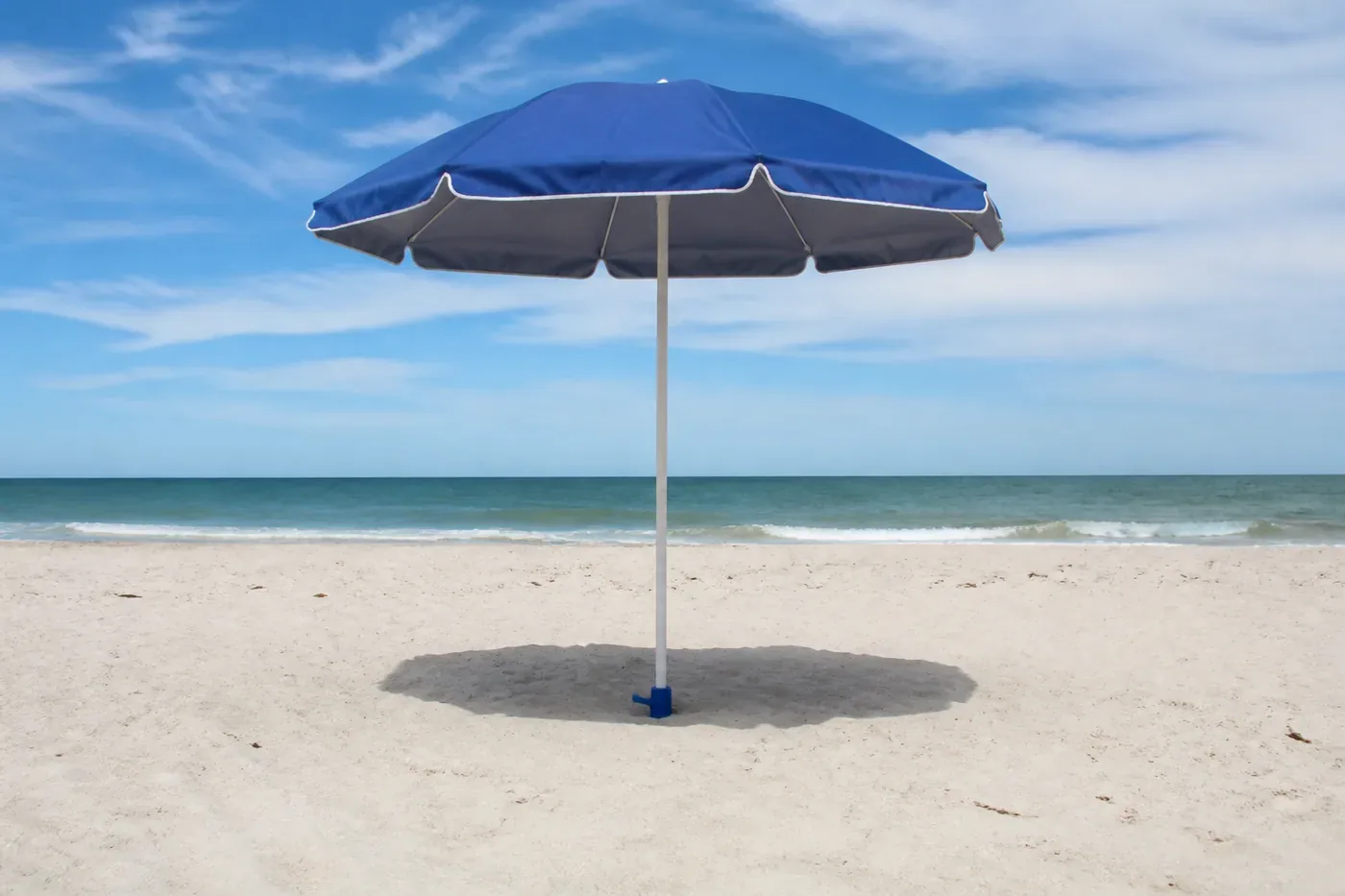
Pushing a bare pole into loose sand may look stable while the air is calm, but the canopy creates a large surface for a gust to lift and twist. Digging deeper by hand does not prove the setup can resist a specified force. A compliant umbrella-and-anchor system is evaluated as a system; the pole diameter, canopy area, anchor, sand, installation depth, and condition all matter.
Check the label on both the umbrella and anchor. Confirm the maximum canopy size the anchor is intended to support and whether the standard designation is current. If the product has no safety label or test documentation, treat it as an unverified accessory rather than a compliance solution.
A safer setup sequence
- Check beach rules and weather. Some locations restrict umbrella size, anchoring methods, or shade equipment.
- Inspect every part. Do not use a cracked anchor, bent pole, damaged canopy, loose collar, or worn locking mechanism.
- Match the pole to the anchor. The socket and clamp must fit the actual pole diameter without improvised shims.
- Install the anchor fully. Follow its orientation, depth, and sand-condition instructions. Spiral blades should not remain exposed as a trip hazard.
- Attach and lock the pole. Confirm that the umbrella cannot lift out of the socket.
- Open it only after the base is secure. Keep people clear while opening and monitor movement from the first minute.
CPSC’s safety alert says compliant systems must resist at least 75 pounds of upward force or remain secure in wind speeds up to 30 mph under the standard’s test conditions. That number is not a personal operating target. Beach gusts, poor installation, damaged parts, different sand, or a larger canopy can invalidate the comparison.
Know the stop conditions
Close the canopy when the pole rocks, the anchor rotates, the canopy repeatedly inverts or snaps, the sand loosens around the base, a storm approaches, or a lifeguard or local authority directs people to remove shade. Close it before leaving for the water, food, or a walk. Never ask a child or another beachgoer to hold a failing umbrella upright.
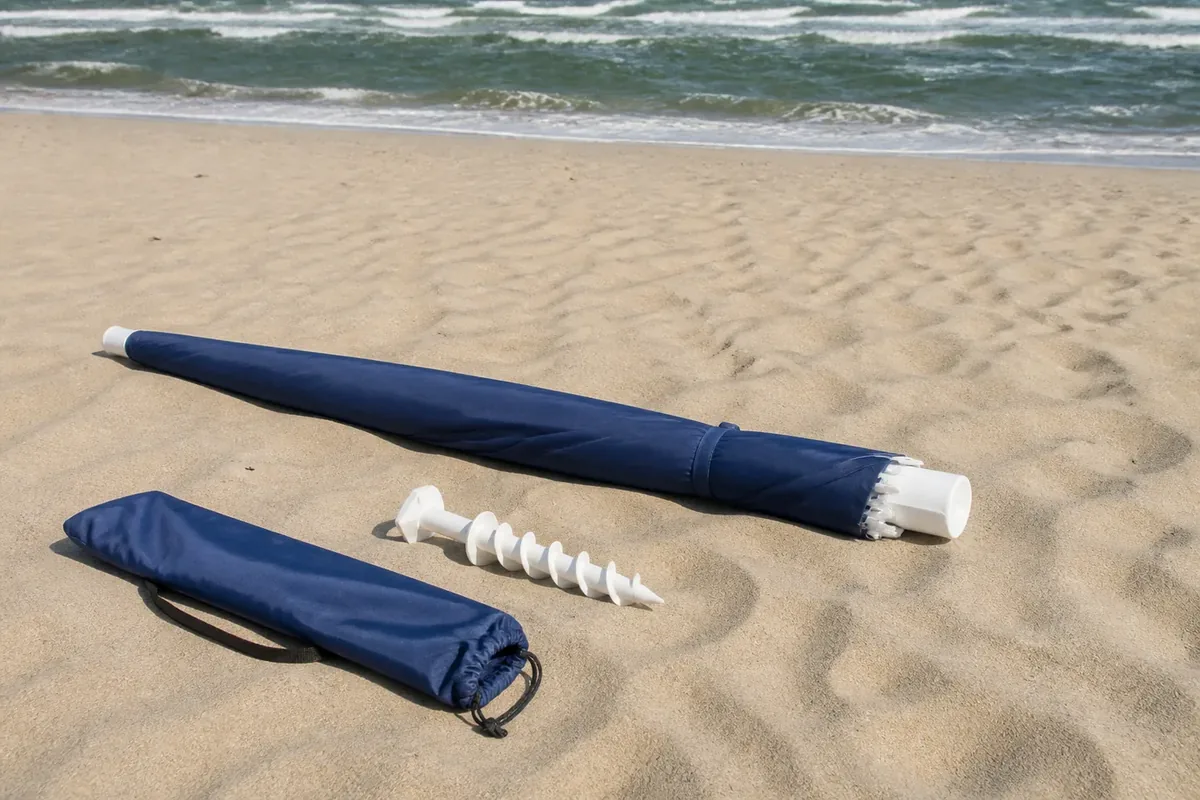
After closing it, lay the umbrella flat or pack it as directed. Recheck the anchor before reopening, but do not treat tightening as permission to ignore worsening weather. Moving to a sheltered location or going without the umbrella is a valid solution.
Where a screw-in sand anchor fits
A screw-in anchor may be easier to install than repeatedly twisting the umbrella pole itself, and a handle can provide leverage. The design still has to match the pole and canopy. Plastic can crack, threads can strip, and wide spiral blades can be difficult in packed or rocky sand. Metal is not automatically safer; corrosion, sharp edges, and incompatible clamps introduce other problems.
For any candidate, look for the ASTM F3681 label and documented canopy limits. If those are absent, do not infer compliance from the shape, color, customer rating, or the words “heavy duty.”
A current generic anchor example
Affiliate disclosure: This section contains an affiliate link. GadgetPickLab may earn a commission at no extra cost to you. This product is included only as a fit-and-feature example; it is not presented as a safety-certified recommendation.
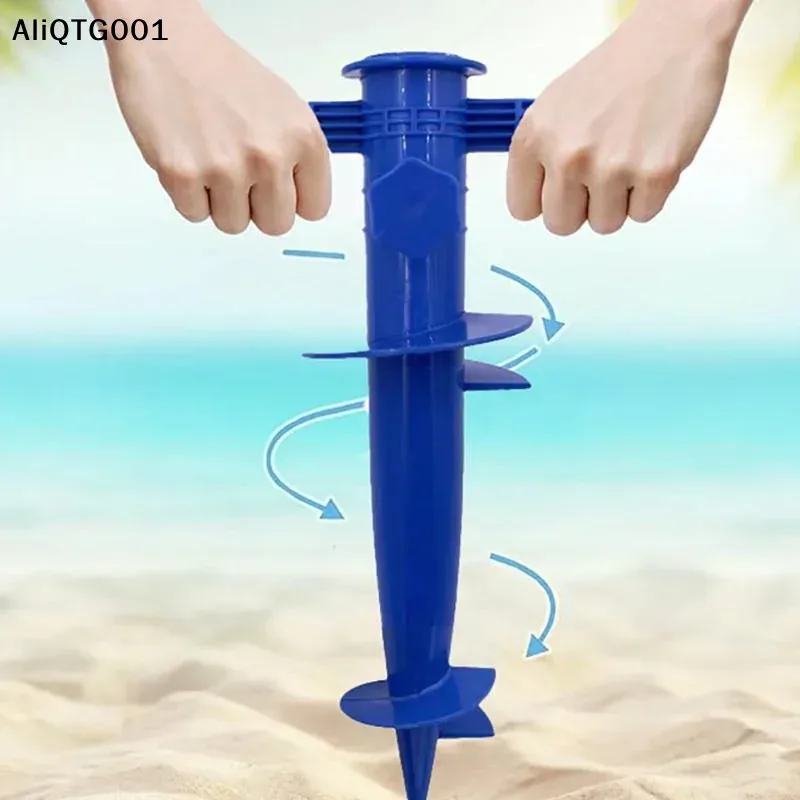
Plastic screw-in sand anchor with handles
The listing image shows a blue auger-style anchor with two handles and a top socket for an umbrella pole. The listing did not provide independently verified ASTM F3681 compliance, wind performance, pull resistance, or a confirmed canopy-size limit in the data reviewed.
- Listing snapshot checked: August 5, 2026
- Marketplace signals displayed: 185 orders and a 100.0% positive rating
- Still verify: current safety label, pole-diameter range, canopy limit, material, installed depth, locking method, instructions, shipping, and returns
- Do not assume: that sales or rating signals establish wind safety or compliance with ASTM F3681
Check anchor fit and listed dimensions
Options, specifications, price, order count, rating, availability, shipping, safety claims, and included parts can change after the research date.
Take it home in usable condition
Rinse sand and salt according to the manufacturer’s care instructions, dry all parts before storage, and inspect plastic for whitening or cracks. Keep the anchor covered in transit so its point and handles do not damage other gear.
The correct goal is not making an umbrella impossible to move. It is using a tested, compatible system conservatively and removing the canopy before conditions exceed it.