How Do You Keep a Fitted Sheet From Popping Off the Corners?
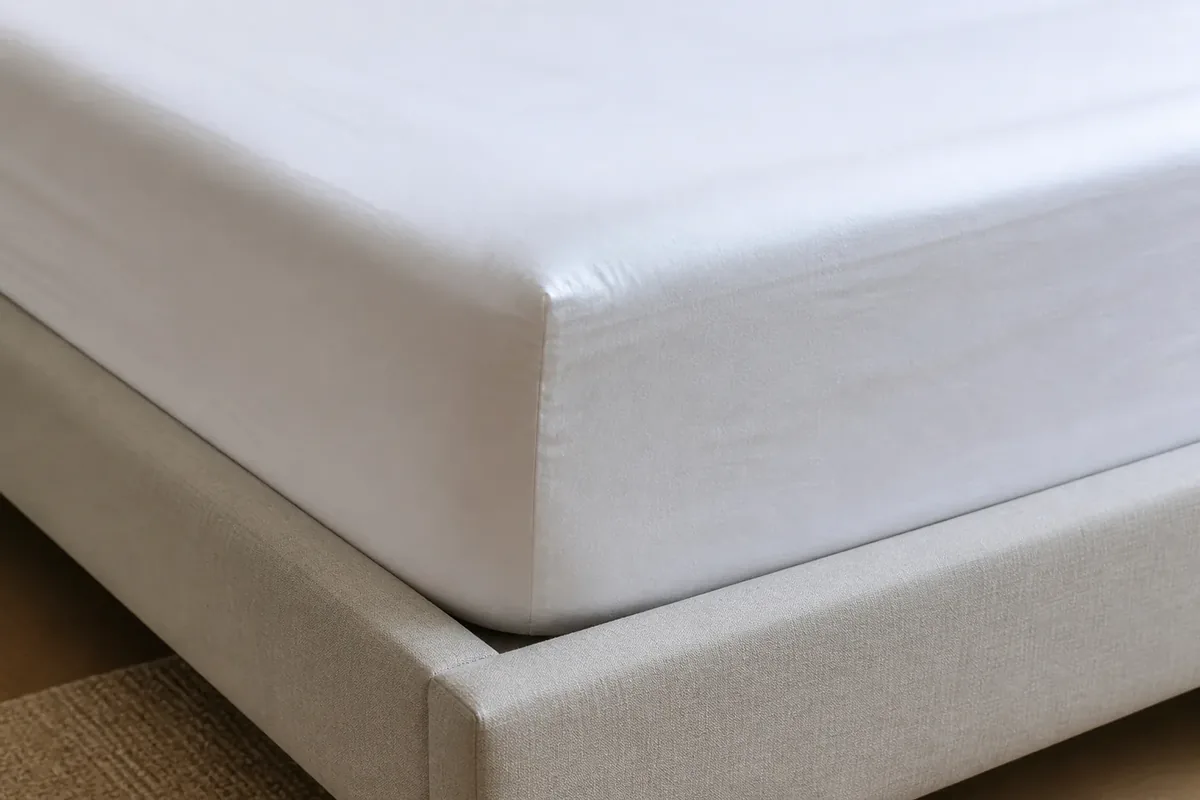
A fitted sheet usually lets go for one of two reasons: the pocket is being asked to stretch farther than it can, or the elastic has too little grip to stay below the mattress edge. Pulling the same corner down every morning treats the symptom, not the cause.
First, check whether the sheet can actually reach
Measure from the top surface of the mattress to the lowest point the fitted edge must wrap under. Include any topper or thick pad. Compare that total with the manufacturer’s stated pocket depth, allowing some fabric to tuck beneath the mattress. A label such as “deep pocket” is not a universal size.
Next, look at the corner seams. Each seam should sit close to the vertical corner rather than being pulled across the top or hidden far underneath. If two corners fit easily and the other two fight back, rotate the sheet 90 degrees; the sheet may simply be sideways.
Try these fixes before buying anything
- Start diagonally. Fit one corner, then the opposite corner, followed by the remaining pair. This spreads tension more evenly.
- Remove trapped layers. Smooth a bunching mattress protector or topper skirt before pulling the fitted sheet over it.
- Wash and dry to the care label. Excessive heat can be hard on elastic and some fabrics. Retire a sheet whose elastic stays visibly stretched.
- Add friction, not bulk. If the mattress surface is slick, a thin, breathable mattress protector may give the sheet more to hold. Avoid loose material that can wrinkle under you.
- Test without the topper. One night without a thick topper can reveal whether pocket depth is the real problem.
When straps solve the right problem
Straps make sense when the sheet reaches below every corner, the fabric is still sound, and normal movement gradually pulls the elastic upward. They are a poor rescue for an undersized sheet. More tension on a sheet that barely reaches can stress the fabric or release a clip.
Before installing any clip, inspect its jaws and test it on an inconspicuous edge. Follow the listing’s placement instructions and keep attachments below the mattress, away from where a person can contact them. If lifting the mattress is difficult, get help rather than trying to hold it with one hand while fastening a strap.
Affiliate disclosure: This section contains an affiliate link. GadgetPickLab may earn a commission at no extra cost to you. This is a researched listing example, not a hands-on-tested endorsement.
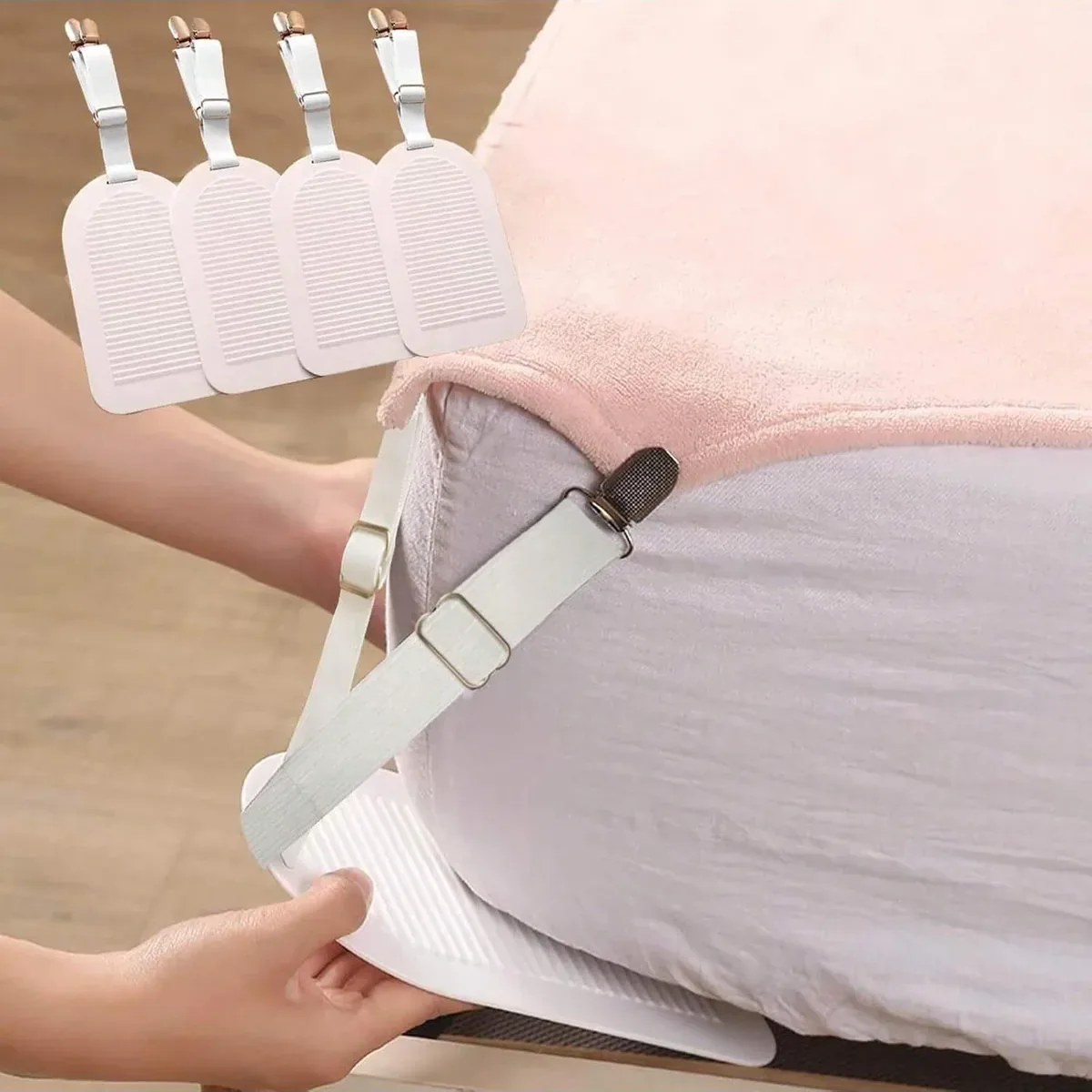
Adjustable four-corner sheet straps
The listing shows a set of elastic straps intended to pull neighboring sheet edges together beneath the mattress. That can add tension when the sheet is correctly sized but still creeps upward. It cannot create extra pocket depth or repair worn elastic.
- Listing snapshot checked: August 9, 2026
- Marketplace signals displayed: 11,430 orders and a 96.3% positive rating
- Still verify: clip opening, strap adjustment range, mattress clearance, sheet fabric, included quantity, and whether installation requires lifting the mattress
- Do not assume: every clip is gentle on thin, delicate, or loosely woven fabric
View current sizes and options
Options, dimensions, price, discount, order count, rating, availability, shipping, taxes, and returns can change after the research date.
A two-minute test the next morning
Do not judge the fix by how tight the bed looks immediately after installation. Check whether the corner seams stayed aligned, whether any clip marked the fabric, and whether the sheet surface feels overly taut. The best result is not maximum tension; it is a correctly sized sheet that stays flat with the least extra hardware.
If only one corner releases, mark that corner temporarily and swap the sheet’s orientation on the next wash cycle. A problem that follows the sheet points toward elastic, seam shape, or fabric wear; a problem that stays at the same mattress corner points toward a topper, protector, bed-frame access, or unusual corner geometry. That simple comparison keeps you from tightening all four corners to solve one local mismatch.