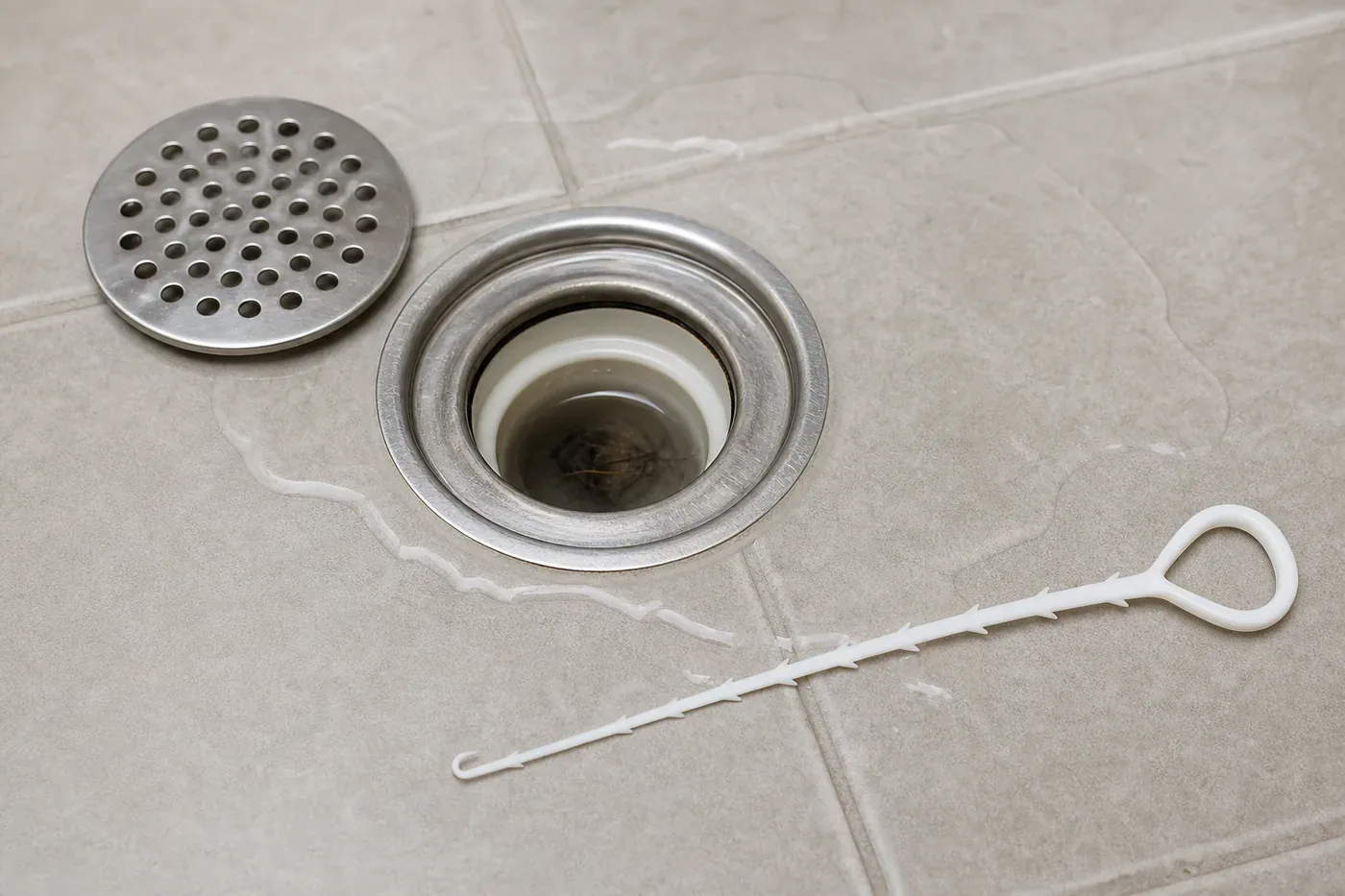
Why Is the Shower Drain Still Slow After Removing Visible Hair?
Pulling a wad of hair from the drain cover may improve the flow without clearing the blockage below it. Soap residue can bind more hair just inside the drain throat, a stopper mechanism can hold debris out of sight, or the restriction can be farther down the pipe than a simple plastic tool can reach.
First decide whether this is a local hair clog
A shallow shower-only problem often points to hair and soap residue near the drain. A deeper plumbing problem becomes more likely when the toilet gurgles, another sink drains slowly, water rises in a different fixture, or there is a sewage odor or backup.
Do not keep pouring water to test a drain that is close to overflowing. Turn off the shower and give standing water time to fall. In a rental, hotel, or condominium, report the problem before removing fixed plumbing parts. You may be responsible only for lifting a removable strainer and cleaning the accessible area.
Check the pieces you can see
- Put on cleaning gloves and ventilate the room.
- Lift a removable hair catcher or strainer. Use the correct screwdriver only if the cover is designed to be unscrewed.
- Remove hair from both sides of the cover and place it in the trash, not back into the drain.
- Inspect the first visible section of the drain with a flashlight.
- If the shower has a stopper, follow the maker’s instructions to release and clean it. Do not force a fixed linkage.
- Run a small amount of water and watch the flow. Stop before the pan fills.
A clean cover with slow flow suggests debris is lower than the surface. That is the point where a small mechanical tool can be more useful than another round of wiping.
Why mechanical removal comes before chemicals
The U.S. Environmental Protection Agency lists a plunger or plumber’s snake as a way to reduce reliance on drain cleaner in its household hazardous-waste guidance. For a shower hair clog near the opening, a flexible barbed strip works on the same basic principle: pull the material out instead of trying to dissolve it.
Many non-enzymatic drain openers contain highly corrosive acids or alkalis. Poison Control warns that splashes can cause serious skin and eye injuries, and that some products generate heat. Its general cleaning guidance says never to mix household cleaning products.
If anyone has already poured drain cleaner into the fixture, do not insert a tool, plunge aggressively, add another product, or lean over the opening. A tool can splash the trapped chemical. Follow the product label and contact Poison Control or a plumber for situation-specific advice. In the United States, Poison Control is available at 1-800-222-1222.
How to use a simple hair tool carefully
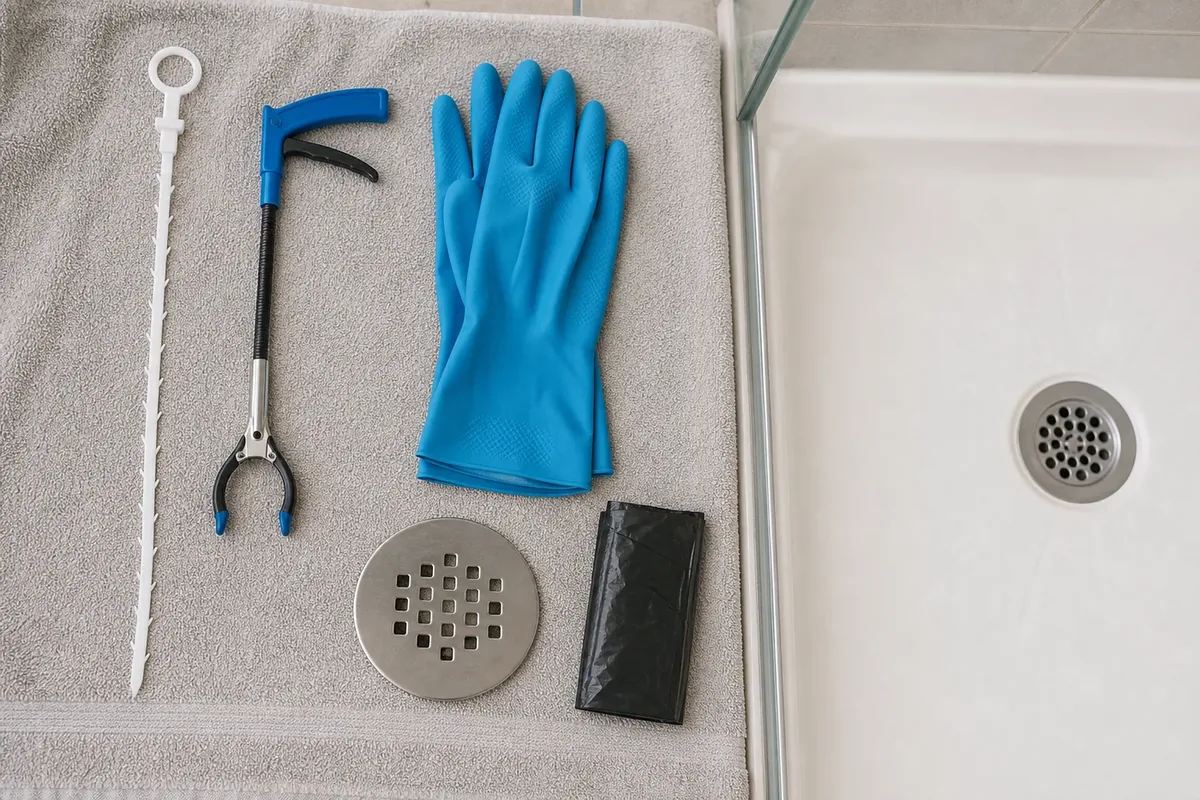
- Confirm that no chemical drain product is present.
- Choose a tool narrow enough for the drain opening and long enough for the accessible throat.
- Feed it slowly. Follow the curve without forcing it past a hard stop.
- Rotate or move it slightly only as the tool instructions direct.
- Withdraw it slowly over the drain and transfer captured debris directly into a bag.
- Repeat once or twice rather than scraping aggressively.
- Rinse the drain with a modest flow of water and check the result.
Disposable plastic barbed strips can break if twisted hard or pushed into a tight trap. A claw grabber can catch an object but may scratch surfaces or become stuck. Stop when you feel resistance that is not soft debris.
What the result tells you
If the tool returns with hair and the flow improves, the blockage was probably near the drain throat. Add a removable hair catcher and clean it regularly to reduce recurrence.
If nothing comes out and the flow is unchanged, do not keep buying longer random tools. The restriction may be in a trap, branch line, or shared drain. A plumber can use the correct cable, inspect the line, and protect the fixture finish.
If water backs up in another fixture, the problem is not a simple shower-surface cleanup. Stop using affected fixtures and get professional help. Sewage water requires different protective measures than ordinary shower water.
When a small drain-tool kit actually helps
A kit makes sense when hair clogs recur close to an accessible shower, bathtub, or sink drain and you can use the tool without removing fixed plumbing. It is less useful for grease-heavy kitchen clogs, toilets, damaged pipes, or shared-line backups.
Check tool length, width, flexibility, handle design, and whether the set includes disposable barbed strips, a claw grabber, or brushes. More pieces are not necessarily better. Choose only the type appropriate for the drain opening, and do not use a narrow brush that could shed bristles into the pipe.
A current mechanical drain-tool example
Affiliate disclosure: This section contains an affiliate link. If you buy through it, GadgetPickLab may earn a commission at no extra cost to you. The listing below is a marketplace example, not a hands-on-tested endorsement.
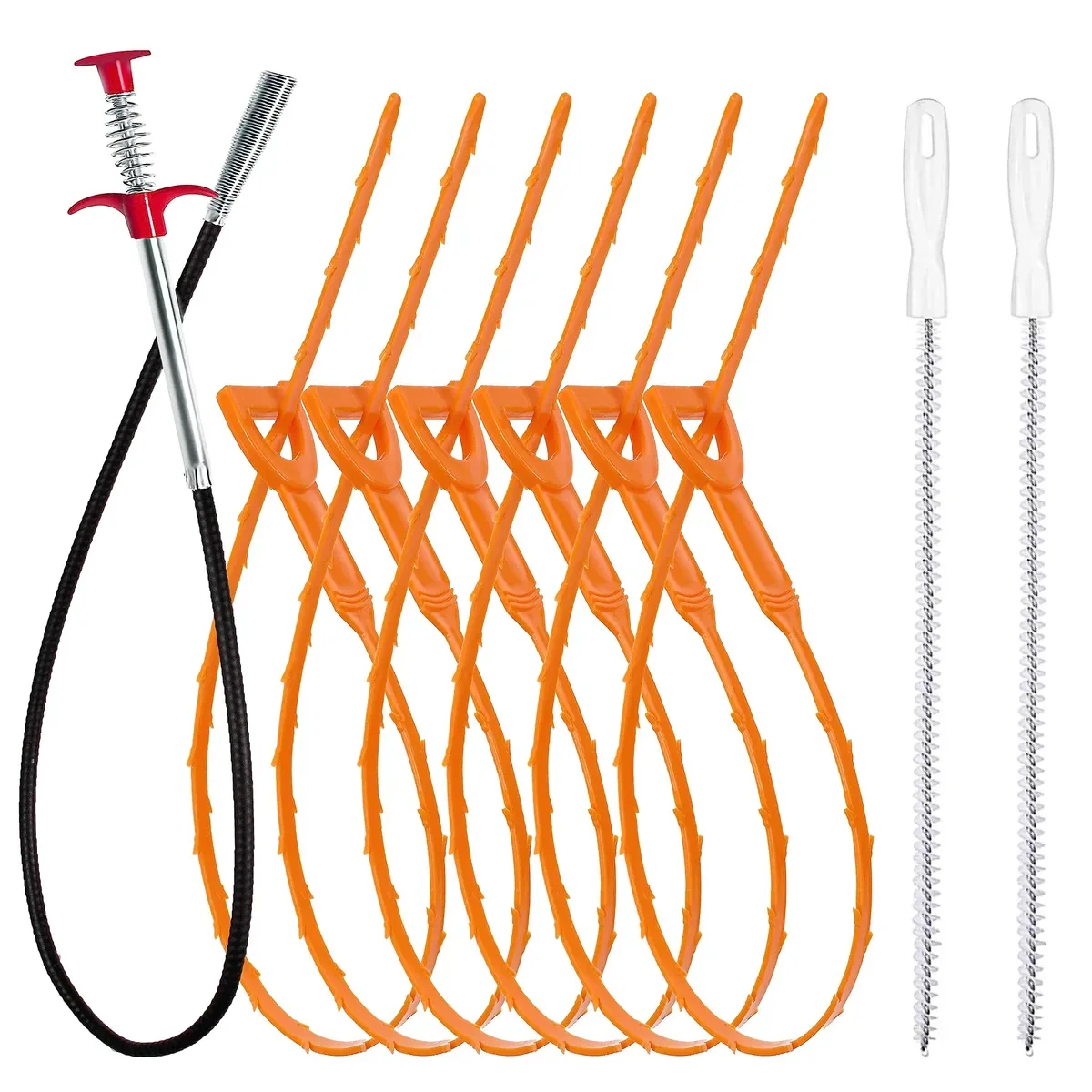
Mixed hair-removal and grabber tool set
The listing image shows several orange plastic barbed strips, a flexible claw grabber, and narrow brushes. The title references 35.5-inch and 25-inch tools, but exact lengths, materials, piece count, durability, and drain compatibility depend on the selected option.
- Listing snapshot checked: August 2, 2026
- Marketplace signals displayed: 448 orders and a 98.0% positive rating
- Still verify: selected set, actual tool lengths and widths, material, handle type, piece count, shipping, taxes, returns, and current seller rating
- Do not use: when chemical drain cleaner is present or when the blockage appears to affect multiple fixtures
Check current length and tool options
Options, specifications, availability, order count, rating, price, shipping, and included parts can change after the research date.
Prevent the same shallow clog
- Use a removable hair catcher that fits without blocking normal flow.
- Empty it into the trash after each shower or as soon as hair collects.
- Clean soap film from the catcher so water can pass through.
- Keep oils, wax, and non-flushable material out of the drain.
- Respond when flow first slows instead of waiting for standing water.
- Arrange professional service for recurring deeper restrictions.
Frequently asked questions
Will baking soda and vinegar clear a hair clog?
Poison Control explains that the carbon dioxide can escape from an open drain, so the mixture generally does not build enough pressure to dislodge a tough clog. More importantly, never add a home mixture when another chemical may already be present.
Can I use boiling water?
Do not assume the fixture, seals, or pipe material can tolerate it. Follow plumbing and manufacturer guidance. Mechanical hair removal near the opening is more targeted.
When should I call a plumber?
Call when multiple fixtures are slow, sewage appears, the clog returns quickly, a tool breaks or becomes stuck, the pipe may be damaged, chemicals are trapped, or you cannot access the blockage without dismantling plumbing.
Remove what you can reach, then know when to stop
A slow shower drain after surface cleaning usually needs inspection just below the cover, not a stronger chemical cocktail. Use a simple mechanical tool only in a chemical-free drain, work gently, and treat unchanged flow or multi-fixture symptoms as a reason to bring in a professional.