Mini Electric Screwdriver: Is It Strong Enough for Small Repairs?
Quick Answer
Small repair screws should first be matched with the correct manual driver, cleaned, and tested for damage. A mini electric screwdriver helps when many light-duty screws must be removed and replaced without repeated wrist motion. Skip it for seized fasteners, drilling, high-torque work, or delicate devices where the bit, torque control, and repair skill do not match the job.
- Try first: Use the exact manual bit and apply straight, controlled pressure before adding power.
- Consider one when: Furniture, covers, or household devices involve repeated compatible screws that loosen normally.
- Skip if: The screw is stripped, corroded, load-bearing, or requires more control than the tool clearly provides.
What Is Actually Causing the Problem
A stubborn screw does not automatically call for a motor. The problem may be the wrong bit, damaged head, thread locking compound, corrosion, poor access, or a fastener that was overtightened.
- Wrong bit: A close-looking tip slips and rounds the screw head.
- Damaged fastener: The driver cannot engage enough material to turn safely.
- High breakaway torque: The screw needs controlled manual force before powered spinning.
- Awkward alignment: An angled tool damages the bit and fastener even at low speed.
Seat the correct manual driver and turn gently. If it cannot break the screw free, a small powered driver may be the wrong escalation.
Free Fixes to Try First
- Identify the screw type and choose a bit that fills the recess.
- Clean debris from the head without damaging surrounding material.
- Support the workpiece and align the driver straight.
- Break a tight screw loose manually when the repair allows it.
- Test the electric driver on a noncritical fastener before using it near fragile parts.
Try before buying: A quality manual screwdriver set is safer and simpler for occasional repairs with only a few screws.
A Practical Decision Check
Two loose cabinet screws
- Start here: Use manual driver
- Product decision: Usually no
- Check before deciding: Correct bit
Many light cover screws
- Start here: Start one manually
- Product decision: Mini driver may save time
- Check before deciding: Torque and bit fit
Stripped screw
- Start here: Use extraction method
- Product decision: Power can worsen damage
- Check before deciding: Head condition
Large structural fastener
- Start here: Use proper full-size tool
- Product decision: Mini driver is unsuitable
- Check before deciding: Required torque
Where One Gadget Can Help
A mini electric screwdriver becomes useful when the fasteners are already known to move normally and repetition is the main burden. It can spin screws through the easy part of removal and installation while final tightening remains controlled.
The listing used here describes a rechargeable 4.2V cordless screwdriver with an LED and bit kit. Voltage alone does not establish useful torque or delicate control. Bit quality, speed behavior, manual lock, charging, and spare availability matter in real repairs.
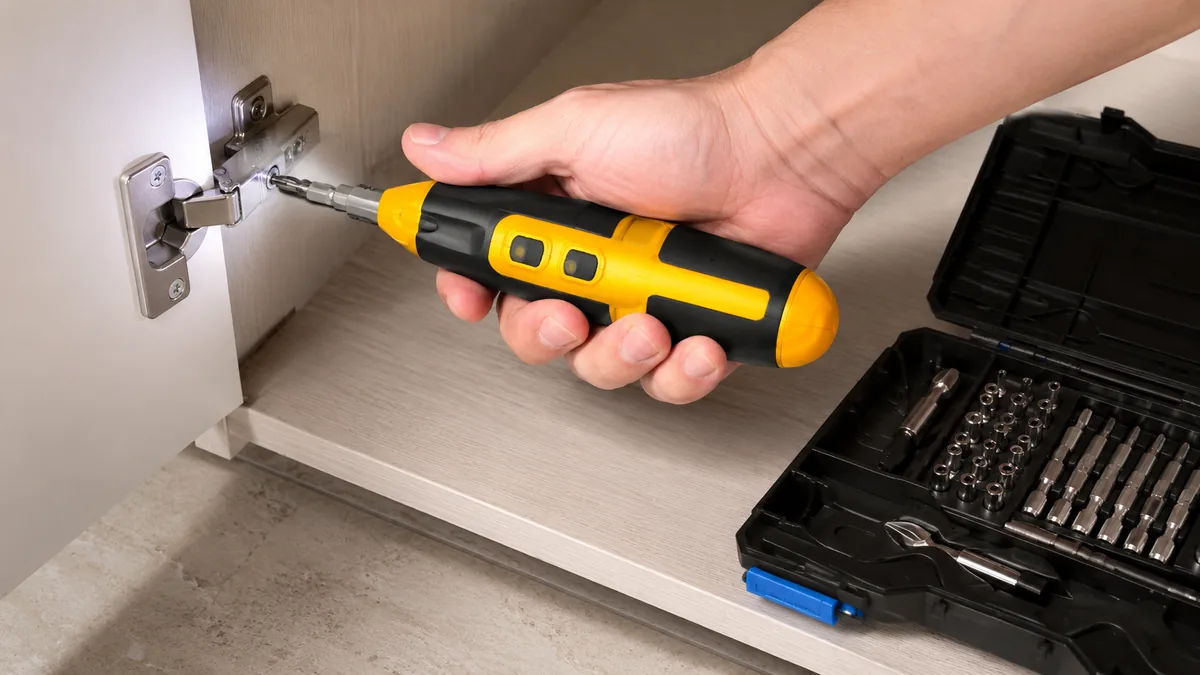
The single AliExpress listing below is one example of this tool type, not a best pick or a hands-on recommendation. Use it only as a reference, and verify the current specifications, compatibility, recent reviews, shipping, returns, and price yourself.

Skip the product if: you are facing seized, stripped, structural, or safety-critical fasteners or cannot confirm that the included bits fit the work.
Checks Before You Order
Match the tool to the screws and materials you actually repair rather than treating a long bit list as proof of capability.
- Bit selection: Confirm the exact sizes and shapes, and whether common replacements fit the holder.
- Torque behavior: Look for stated settings, clutch behavior, or guidance for delicate and larger screws.
- Manual control: A manual lock or safe hand-tightening method helps prevent overtightening.
- Charging: Check connector type, charge time guidance, battery access, and storage instructions.
- Grip and lighting: The body should align straight in the available space, and the LED should illuminate rather than cast a shadow.
Choose it for repeated light screw work only after bit fit and control are clear.
Mistakes That Make This Harder
- Using power to break a seized screw. Slipping can strip the head before the fastener moves.
- Starting at an angle. Powered rotation magnifies poor alignment.
- Final-tightening automatically. Small threads and plastic parts are easy to damage.
- Choosing by voltage. The number does not describe clutch control, torque curve, or bit quality.
- Treating it as a drill. A mini screwdriver may not be designed for drilling or heavy fastening.
Common Questions
When is a mini electric screwdriver worth adding?
It is useful when many compatible light-duty screws move freely and repetitive turning is the main problem.
Who should skip a cordless mini screwdriver?
Skip it for seized, stripped, structural, or safety-critical fasteners and for repairs beyond your skill level.
Can a mini electric screwdriver replace a manual set?
Usually not. Manual drivers provide breakaway and final-tightening control and remain necessary for many repairs.
Affiliate Disclosure
This article includes one affiliate listing as an optional example. GadgetPickLab may earn a commission at no extra cost if you buy through the link. Use appropriate tools and stop when a repair exceeds your skill or safety limits.