How to Keep Small Car Messes from Taking Over
Quick Answer
Keeping small car messes from turning into a weekend cleaning job usually starts with one rule: stop loose items from migrating in the first place. Use one small trash spot, one catch-all bin, and a daily 30-second reset for receipts, wrappers, cables, and dust-prone clutter. A portable car vacuum can help when crumbs, dirt, or pet hair keep settling into seams, but skip it if the real issue is poor storage, no clear place for trash, or a setup that blocks safe mounting and cable routing.
- Best for: Daily drivers with crumbs, dust, and small seat gaps.
- Skip if: The mess comes from bad storage habits, not dirt cleanup.
- Check first: Seat pockets, cable path, and where trash will land.
When This Setup Makes Sense
This is for drivers who keep meaning to clean the car “later,” then find the small stuff has spread: cup-holder crumbs, receipts in the door pocket, charging cables on the floor, and dust around the dashboard. The problem is not usually one huge spill. It is a steady accumulation of little things that have nowhere obvious to go.
- Daily commuters who toss items into the center console and shut the lid.
- Drivers who keep chargers, keys, and parking slips in shallow pockets.
- People whose dashboard fit is tight, so clips and mounts keep getting in the way.
- Anyone with cable routing that crosses a gear selector or blocks a vent.
- Owners who park for short trips and never get a full reset between drives.
Why This Gets Messy
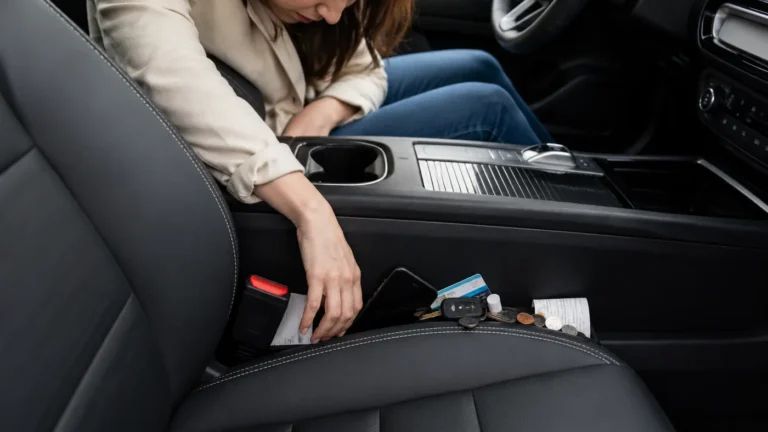
Small car messes spread because a car has many tiny landing zones and very little slack. A wrapper falls between the seat and console. A cable drapes across the dash and catches on a bag. A shallow pouch is too small for what gets dropped into it, so items spill back out.
The second issue is friction. If cleaning tools live in the trunk, they are too far away for a five-minute reset. If storage spots are awkward, people stop using them. That is where a portable car vacuum starts to make sense, but only as one tool in a better routine, not the whole answer.
How to Set It Up
- Remove the obvious loose items from seats, floor mats, and cup holders.
- Assign one small trash container and one catch-all spot for daily driving.
- Shorten the cable path so chargers do not cross controls or fall behind the seat.
- Reposition storage so the most-used pocket is reachable from the driver’s seat.
- Vacuum seams, mats, and floor edges after busy days, not only on weekends.
- Reset the car for 30 seconds before leaving: trash out, cables coiled, pockets cleared.
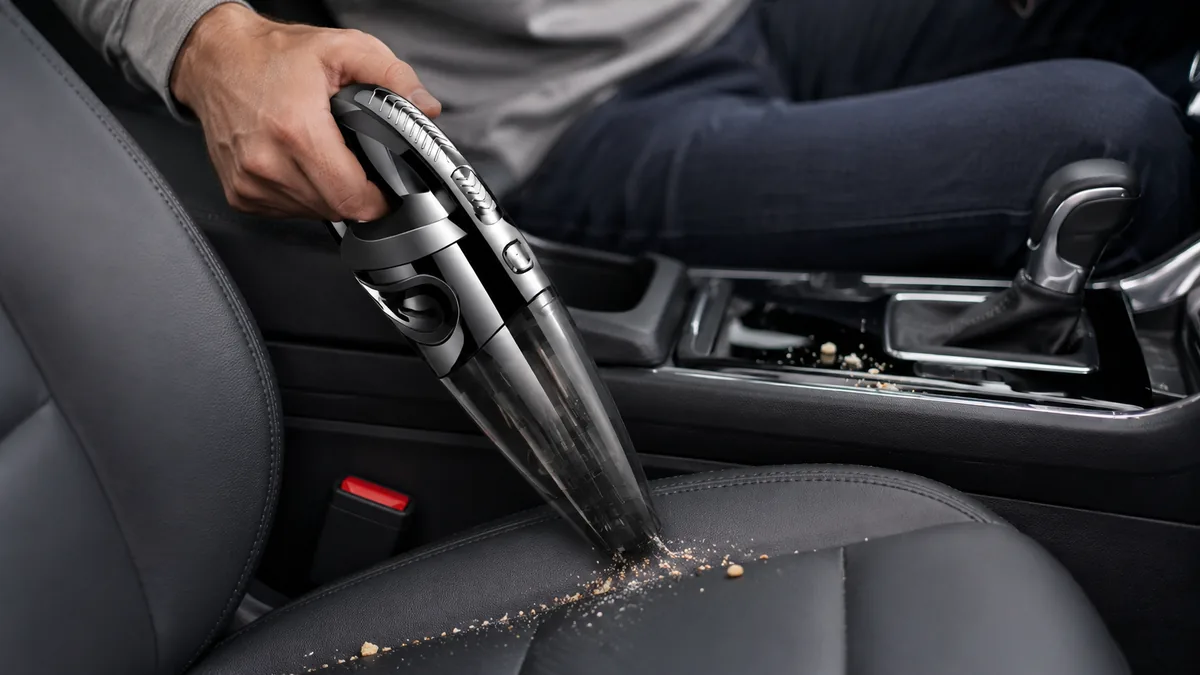
That is usually enough for routine use. If crumbs keep collecting in seat seams or sand keeps tracking in from shoes, a compact vacuum becomes a practical add-on.
Quick Setup Comparison
| Option | Best for | Watch out for |
|---|---|---|
| Trash bin | Wrappers and receipts | Too small or hard to reach |
| Cable clips | Tidy charging paths | Blocking ports or vents |
| Portable car vacuum | Crumbs and seat seams | Weak reach or awkward storage |
| Seat organizer | Daily carry items | Shallow pockets spill back out |
Setup Checks That Matter
Choose the setup around your routine, not around the idea of “a cleaner car.” A good setup fits the way you drive, where you park, and what usually lands on the floor. It should make the next small cleanup easier, not add another item that needs its own storage spot.
- Check whether your mess is mostly trash, crumbs, dust, or tracked-in grit.
- Check where the item can live without blocking a seat, port, or cup holder.
- Check dashboard fit so any mount or holder stays clear of controls.
- Check cable routing so cords do not press against edges or snag on bags.
- Check whether you can reach the tool in under ten seconds.
Where a Gadget Can Help
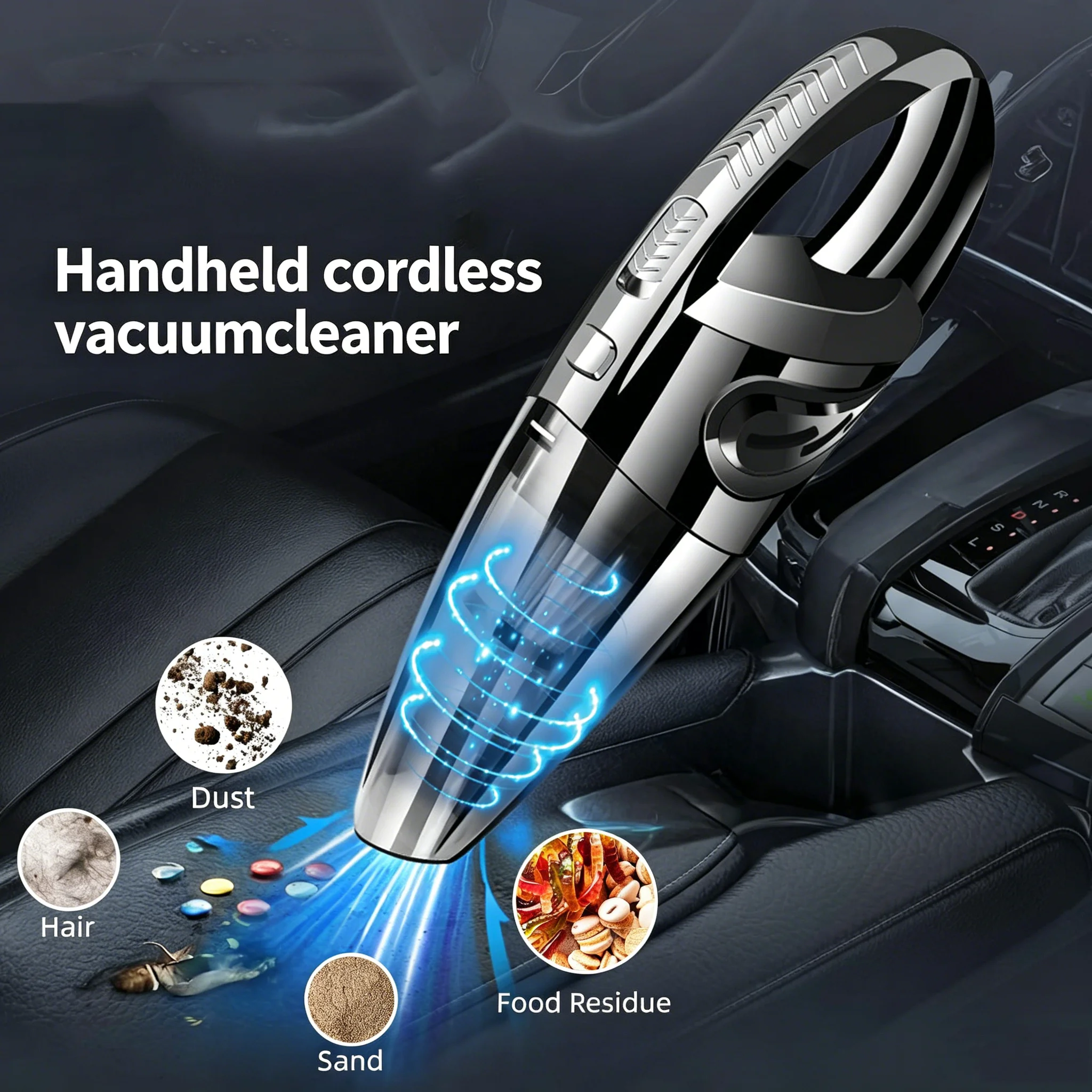
Gadgets help when the problem is repeated cleanup in the same tight spots: seat seams, floor edges, console corners, or dashboard dust that keeps coming back. A portable car vacuum is one example of a practical tool for that kind of cleanup, especially if crumbs and grit are the main annoyance. Who should skip this: drivers who mainly need better storage habits, a better trash spot, or safer cable routing.
One AliExpress example that matches this tool type is included below. Use it as a reference point, then check the listing details, compatibility, and fit yourself.
What to Avoid
- Buying cleanup gear before fixing storage. If trash has nowhere to go, messes return fast.
- Pushing cables through the wrong path. A cord that crosses a gear selector becomes annoying and unsafe.
- Choosing shallow pockets. They look neat until receipts and chargers spill out.
- Blocking vents or ports. A clip that blocks access gets removed and stops being used.
- Storing tools too far away. If it lives in the trunk, you will not use it for quick resets.
Practical FAQ
What is the fastest way to keep keeping small car messes from turning into a weekend cleaning job?
Give every common item one place: trash, cables, receipts, and loose change. Then do a short reset after busy drives. That habit prevents the mess from spreading into seats, seams, and floor edges.
When is a gadget worth adding?
Add a gadget when the same tiny mess keeps returning in the same place. A portable car vacuum makes sense for crumbs, dust, and tracked-in grit. If the issue is clutter and nowhere to put things, fix the storage first.
Who should skip it?
Skip it if you rarely deal with dirt and the real problem is disorganized storage. Also skip it if dashboard fit, cable routing, or mounting would make the setup awkward in daily driving.
How do I know if my setup is too complicated?
If a simple task takes two hands, several steps, or a long reach, it is too complicated. The best setup is the one you can use while getting out of the car without thinking about it.
Affiliate Note
Some pages may include affiliate links or product cards. Those do not change the advice here: fix the routine and layout first, then consider a tool only if it matches the problem.