A Simple Repair Setup for Small Fixes Around the Home
Quick Answer
If your home repair, garage corner, or yard job keeps turning into guesswork, the simplest non-product fix is to mark one starting point, use a tape for short runs, and clear the line of sight before measuring. A construction laser measuring tool rangefinder, or laser distance meter, helps when you need faster repeated measurements across storage space, uneven yard layouts, or awkward corners. Skip it if you only measure once in a while or if your setup is too cramped for a steady aim.
- Best for: Repeated measuring in garages, storage rooms, and yard layouts.
- Skip if: You only need occasional short measurements.
- Check first: Sight line, target surface, and whether a tape already solves it.
Who This Helps Most
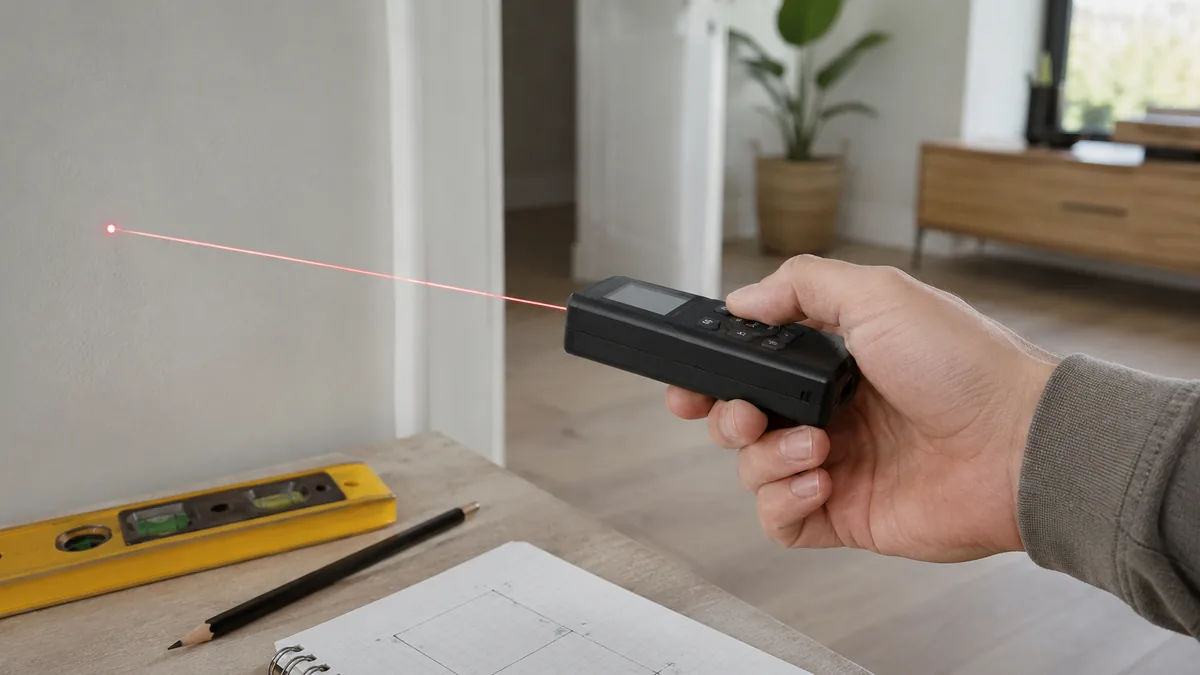
This is for the person trying to set shelves in a garage corner, figure out clear space around a workbench, or estimate a run across a yard without dragging out a long tape every time. It also fits anyone dealing with storage space where one box sits too close to another, or where a wall, post, or parked bin breaks the measuring line.
- A shelf or bracket needs to sit level, but the wall is interrupted by trim or a pipe.
- A garage corner is crowded, and a tape keeps bending around tools or a ladder.
- A yard path or boundary needs a quick distance check before small repairs or layout changes.
- A storage area has awkward depth, and a shallow pouch or narrow shelf makes tools hard to position cleanly.
- A cord, extension lead, or hose keeps pressing against the edge of the area you are trying to measure.
Why This Gets Messy
The annoyance usually starts with the setup, not the measuring tool. Small home repair spaces are rarely flat, clear, or easy to stand in. Corners crowd the line of sight, surfaces differ in height, and a tape can slip, bow, or disappear behind something you meant to measure from.
That is where a laser distance meter starts to make sense. It reduces the need to stretch across obstacles, and it is useful when you want the same reading again and again from one point. But the gadget only helps if the space allows a clean aim. If you cannot see the target or hold the tool steady, the problem stays the same.
A Practical Setup Sequence
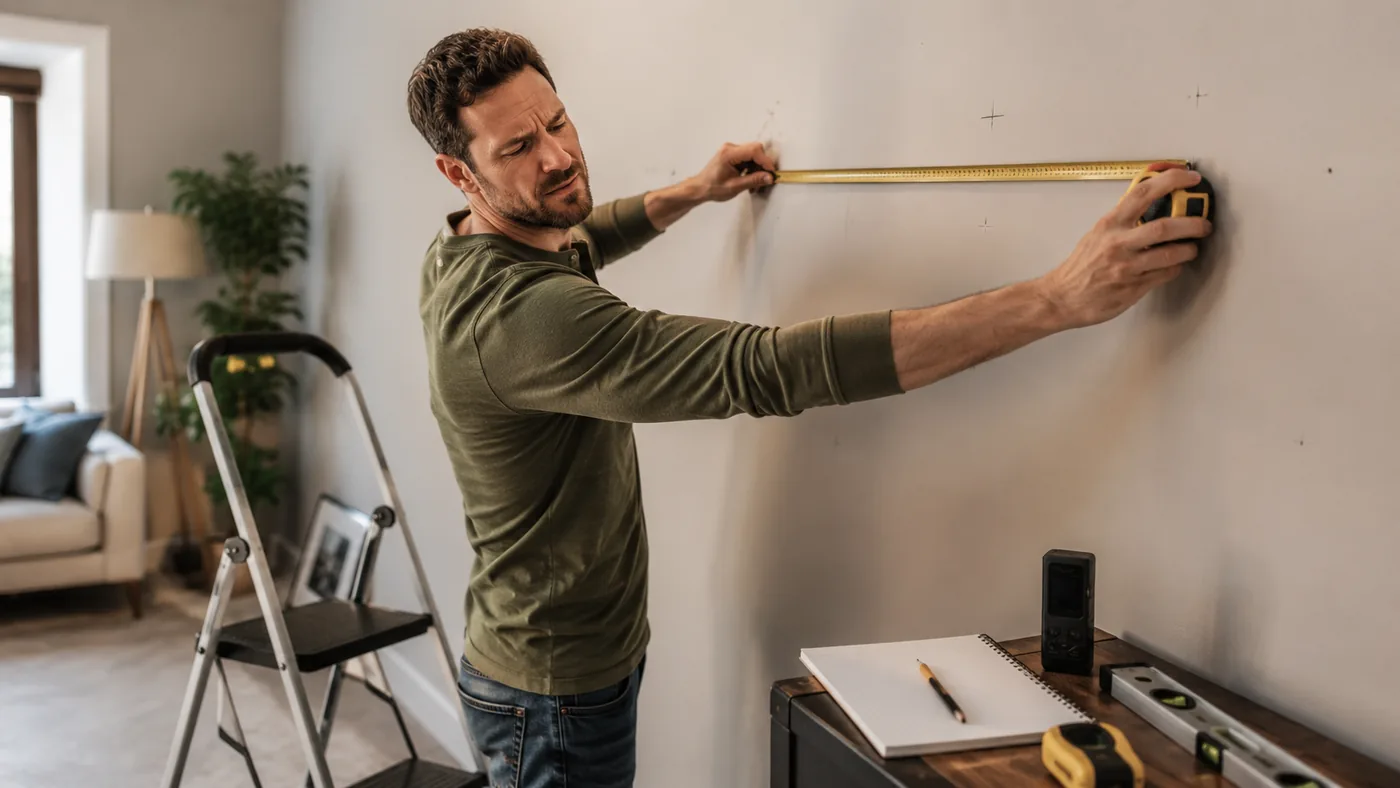
- Mark the exact start point with tape, chalk, or a pencil line.
- Clear the direct path by moving bins, cords, and loose tools aside.
- Measure once with a tape for short, simple spans.
- Compare the result with the real space, including trim, corners, and clearance.
- Choose a laser distance meter only if repeated readings save time or reduce awkward reaching.
- Store the tool where it is easy to grab, not buried behind stacked boxes.
A concise checklist helps:
- Is the target visible from your standing position?
- Will the surface reflect or absorb the beam poorly?
- Do you need one measurement or many?
- Can a tape, ruler, or marked string solve it first?
Quick Setup Comparison
| Option | Best for | Watch out for |
|---|---|---|
| Tape measure | Short, simple jobs | Fumbles in tight corners |
| Laser distance meter | Fast repeated readings | Needs clear aiming |
| Marked string | Rough yard layouts | Less precise finish |
| Combination setup | Mixed repair tasks | More pieces to manage |
Setup Checks That Matter
Pick the method that fits your routine, not the one that looks clever. A practical setup is the one you can reach quickly, aim cleanly, and store without cluttering the shelf or toolbox.
- Measure how often the job repeats across the same area.
- Check whether corners, posts, or bins block a straight line.
- Confirm you can hold the tool steady at the needed distance.
- Make sure storage space is dry, visible, and easy to grab from.
- Watch for setup safety, especially around ladders, tools, and loose cords.
One Tool Type to Consider
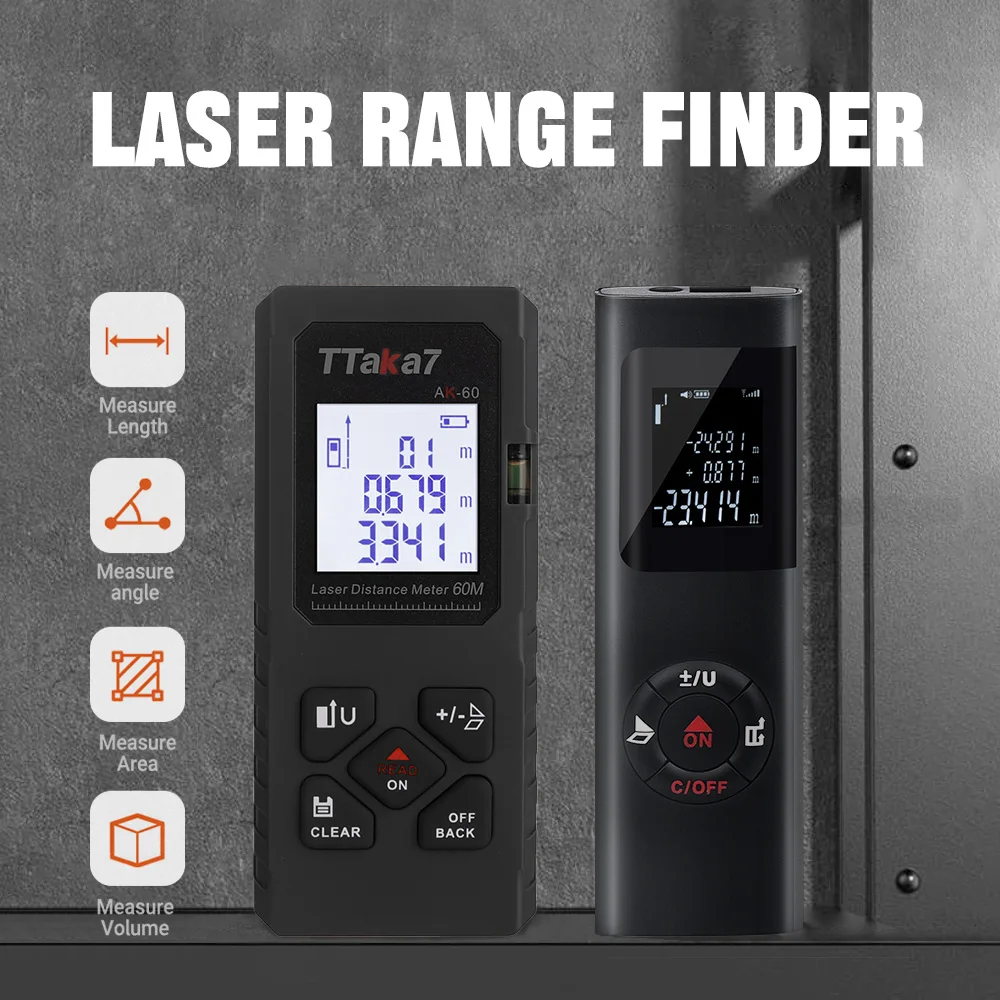
Gadget help makes sense when the measuring task is repetitive, the space is awkward, or the line of sight is hard to manage. In those cases, a laser distance meter can be a practical reference point for comparing features, range, and ease of use. A construction laser measuring tool, including a 40M/60M portable rangefinder style for indoor or outdoor layout work, is one example of that type.
Who should skip this: If your measuring is rare, short, and already covered by a tape, the added device is usually unnecessary.
One AliExpress example that matches this tool type is included below. Use it as a reference point, then check the listing details, compatibility, and fit yourself.
What to Avoid
Most failed setups come from solving the gadget question too early. The fix is often placement, not purchase.
- Buying a laser tool before checking whether the target is easy to see.
- Trying to measure through clutter instead of clearing the line first.
- Using a laser for every job, even short spans where a tape is faster.
- Ignoring storage and leaving the tool buried behind bulky items.
- Forcing a measure from a shaky stance near a shelf edge or ladder step.
- Picking a tool without considering reflective surfaces, bright light, or yard glare.
That cable pressing against the wall, the charger falling behind a shelf, or the pouch that is too shallow to close properly are all signs of a setup problem. Fix those first. A gadget cannot compensate for a bad routine.
Practical FAQ
Is a laser distance meter practical for home repair work?
Yes, when you need repeatable measurements in a garage corner, storage area, or yard layout. It is especially useful where a tape measure bends, slips, or is awkward to read.
When is a gadget worth adding to the setup?
It is worth adding when you measure often, work alone, or keep running into access problems. That is where a laser distance meter can save small frustrations, especially in tight repair spaces.
Who should skip it?
Skip it if you only measure occasionally, work on short spans, or already have a tape and a clear routine. In that case, the extra tool adds little.
What is the best first fix before buying anything?
Clear the measuring path, mark the start point, and test the job with a tape or string first. That simple setup solves more problems than a new tool does.
Disclosure Note
Some informational articles may mention product types as examples, but no recommendation here is based on a hands-on test of a specific listing. If a gadget helps, treat it as one possible tool in a larger setup, not the whole solution.