Car Too Hot After Parking? What a Windshield Sunshade Can and Cannot Do
Opening a car after it has been parked in summer sun can feel like opening an oven. The air is uncomfortable, but the steering wheel, dashboard, buckle, and seats may be the parts that make the first few minutes especially unpleasant.
A windshield sunshade can reduce some of the solar energy reaching the front of the cabin. It cannot make a parked car safe for a child, pet, or anyone else, and it will not keep the whole interior cool. The useful question is narrower: can it make the front surfaces less punishing and shorten the uncomfortable part of your return?
Safety comes before cabin comfort
No sunshade, cracked window, or shady parking space makes it acceptable to leave a child or pet in a parked vehicle. The National Highway Traffic Safety Administration says never to leave a child unattended in a vehicle for any length of time and warns that rolling down the windows or parking in shade does little to change the danger. The CDC gives the same basic instruction: never leave children in a parked car, even with the windows open.
That warning is not at odds with using a shade for comfort. A shade may reduce solar load on the dashboard and steering wheel, yet the cabin can still become dangerously hot. Think of it as a barrier for one large piece of glass, not climate control.
Before locking the car, check the full cabin, take children and animals with you, and secure the vehicle so a child cannot enter it while playing. If you see a child alone in a locked hot car, follow local emergency guidance and call emergency services immediately.
Why the front of a parked car gets so uncomfortable
Sunlight passes through the glass and is absorbed by darker interior surfaces. The dashboard, steering wheel, seats, and trim then warm the surrounding cabin. The exact result changes with cloud cover, outside temperature, vehicle color, glass area, parking direction, and the time left in the sun.
A study published by the Florida Solar Energy Center monitored parked vehicles and found that a conventional cardboard windshield shade reduced interior air temperature by an average of 15°F under its sunny test conditions. That is useful evidence that blocking the windshield can help, but it is not a promise for every vehicle or every day. Test methods, shade design, and local weather all matter. See the Florida Solar Energy Center report.
The most realistic benefit is often local: less direct solar exposure on the dashboard, steering wheel, and front seats. Side windows, the roof, rear glass, and the body still receive heat, so the cabin may remain very hot.
Try these free steps before buying anything
A shade works best as one part of a routine. Start with the steps that cost nothing.
- Use real shade when practical. A garage, carport, or tree shadow can reduce direct solar exposure, although shade can move while you are away.
- Consider the parking direction. If two spaces are otherwise equal, keeping the front windshield out of the strongest afternoon sun can reduce the load on the dashboard.
- Remove vulnerable belongings. Take phones, power banks, cameras, medicines, food, and aerosol products with you when their labels or makers warn against high storage temperatures.
- Cover the touch points. A light-colored towel over the steering wheel or a dark seat can reduce direct sun on that surface. Remove it before driving.
- Let the trapped air out on your return. Open the doors or lower the windows briefly before settling in. Keep the car stationary while you arrange the cabin and make sure your view and controls are clear before moving.
- Use the climate system as designed. Follow the vehicle manual. If the air conditioning is weak, noisy, or no longer cools normally, a shade is not a repair.
AAA recommends parking in shade and releasing trapped hot air before asking the air conditioner to finish cooling the cabin. Its guidance also describes briefly opening a window and moving the opposite door to help exchange air. Read AAA’s efficient cooling advice.
What a windshield sunshade can—and cannot—do
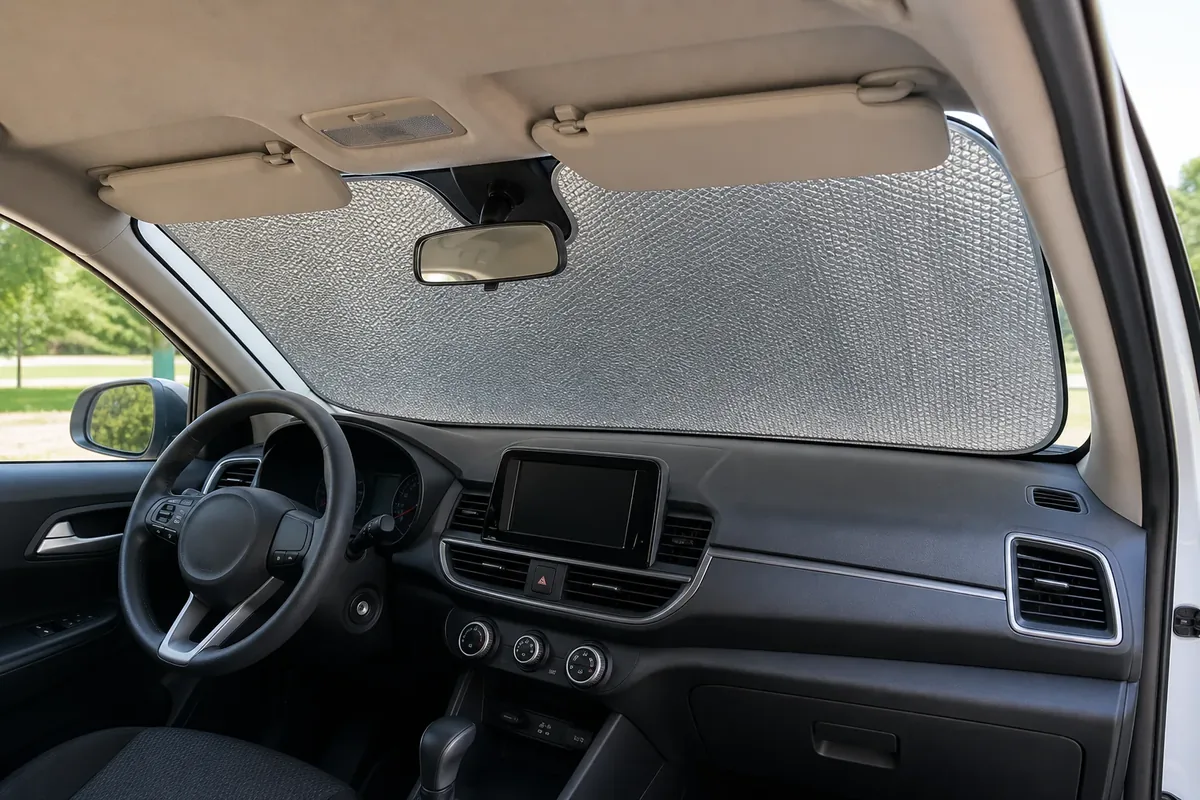
A reflective or opaque panel interrupts sunlight that would otherwise strike the front dashboard and seats. A close fit usually blocks more of the windshield than a small panel with wide gaps. A shade that folds quickly and stores within reach is also more likely to become part of the parking routine.
Its limits are just as important:
- It does not actively cool the air.
- It covers only the glass area it actually blocks.
- It does not stop heat entering through the side and rear glass, roof, or body.
- It does not replace working air conditioning or mechanical repairs.
- It does not protect a person or animal left in the vehicle.
- It must be removed completely before the car moves.
If the windshield spends most of the day in a garage or faces away from direct sun, the improvement may be too small to justify another item to unfold and store. A product is worthwhile only if it solves the repeated part of your routine.
Measure the car, not the product photo
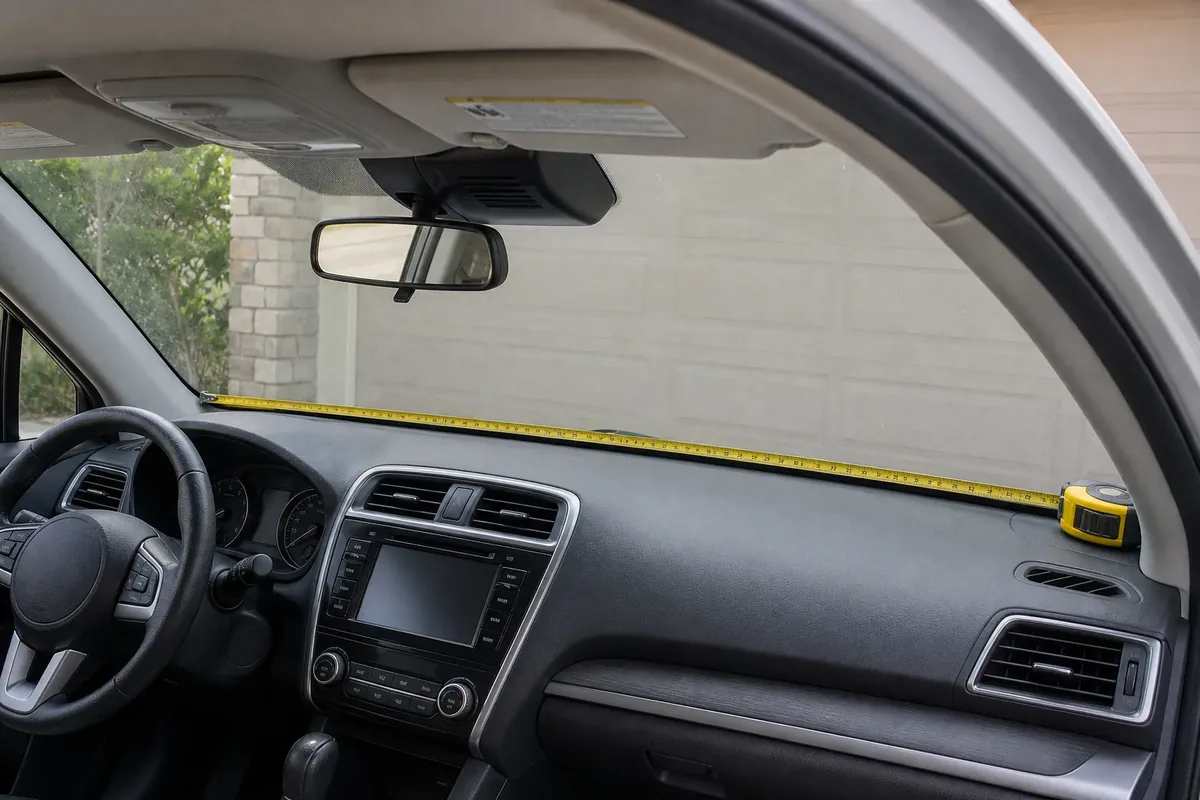
Labels such as compact, sedan, SUV, and universal are not measurements. Windshield proportions vary, and modern cars may have large mirror mounts, camera housings, toll tags, dashcams, head-up-display areas, or dashboard screens near the glass.
With the vehicle parked, measure the usable interior width near the lower windshield and the height from the dashboard edge to the headliner. Then check:
- Rear-view mirror area: Is there a notch, overlap, or split that can fit around the mount?
- Sensor and camera housing: Will the shade sit without forcing, scraping, or hanging from the housing?
- Dashboard clearance: Can the lower edge rest without pressing a screen, speaker, dashcam cable, or loose accessory?
- Sun-visor support: Can the visors hold the top edge without excessive tension?
- Storage size: Will the folded shade fit in a door pocket, seat-back pocket, trunk organizer, or another consistent place?
Choose dimensions that match the measured glass rather than the largest option available. A panel that is slightly flexible can tolerate small differences; one that bunches heavily, sags onto equipment, or leaves large uncovered bands is a poor fit.
Which style fits the routine?
A simple folding panel is easy to understand and has no rigid handle extending over the dashboard. Spring-frame shades collapse smaller but take a little practice to twist and store. Accordion panels are quick to fold but occupy a longer storage space. Umbrella-style shades can open quickly, yet their ribs, central joint, and handle add more points that must clear the mirror, screen, and dashboard.
None of these styles is automatically best. Favor the design you can place flat, remove without snagging equipment, and store without leaving it loose near the pedals. If a seller does not provide useful dimensions, the listing has not given you enough information to choose confidently.
A current foldable-shade example
Affiliate disclosure: This section contains an affiliate link. If you buy through it, GadgetPickLab may earn a commission at no extra cost to you. The product below is a marketplace example, not a hands-on-tested endorsement.
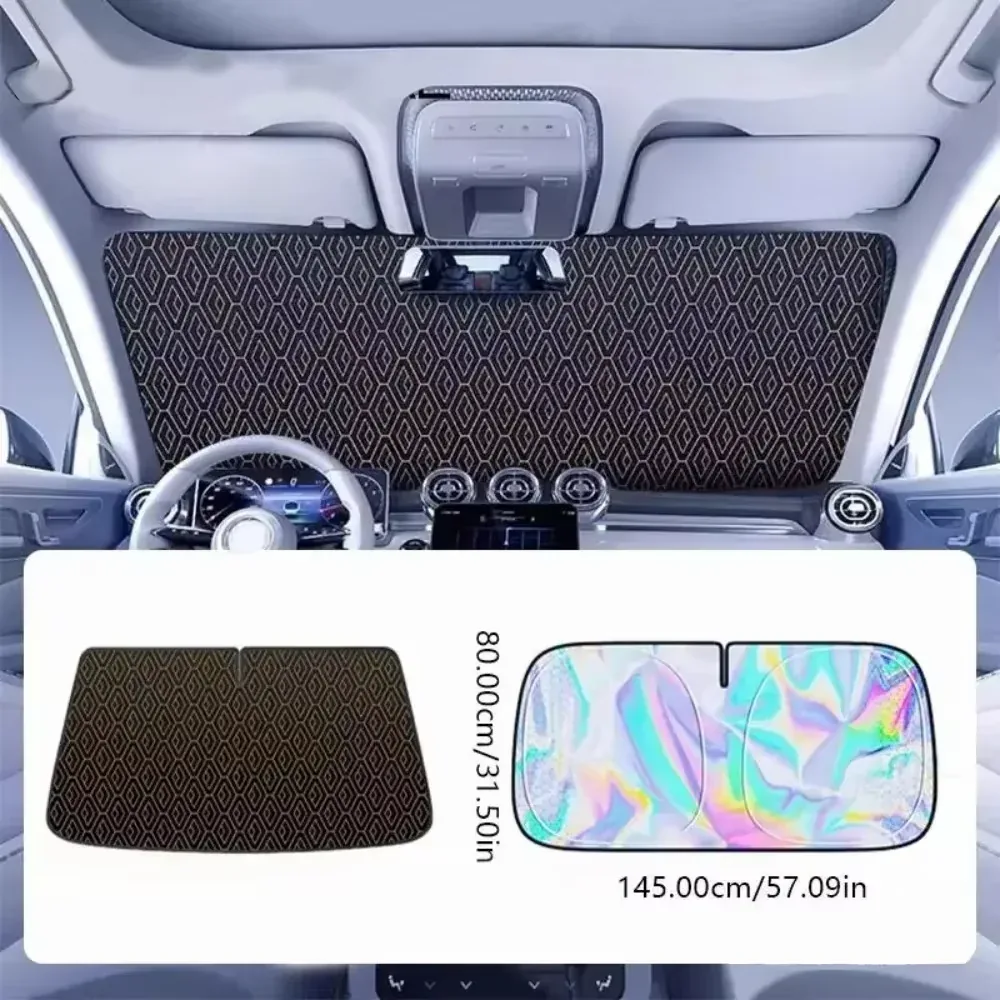
Foldable windshield shade with mirror notch
The reviewed listing image shows a flexible front-windshield panel, a center notch, a storage pouch, and one version labeled 145 × 80 cm (57.09 × 31.50 in). The marketplace title calls it a five-layer shade, but that construction and its thermal performance were not independently verified.
- Listing snapshot checked: July 30, 2026
- Marketplace signals displayed: 12,355 orders and a 98.0% positive rating
- Still verify: the exact selected size, windshield measurements, mirror and sensor clearance, included pouch, shipping cost, taxes, return terms, and current seller rating
- Do not assume: that the image’s 145 × 80 cm label applies to every option in the listing
Check current sizes and options on AliExpress
Options, dimensions, price, discount, order count, rating, availability, shipping, and included parts can change after the research date.
This example makes sense only if its real dimensions match your glass and you prefer a conventional flexible panel. A high order count does not prove fit, durability, or temperature reduction in your car.
Use it without creating a new problem
- Park, switch the vehicle off, and make sure it cannot move.
- Unfold the shade inside the cabin and position the lower edge gently.
- Fit the notch around the mirror mount without pulling on wires or a sensor housing.
- Use the sun visors to support the top only if that matches the shade instructions.
- Do not force the panel against a dashcam, display, or accessory.
- On return, remove and fold the shade before starting to drive.
- Store it where it cannot slide into the driver’s footwell.
Stop using a shade if a sharp edge, broken frame, exposed wire, or failing fastener could scratch the glass or interior. A bulky product left loose on a seat or floor can become a different kind of nuisance.
Common questions
Should the reflective side face outward?
Follow the product instructions. Many reflective shades are designed with the reflective face toward the windshield, but reversible or multilayer products may use a different arrangement. The seller’s photos are not a substitute for the instructions supplied with the exact option.
Is a windshield shade enough for all-day parking?
No. It may reduce direct solar load through the front glass, but the rest of the vehicle continues to gain heat. Never use it as a reason to leave a person or pet inside.
Should I crack the windows while the car is parked?
A small opening is not a hot-car safety measure and may add security or weather risks. NHTSA specifically warns that cracked windows do not prevent deadly interior conditions. Make that decision according to local security, weather, and vehicle guidance—not as a substitute for taking every occupant with you.
What if the air conditioning still takes too long?
Release trapped hot air before driving and use the climate system according to the owner’s manual. If airflow is weak, the air never becomes cool, or the system behaves abnormally, have the vehicle inspected. A windshield accessory cannot repair the cooling system.
The useful decision is simple
Buy a windshield sunshade when direct sun through the front glass is a repeated problem, the measured dimensions fit, the shade clears the car’s equipment, and you will use it consistently. Skip it when real shade and a short ventilation routine already solve the discomfort or the listing cannot confirm fit.
The honest expectation is not a cool parked car. It is less direct sun on the front cabin, a more manageable steering wheel and dashboard, and a slightly easier start to the cooling process—while the vehicle remains empty and safely parked.