Shoes Still Wet? How to Dry Them Faster Without Damaging the Fit
Wet shoes create an awkward deadline. You may need the same pair for work, school, or a run the next morning, but forcing heat into the upper can trade one inconvenient night for warped materials, weakened adhesive, or a changed fit.
The useful goal is not “maximum heat.” It is to remove free water, open the shoe, expose the damp interior to moving air, and give each material the gentlest drying method its maker allows.
What to do in the first ten minutes
The first few minutes are for removing water that does not need to evaporate. That shortens the job without raising the temperature.
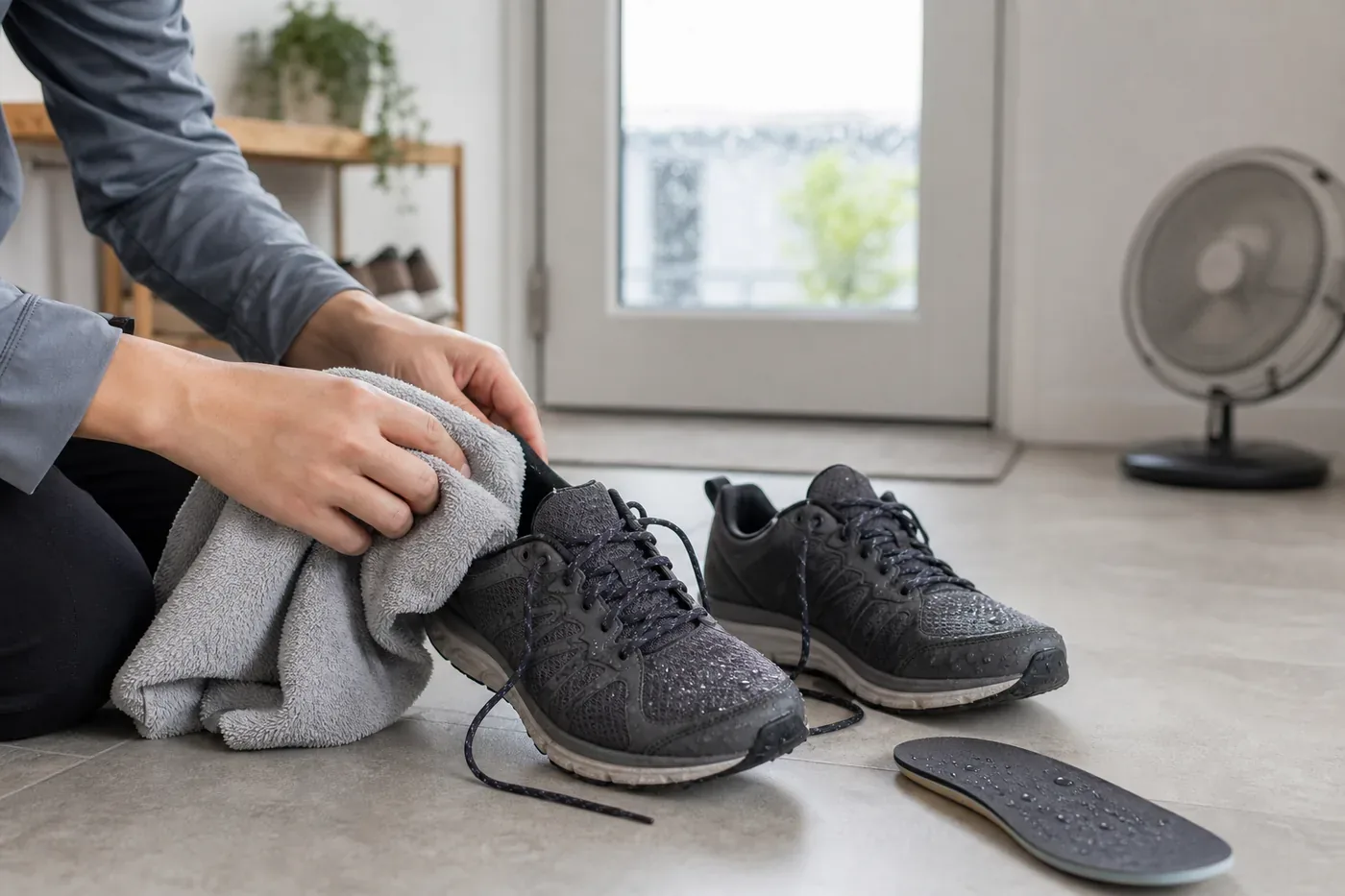
- Take the shoes off a wet floor or sealed bag. Put them on an absorbent towel where water cannot damage the surface underneath.
- Blot instead of scrubbing. Press a clean towel against the upper and around the collar. Aggressive rubbing can push dirt deeper into mesh or change the nap of suede.
- Remove detachable insoles. Drying them separately exposes the damp footbed and the space underneath it.
- Loosen or remove the laces. Pull the tongue forward so air can reach the toe box.
- Remove loose mud. If the shoes are dirty, follow the maker’s cleaning instructions before letting mud harden into the material.
Nike’s shoe-drying guidance recommends removing insoles, loosening laces, and placing shoes in a dry, well-ventilated indoor area. Its running-shoe cleaning guide also recommends blotting moisture with a dry microfiber towel or soft cloth. See Nike’s guide to drying shoes and Nike’s running-shoe care steps.
Build airflow before adding heat
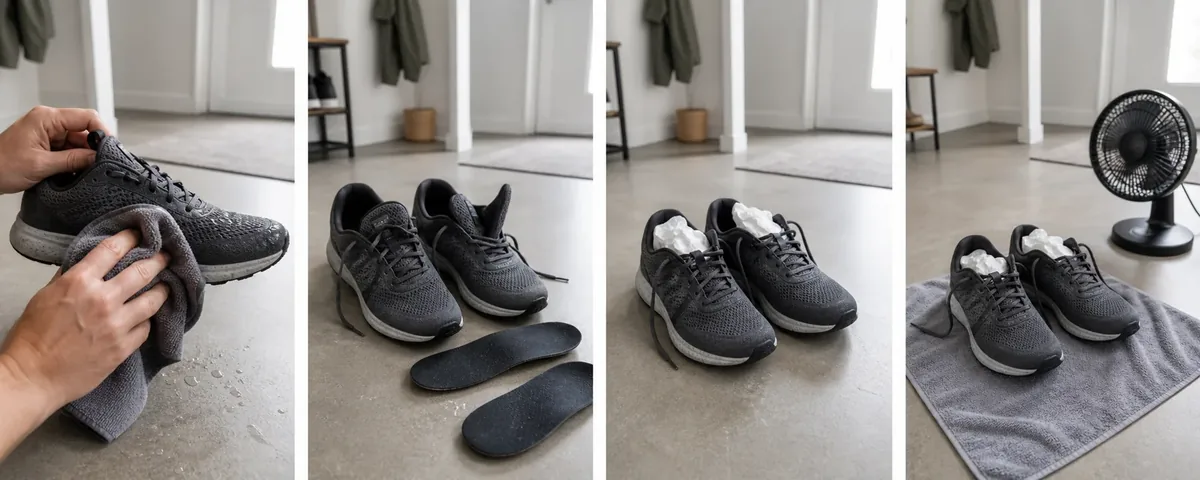
A fan helps because it replaces the damp air sitting around the shoe with drier room air. It does not need to blast the upper at close range. Place the opened shoes on a towel with space between them, aim a room fan so air can move through and around them, and keep the setup away from direct sun or a hot vent.
Brooks advises stuffing wet shoes with plain newsprint and air-drying them in a cool room away from a dryer, heater, sunlight, and excessive heat. ASICS similarly advises drying shoes in a well-ventilated shaded location rather than using a hair dryer, heater, or stove. See Brooks’ shoe-care instructions and ASICS’ material-specific shoe-care guidance.
Use stuffing for absorption, not permanent packing
Plain paper can pull moisture from the toe box and help a soft upper keep its shape. Use unprinted white paper, plain newsprint, or clean paper towels when color transfer is a concern. Insert it loosely. A tightly packed toe can slow airflow and distort the shape you are trying to preserve.
Check the paper after the first 30 to 60 minutes. If it feels soaked, replace it. Once the shoes are no longer saturated, reduce the stuffing or remove it so air can circulate inside. Leaving wet paper in place all night simply keeps a damp object pressed against the lining.
A clean, dry washcloth can work when paper is unavailable, but thick fabric holds a lot of water and may need changing more often. Avoid colored newspaper against light linings because ink may transfer.
Why direct heat is the risky shortcut
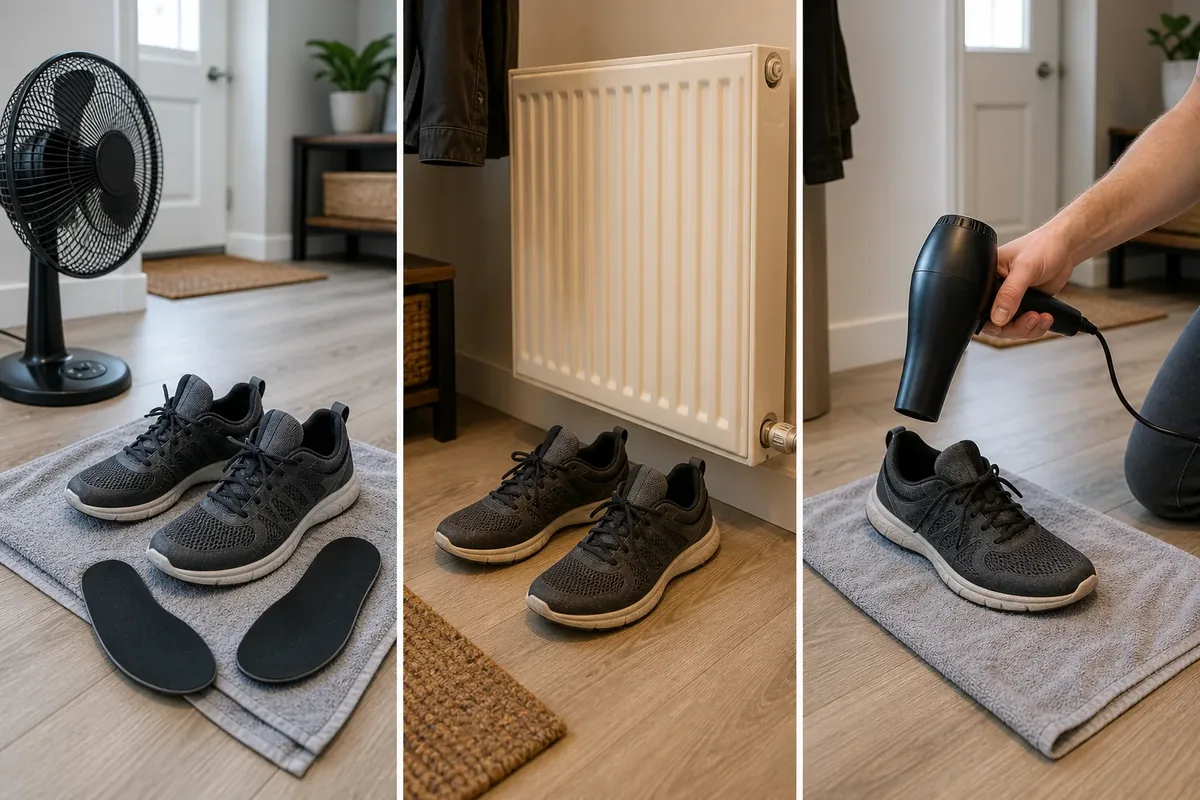
High heat can affect more than the visible fabric. Athletic shoes may combine mesh, foam, rubber, synthetic overlays, lamination, and adhesive, and those parts do not necessarily tolerate the same temperature. Nike warns that tumble-dryer heat can shrink shoes and damage the glue used in their construction. ASICS says direct heat can alter the shape of a shoe.
- Tumble dryer: heat and tumbling can affect shape and construction.
- Radiator or space heater: one side may receive concentrated heat while the interior remains damp.
- Hair dryer at close range: the temperature and distance are difficult to keep consistent across glue, foam, and fabric.
- Direct midday sun: may expose the upper to unnecessary heat and color change.
- Closed shoe cabinet or gym bag: traps humid air instead of letting it leave.
If the manufacturer provides a drying rack for a clothes dryer or approves a particular low-heat method for that exact shoe, follow those instructions. General internet advice should not overrule the care directions for the pair in front of you.
The material changes the answer
Mesh running shoes
Open the tongue, remove detachable liners, blot the upper, and prioritize airflow. Foam can remain damp after mesh feels dry, so do not judge the whole shoe by the surface alone.
Leather and suede
These materials require their own cleaning and conditioning methods. Do not assume a process that suits washable mesh is safe for finished leather or suede. Blot water, support the shape, use ventilation, and consult the shoe maker before applying cleaners, heat, or a powered dryer. A specialist may be the sensible choice for expensive footwear.
Waterproof shoes and boots
A waterproof upper can also slow evaporation from the inside. Remove the insole if the maker allows it, open the boot fully, and expect more time. Check the membrane and footwear instructions before inserting a heated device.
Shoes with lights, batteries, or electronics
Do not connect or charge wet electronics. Follow the product’s own water-exposure and drying instructions, and keep powered drying equipment away unless the manufacturer explicitly says the combination is safe.
Can wet shoes really dry overnight?
Sometimes, but “overnight” is not a reliable drying specification. A lightly damp mesh trainer in a dry room with good airflow may be ready by morning. A saturated foam midsole, padded boot, waterproof lining, or humid room can take much longer. Nike notes that its newspaper method may take around 12 hours, while Brooks cautions that some wet running shoes may take a couple of days.
Before wearing the pair, check the toe box, seams, area beneath the insole, and heel padding. Reinsert the insole only when both it and the footbed feel dry. If one area is still cool and damp, rotate to another pair rather than hiding the moisture under a sock.
When a powered shoe dryer becomes reasonable
A powered dryer is not the first requirement for one rainy walk. It becomes easier to justify when shoes, work boots, ski boots, or children’s footwear get wet repeatedly and the household lacks a consistently ventilated drying area.
Before using one, verify all of the following:
- the footwear maker permits the device’s drying method or temperature;
- the dryer has the correct plug and voltage for your country;
- the selected listing variant includes the controls and parts shown;
- the arms or inserts fit without forcing the shoe out of shape;
- the vents, cord, plug, and control unit are dry and undamaged; and
- you can follow the exact timer, placement, clearance, and supervision instructions supplied with the device.
Do not treat “overnight” as permission to leave a heating appliance running unattended. Use only the cycle and supervision described by the manufacturer, and stop if the shoe or device becomes unusually hot, smells electrical, or shows damage.
A current foldable shoe-dryer example
Affiliate disclosure: This section contains an affiliate link. If you buy through it, GadgetPickLab may earn a commission at no extra cost to you. The product below is a current marketplace example, not a hands-on-tested endorsement.
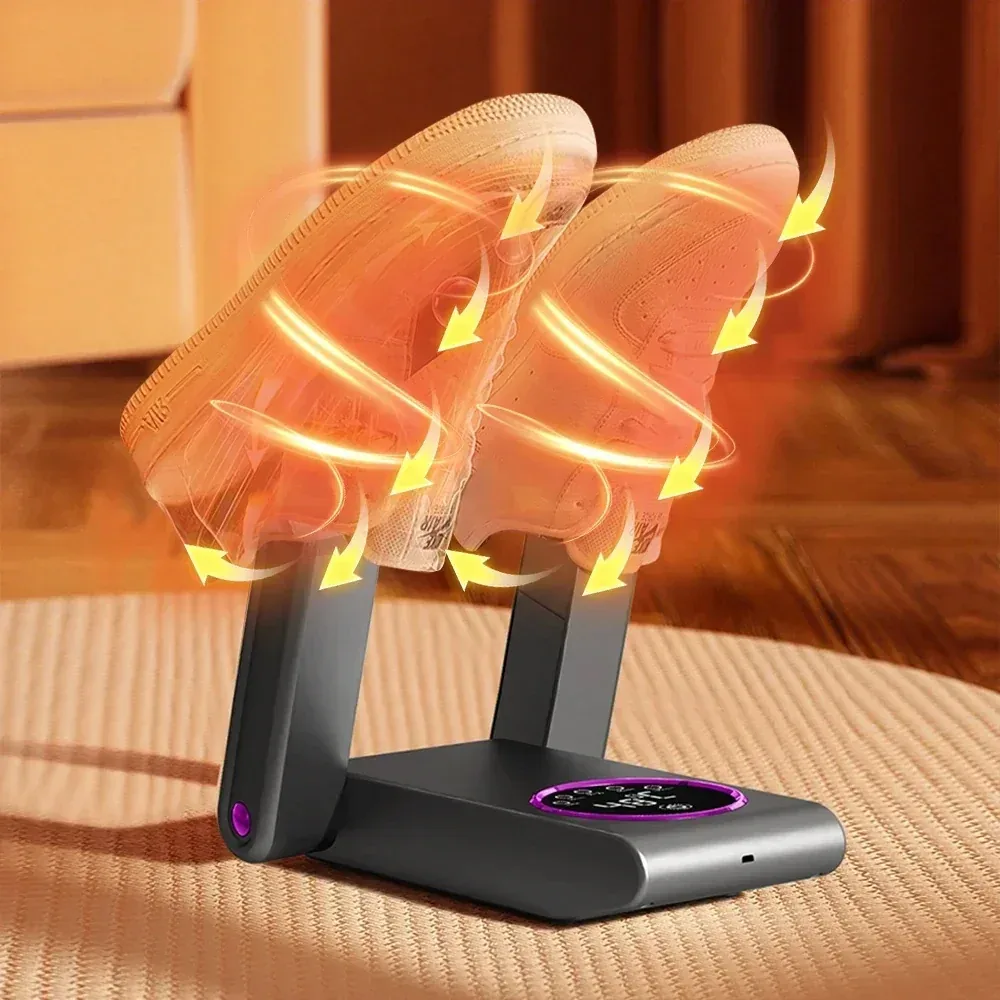
Foldable electric shoe dryer with timer control
The listing image shows a foldable base, two extendable drying arms, and a circular timer-style control. It also uses glowing arrows to illustrate airflow or heat; those graphics are seller marketing, not independent evidence of drying speed, temperature, sterilization, or odor removal.
- Listing snapshot checked: July 30, 2026
- Marketplace signals displayed: 121 orders and a 98.0% positive rating
- Price display during research: a 52% discount from a US$61.25 reference price; live price depends on the selected option
- Still verify: country-specific plug and voltage, selected color or model, timer controls, operating temperature, included parts, footwear compatibility, shipping cost, and return terms
Check the current AliExpress listing
Price, options, plug type, voltage, order count, rating, availability, and included parts can change after the research date.
This type of dryer fits a repeated wet-footwear routine better than an occasional emergency. If a towel, removable insoles, fresh paper, and a fan already solve the problem, the appliance may add storage and electrical checks without adding much value.
A simple next-morning routine
- Blot, open, and separate the removable parts as soon as you get home.
- Use fresh absorbent paper during the saturated stage.
- Finish with open space and gentle room-air movement.
- Keep direct heat away unless the exact shoe maker approves it.
- Check the deepest padding before putting the insole back.
- If the pair is still damp, wear another pair and give it more time.
The best drying setup is the one that removes moisture without creating a new materials problem. For most wet sneakers, that begins with a towel, an open tongue, removable parts, and moving air—not a hotter appliance.
Common questions
Should I put rice inside wet shoes?
Loose rice is difficult to remove from seams and does not create airflow. Plain absorbent paper or a clean dry cloth is easier to replace and inspect.
Can I use newspaper in white shoes?
Printed ink may transfer to a light lining. Use plain newsprint, unprinted white paper, or white paper towels when staining is a concern.
Should the insoles go back in overnight?
Leave detachable insoles out until both the footbed and the insoles are dry. Reinstalling them early closes the dampest part of the shoe.
Will a shoe dryer remove odor?
Drying removes moisture, but a marketplace claim about deodorizing or sterilizing should not be treated as proven without reliable product-specific evidence. Clean the footwear according to its care instructions and treat the dryer primarily as a drying tool.