Sweater Covered in Pills? How to Remove Them Without Damaging the Knit
A sweater can look tired long before the knit is worn out. Small balls of tangled fiber collect under the arms, along the sides, and anywhere the fabric rubs against a desk, bag strap, or jacket. Removing them can make the surface look cleaner, but the wrong tool or too much pressure can turn a cosmetic problem into a pulled thread or hole.
The safest approach is to identify what is on the surface, start with the gentlest useful method, and only reach for an electric fabric shaver when the knit is stable enough for it.
First, make sure the problem is actually pilling
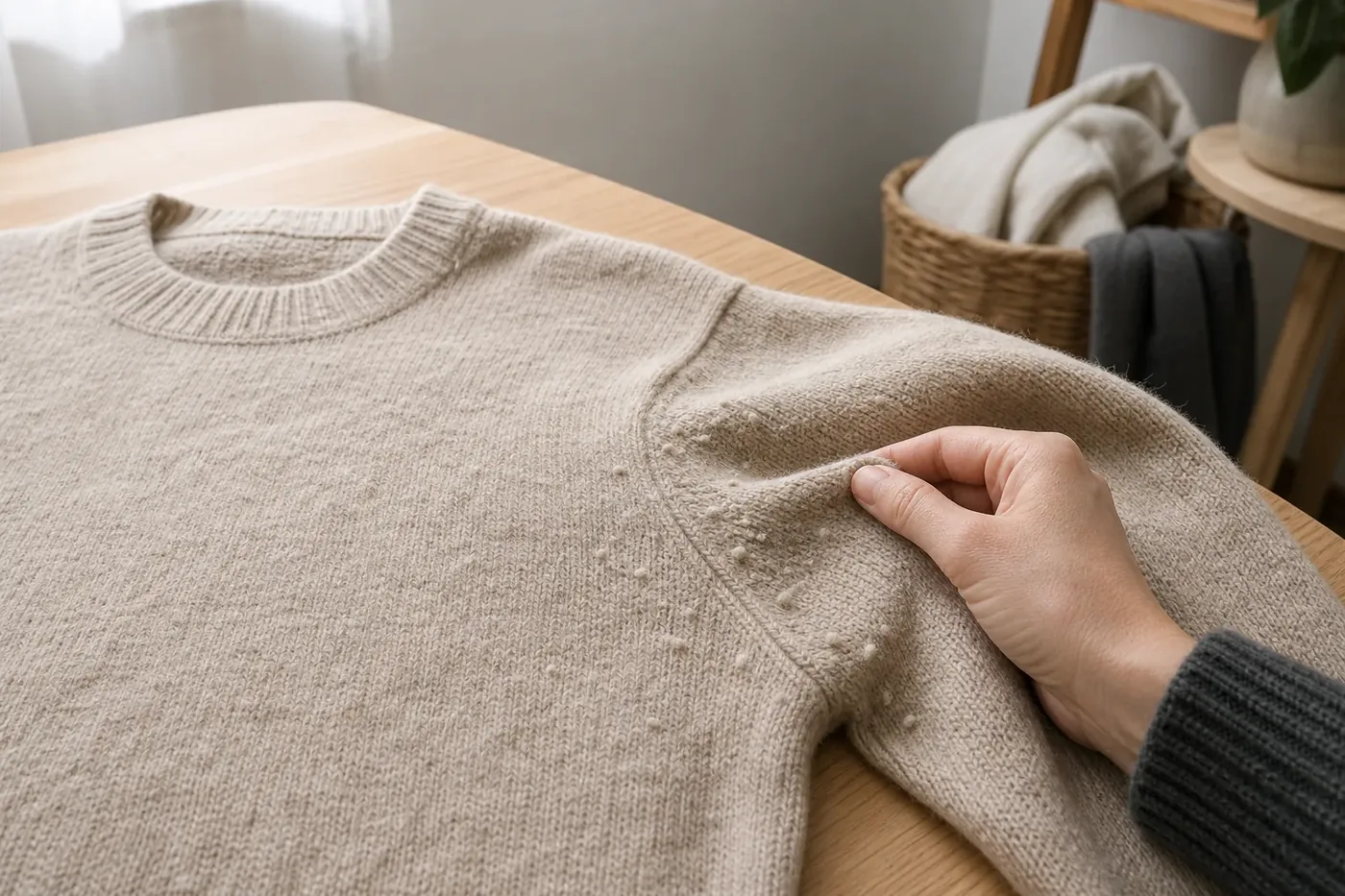
Pills are small balls of entangled fiber attached to the fabric surface. Woolmark explains that they form through rubbing and commonly appear at the elbows, underarms, sleeves, belly, and sides of a sweater. Fiber type, yarn construction, fabric structure, finishing, and normal use can all affect how readily a garment pills. See Woolmark’s explanation of pilling and CottonWorks’ fabric-durability guide.
Not everything raised from the surface should be shaved. Check the area in bright light:
- Loose lint or pet hair sits on top and can often be lifted with a lint roller or soft garment brush.
- True pills look like small fuzzy balls that remain attached to the surface.
- A snag is a pulled loop or long thread. Cutting or shaving it can enlarge the damage.
- A thin or shiny patch may mean the fabric itself is worn. Removing more fiber will not restore it.
If you see an open hole, a pulled loop, or a weakened patch, stop treating the area as a lint problem. Repairing the knit or asking a tailor is safer than trying to make the damage disappear with a blade.
Prepare the sweater before removing anything
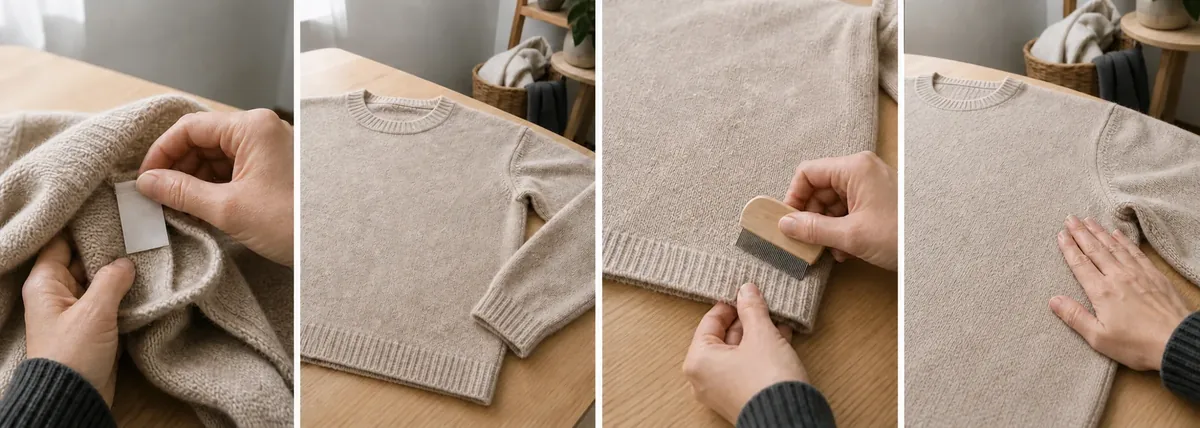
Preparation matters because a bunched sweater gives any comb or shaver an uneven surface to catch. Use this order:
- Read the care label. The maker’s cleaning and handling instructions take priority over general advice.
- Make sure the garment is clean and fully dry. Damp fibers can stretch and behave differently under a tool.
- Empty the pockets and close or move hardware away. Keep zippers, buttons, snaps, and decorative pieces outside the work area.
- Lay the sweater on a firm, flat surface. Straighten the seams without pulling the garment out of shape.
- Test a hidden section. Try the lightest possible pass near an inside hem or another inconspicuous spot and inspect the result before continuing.
Good lighting is more useful than speed. It lets you see whether a tool is removing surface pills or beginning to thin the knit underneath.
Start with the gentlest tool that fits the job
For loose fuzz: a lint roller or soft brush
A sticky roller will not remove every anchored pill, but it can lift hair and loose fibers that make the surface look worse than it is. Patagonia lists a lint roller as a gentle starting option for loose pills and recommends checking the garment’s care instructions before working. Its garment de-pilling guide also distinguishes rollers, combs, sweater stones, and fabric shavers by the kind of surface they address.
Pressing harder with sticky tape is not automatically better. If the knit stretches or fibers lift with the adhesive, stop and switch to a less aggressive method.
For a small pilled area: a sweater comb
Woolmark says a comb can remove pills but should be used gently and carefully. Keep the fabric flat, hold it steady without stretching, and make short, controlled strokes. Work with the visible surface direction rather than scraping back and forth.
A comb takes more time than an electric shaver, which can be an advantage on a soft knit. You can inspect the surface after every few strokes instead of removing fiber across a large area at once.
For a few isolated pills: careful hand removal
Woolmark notes that a small number of pills can sometimes be removed by hand. That does not mean yanking on a ball that is strongly anchored to the knit. Lift only what separates without pulling a loop or distorting the surrounding stitches. If the pill resists, use a suitable garment-care tool rather than increasing force.
When a fabric shaver genuinely helps
An electric fabric shaver becomes reasonable when many attached pills cover a broad, stable area and a lint roller or careful comb would take too long. A perforated guard holds the fabric away from rotating blades while cut fibers collect in a small container.
It is a better match when:
- the garment is fully dry and can lie flat;
- the knit is stable rather than very loose, lacy, or damaged;
- the pills are spread across a plain area away from hardware and decoration;
- you can test the device on a hidden section first; and
- you are willing to stop as soon as the surface looks even rather than chasing every last fiber.
Skip the shaver around embroidery, appliques, zippers, buttons, pockets, seams, loose threads, and raised decorative knitting. Philips’ official support guidance says to lay the garment flat, straighten it, and glide the appliance smoothly while avoiding zippers, buttons, loose threads, and embroidery. See Philips’ fabric-shaver instructions.
Use light passes instead of pressure
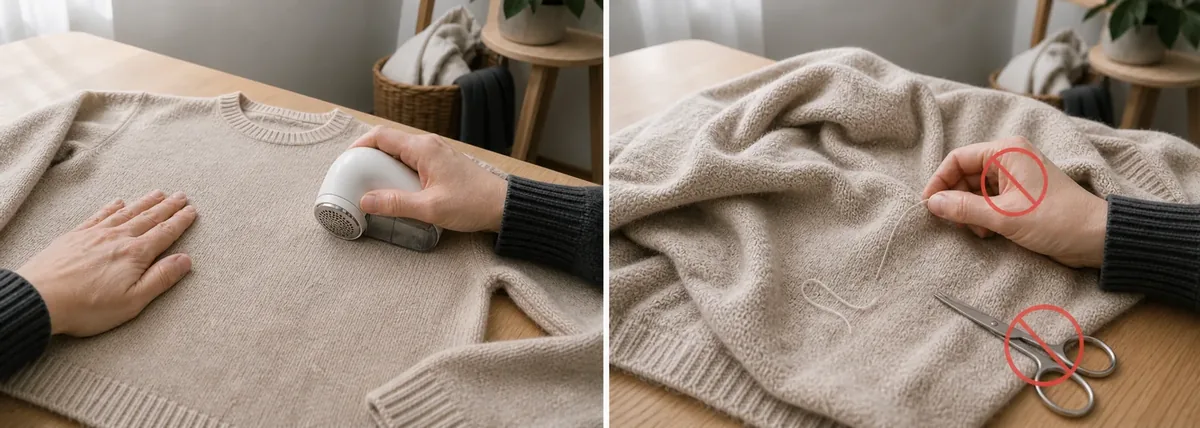
- Choose a plain test area. Stay away from seams, ribs, pockets, and trim.
- Smooth a small section flat. Use one hand to keep the fabric steady without stretching it thin.
- Set the guard or height conservatively. If the device has adjustment options, begin with the least aggressive setting described by its manual.
- Glide rather than press. Make one short pass, lift the device, and inspect the knit.
- Empty the container before it is packed. A full lint chamber can make the device less consistent.
- Stop at an even surface. A few tiny fibers are safer than repeated passes over an already thinned area.
Never operate the device with a damaged guard or while the cutting head is loose. Turn it off before opening the lint chamber or cleaning the blade area, and follow the instructions supplied with the exact model.
Delicate knits need a slower decision
Cashmere, merino, mohair, loosely knitted wool, textured stitches, and garments with fine decoration do not all behave the same way. The fiber name alone cannot tell you how much pressure a particular garment can tolerate.
For an expensive or sentimental sweater, test a comb or other maker-approved method first. If the pills sit beside a snag, thinning, or open stitch, repair the structural problem before attempting cosmetic cleanup. A professional cleaner or knitwear repair service may cost less than replacing the garment.
A current rechargeable fabric-shaver example
Affiliate disclosure: This section contains an affiliate link. If you buy through it, GadgetPickLab may earn a commission at no extra cost to you. The product below is a current marketplace example, not a hands-on-tested endorsement.
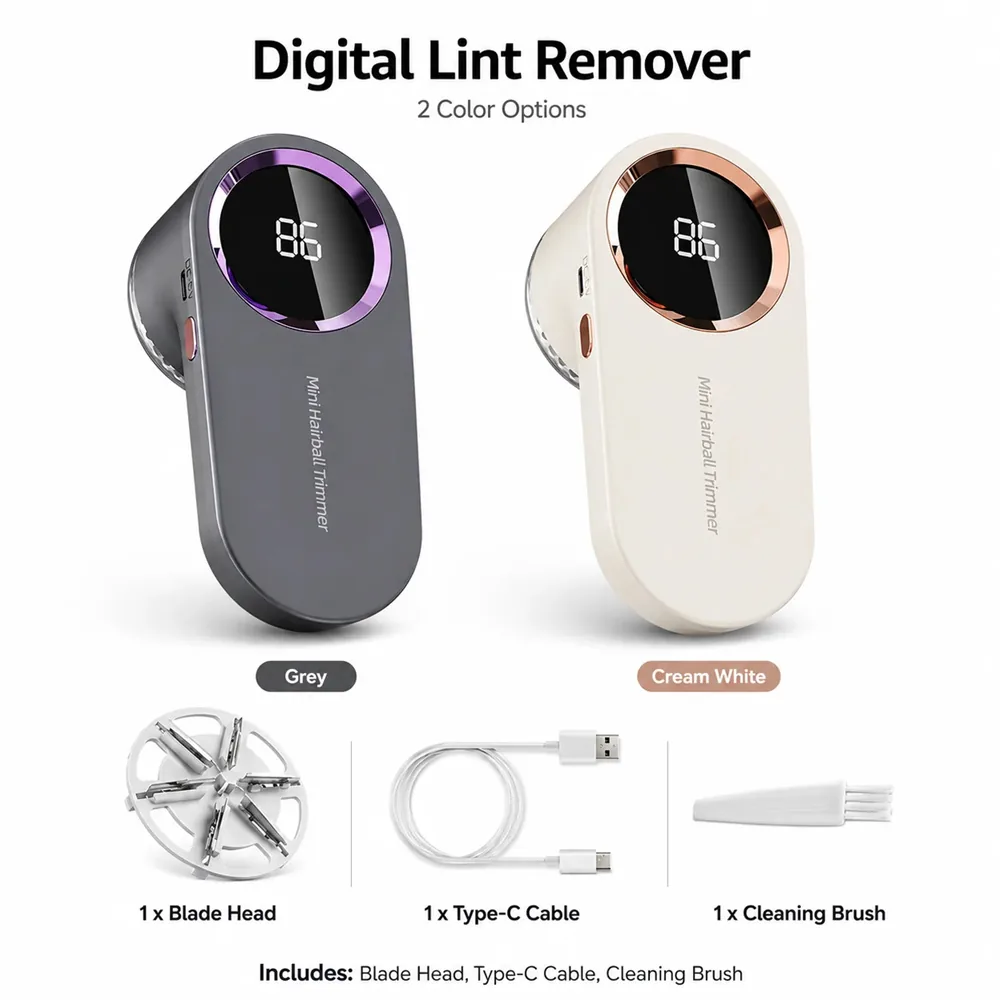
USB-rechargeable digital fabric shaver
The listing image shows two color options, a replaceable-looking blade head, a USB-C cable, and a cleaning brush. That is a useful starting view of the package, but the selected variant and included parts still need to be confirmed on the live page.
- Listing snapshot checked: July 30, 2026
- Price displayed during research: US$10.38
- Marketplace signals displayed: 1,097 orders and a 98.0% positive evaluation
- Still verify: selected color, blade-guard design, charging input, included accessories, shipping cost, and return terms
Check the current AliExpress listing
Price, availability, order count, evaluation rate, product options, and included parts can change after the research date.
This type of shaver makes the most sense for someone who maintains several sweaters, blankets, or other compatible garments and regularly faces broad areas of pilling. For one delicate sweater with only a few pills, a careful comb may be easier to control and simpler to store.
Reduce new pilling instead of shaving more often
Removing pills treats the visible result, not the friction that created them. To slow their return:
- follow the garment’s own wash and drying instructions;
- turn suitable knitwear inside out before washing;
- avoid washing soft knits against rough hardware or abrasive fabrics;
- reduce repeated rubbing from backpack straps, seat belts, rough desk edges, and hook-and-loop fasteners; and
- store the sweater clean and fully dry rather than compressed against rough items.
Woolmark specifically recommends turning wool clothing inside out before washing, minimizing abrasion, and avoiding fabric softener for the wool garments covered by its guidance. Use those ideas only where they agree with the label on your own sweater.
The practical decision
Begin with the surface, not the gadget. Lift loose lint, identify snags, and test the gentlest method on a hidden area. If a stable sweater has many attached pills and slow manual combing is no longer practical, a guarded fabric shaver can be a reasonable maintenance tool.
The goal is not to make an old knit look factory-new in one pass. It is to remove enough surface fuzz to make the garment look cared for without sacrificing more of the fabric underneath.
Common questions
Can I use a disposable razor on a sweater?
A bare razor gives the fabric no protective guard and can cut raised stitches as well as pills. A garment comb, sweater stone, or guarded fabric shaver recommended for the material offers more control. Always check the care label and test first.
Should I shave a sweater while wearing it?
No. The fabric needs a firm, flat surface so it does not fold into the guard. Remove the sweater, lay it flat, and keep the work area away from skin.
How often should I remove pills?
There is no universal schedule. Remove them only when they affect the appearance and the fabric is still strong enough to treat. Repeated aggressive shaving can thin the surface, so stop once it looks even.
Does pilling mean the sweater is low quality?
Not by itself. Pilling is affected by fiber characteristics, yarn and fabric construction, finishing, friction, and use. A heavily worn area can pill even when the rest of the garment remains sound.