Electric Lunch Box: Will 220V Work Where You Eat?
Quick Answer
A cold packed lunch should first be solved with available workplace equipment, an insulated container, or food that is safe and pleasant at room temperature. An electric lunch box helps when you regularly eat where no microwave is available and can use the exact rated power safely. Skip it if the listing’s 220V requirement does not match your outlet or food cannot be kept at a safe temperature.
- Try first: Check workplace appliances, timing, refrigeration, and an insulated food container before adding another heater.
- Consider one when: You carry lunch frequently to a fixed place with compatible power and enough time for controlled heating.
- Skip if: Voltage, plug, food-safety routine, leak resistance, or cleaning access is uncertain.
Why This Keeps Happening
The real inconvenience may be temperature, waiting for a shared microwave, leaking containers, or an unsafe gap between cooking and eating. An electric box addresses only part of that chain.
- No heating access: The eating location lacks a microwave or kitchen.
- Poor timing: Lunch breaks are too short to wait for a shared appliance.
- Storage risk: Food sits too long without appropriate cold holding.
- Container friction: Leaks and difficult cleaning make the routine harder than the meal temperature does.
Map the full trip from refrigerator to meal. Safe storage and a reliable outlet matter before heating convenience.
What to Change Before Adding Gear
- Confirm whether a microwave, kettle, or insulated food jar already solves the meal type.
- Measure the portion you normally carry rather than choosing capacity by appearance.
- Check where food stays chilled before the heating period.
- Verify the outlet voltage and plug at the actual eating location.
- Time one normal lunch break to see how much heating time is practical.
Try before buying: An insulated food jar or access to an existing microwave is simpler when it already keeps the meal enjoyable and safe.
What to Try in Each Situation
Microwave is available
- Start here: Use a suitable container
- Product decision: Usually no
- Check before deciding: Queue and break time
No microwave, fixed desk
- Start here: Confirm safe outlet
- Product decision: Electric box may help
- Check before deciding: Voltage and heating time
Long unrefrigerated commute
- Start here: Fix cold storage first
- Product decision: Heater does not solve it
- Check before deciding: Food safety
Soupy meal
- Start here: Use a leak-tested container
- Product decision: Only with secure lid
- Check before deciding: Seal and carrying angle
Where One Gadget Can Help
An electric lunch box starts to make sense when meals are packed often, cold storage is handled, and the same compatible outlet is available before lunch. Its value comes from a repeatable routine, not from using it occasionally on an uncertain power supply.
The example is described as a 1.2-liter stainless-steel, water-free electric lunch box for 220V household power. Those details are relevant, but they do not answer heating time, plug style, thermostat behavior, or certification for your location.
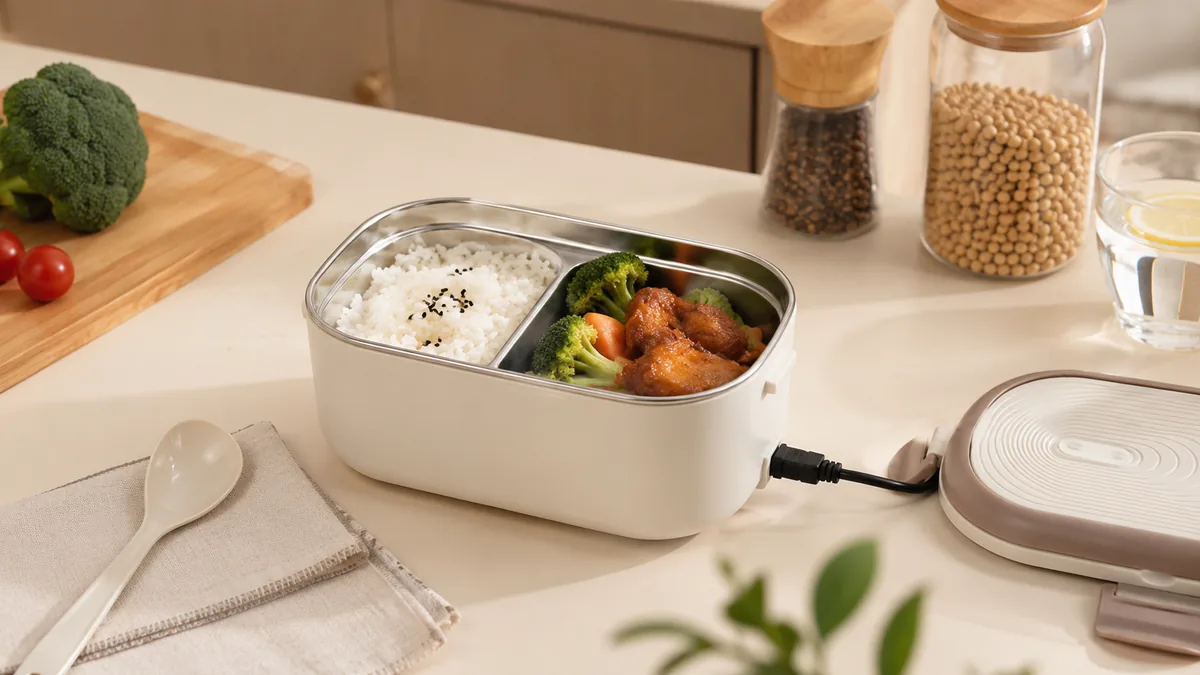
The single AliExpress listing below is one example of this tool type, not a best pick or a hands-on recommendation. Use it only as a reference, and verify the current specifications, compatibility, recent reviews, shipping, returns, and price yourself.

Skip the product if: your outlet is not compatible with 220V operation, you cannot keep food safely before heating, or the container is too difficult to clean completely.
Verify These Details First
Electrical compatibility and food-contact design should be settled before comparing color, shape, or extra accessories.
- Voltage and plug: Match the exact option with the country and outlet where it will be used; do not rely on a travel adapter to change voltage.
- Capacity: Compare 1.2 liters with a real meal and the space available in your work bag.
- Heating guidance: Look for stated time, food preparation instructions, and safe operating steps.
- Lid and carrying: Determine whether the lid is intended for transport and how liquids should be packed.
- Cleaning: Food-contact parts should be removable and reachable without exposing electrical components to water.
Do not order until power compatibility, heating instructions, and cleaning boundaries are explicit.
Common Setup Mistakes
- Ignoring voltage. A 220V appliance is not automatically suitable for every country or workplace.
- Treating heating as refrigeration. The meal still needs safe storage before it is warmed.
- Packing beyond the seal. Overfilling can make transport and cleanup unreliable.
- Washing the powered base. Follow the stated separation between removable food parts and electrical parts.
- Expecting instant heat. A lunch box may need advance time that must fit the break schedule.
Quick Questions
When is an electric lunch box worth adding?
It is useful for frequent packed meals where safe storage, compatible power, and enough heating time are all available.
Who should skip a 220V electric lunch box?
Skip it if local voltage differs, outlets are prohibited, or refrigeration and cleaning cannot be handled reliably.
Can an electric lunch box keep food safe all morning?
Do not assume that. Follow food-safety guidance for cold holding and use the heater only as instructed before eating.
Affiliate Disclosure
This article includes one affiliate listing as an optional example. GadgetPickLab may earn a commission at no extra cost if you buy through the link. Electrical compatibility and food safety remain the buyer’s responsibility.