How Do You Stop a Pet Bowl From Sliding Across the Floor?
A sliding pet bowl is usually a friction problem, but the correct fix depends on what is moving. The bowl may have a hard smooth base, the floor may have cleaner or food residue, or the pet may push strongly because the bowl is too light, too deep, or awkwardly placed.
Run the towel test before buying a mat
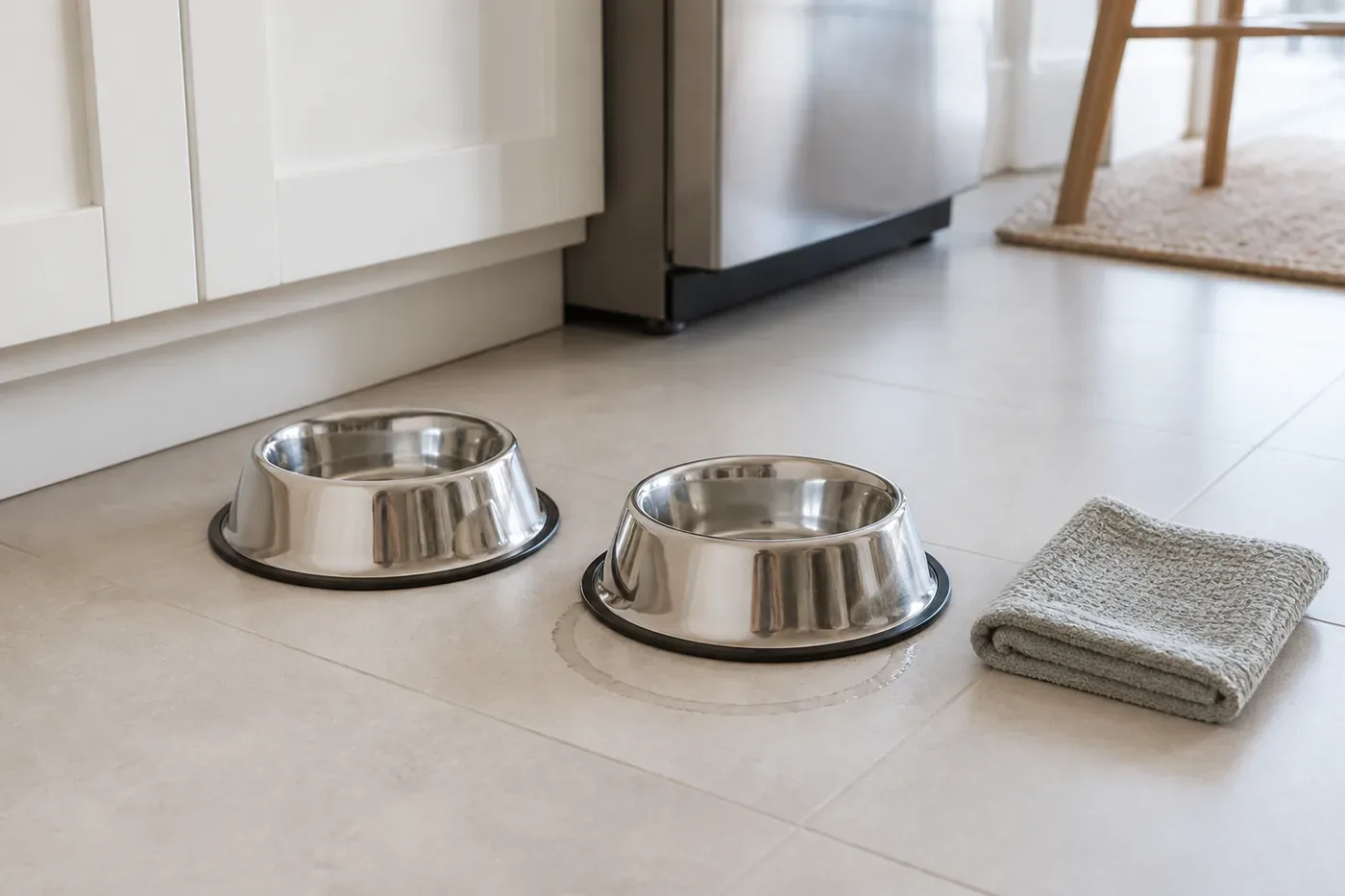
Clean and dry the floor and bowl base. Place the bowl on a clean, flat, dampened towel that cannot bunch, then supervise one normal meal. If the movement stops, adding grip is likely to help. If the entire towel is pushed across the room, the station needs more mass, a better position, or a different bowl—not merely a stickier surface.
Remove the towel after the test so it does not remain damp under the bowl. Do not leave a loose cloth where a pet can chew, pull threads, or trip someone walking past.
Check the feeding setup
- Bowl base: worn rubber rings, warped plastic, and narrow feet reduce contact.
- Floor condition: water, saliva, crumbs, grease, and cleaning product can make tile slick.
- Location: a corner may stop movement but must not crowd the pet or block a doorway.
- Bowl size: a bowl that is too small or deep may cause the pet to push harder to reach food.
- Behavior change: sudden difficulty eating, dropping food, pain, or unusual head movement deserves veterinary attention rather than a gadget fix.
Choose grip without creating a hygiene problem
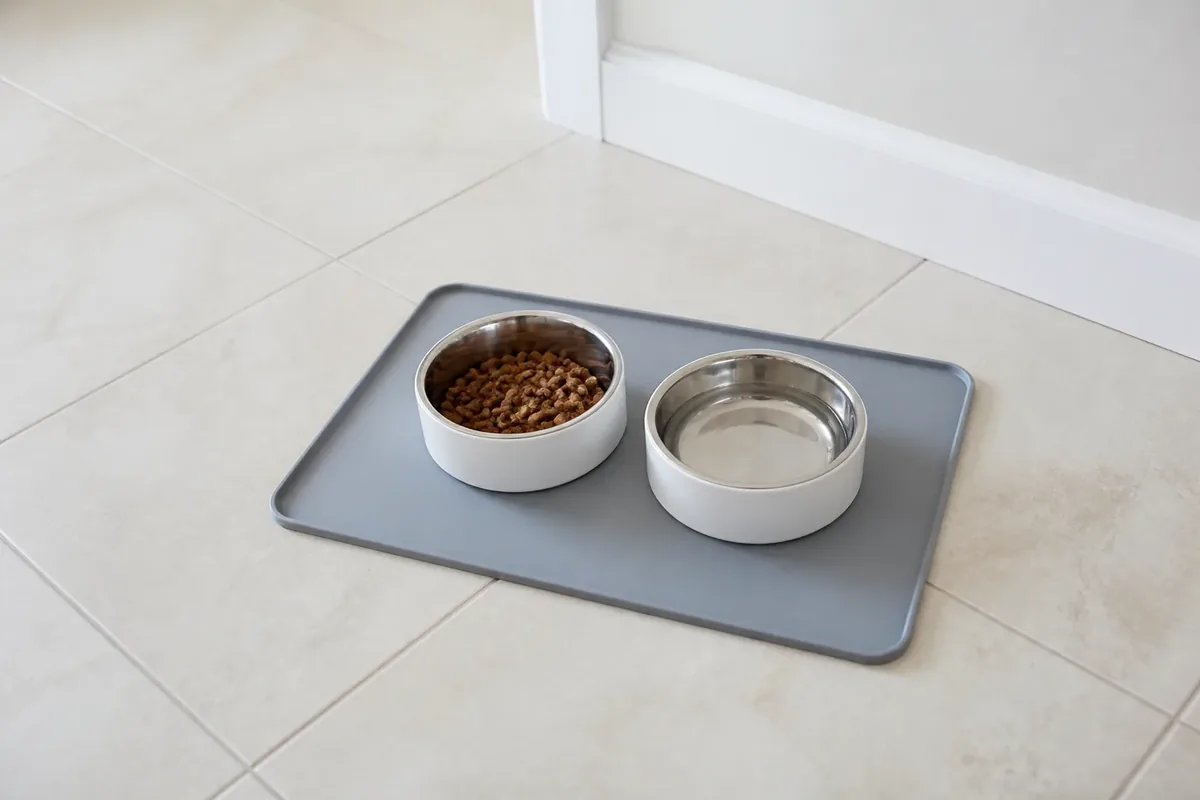
A feeding mat should be large enough that the bowl does not sit on its raised rim, but small enough to keep the walking path clear. A shallow lip can catch small splashes and crumbs. Very deep trays may hold a spill but can also become awkward to wipe and lift.
Check that the material is intended for the stated use, does not have a strong persistent odor, lies flat, and can be cleaned by the method you will actually use. The U.S. Food and Drug Administration recommends washing pet food bowls and scooping utensils with soap and hot water after each use. A mat also needs regular cleaning because it collects the material that does not remain in the bowl.
Mat, heavier bowl, or raised stand?
Use a mat when the current bowl is comfortable and the towel test works. Choose a heavier, wider nonslip bowl when the pet pushes the whole station despite added grip. Consider an elevated stand only for a pet-specific reason discussed with a veterinarian; height and posture needs vary, and elevation is not a universal upgrade.
For an enthusiastic eater, a slow-feeder bowl may change feeding speed, but it solves a different problem and must suit the pet’s size and muzzle. Do not add it solely because the existing bowl slides.
A current silicone-mat example
Affiliate disclosure: This section contains an affiliate link. GadgetPickLab may earn a commission at no extra cost to you. The mat was assessed from listing data and images, not used with a pet by us.
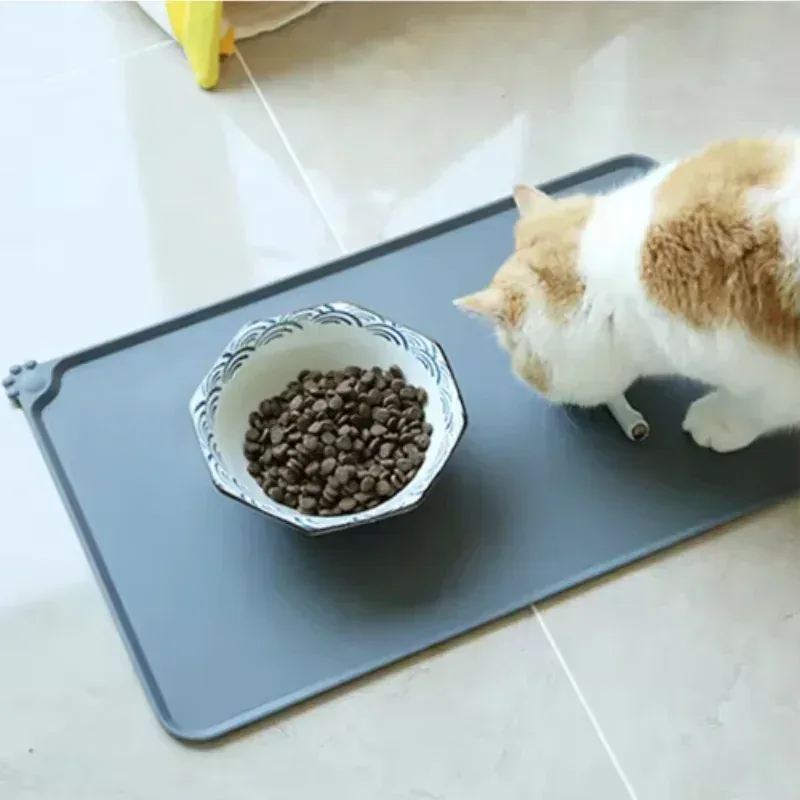
Flat silicone feeding mat with raised edge
The listing image shows a gray rectangular mat with a shallow perimeter lip beneath a pet bowl. The format may improve grip and contain small spills, but material composition, food-contact claims, slip performance, odor, and cleaning durability were not independently verified.
- Listing snapshot checked: August 5, 2026
- Marketplace signals displayed: 330 orders and a 98.0% positive rating
- Still verify: selected dimensions and color, material declaration, edge height, care method, heat and dishwasher limits, shipping, taxes, and returns
- Do not assume: that the mat shown with one bowl fits your two-bowl layout or stays nonslip on every floor finish
Check mat dimensions and raised-edge options
Options, dimensions, price, order count, rating, availability, shipping, and material claims can change after the research date.
Set up the station for daily cleaning
Place the mat on a dry level floor, set bowls fully inside the rim, and check that corners do not curl. Lift the entire station to clean beneath it; trapped moisture can make the floor slick and create odor. Replace a mat that tears, remains warped, develops a persistent smell, or is chewed.
The useful sequence is floor and bowl cleaning, one supervised towel test, then a properly sized washable mat if grip is the missing piece. If feeding behavior itself has changed, skip the product search and ask a veterinarian.