How Do You Stop a Shower Curtain From Blowing Inward?
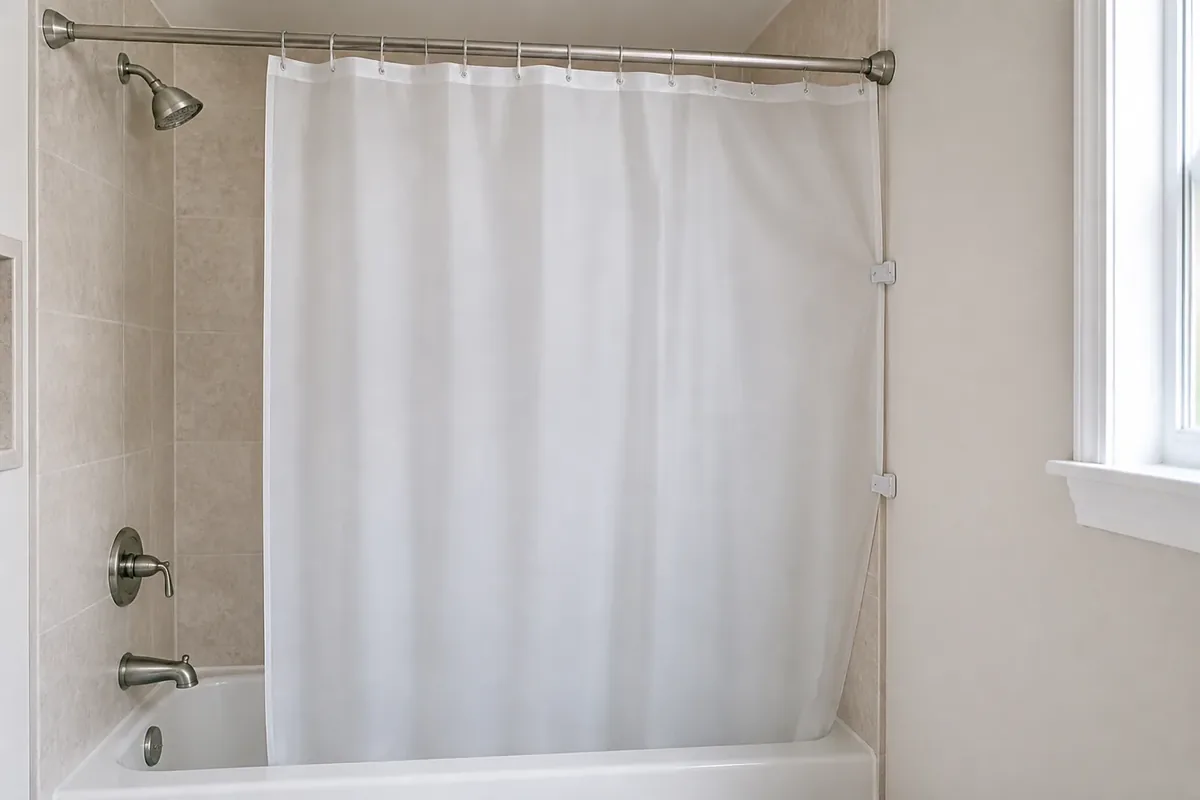
A light shower liner can move inward when water and air start circulating around the tub. The best first fix is to change that movement without permanently sticking hardware to the wall: leave a controlled air gap, position the liner correctly, and make sure it is not hanging too high or too low.
Run three free tests
Open a small gap away from the spray
Leave a narrow opening at the end farthest from the showerhead, provided water stays inside the tub. If the liner stops moving, airflow is a large part of the problem. Keep the opening small and adjust it until water containment and comfort are both acceptable.
Wet the tub-side edge
Press the clean liner lightly against the wet inside wall of the tub. Surface tension may hold it for the shower. This costs nothing and avoids hardware, though it may release as the liner moves or the wall dries.
Check the liner length and rod position
The bottom should remain inside the tub without pooling on the floor or folding into a thick ledge. A liner that is too long can bunch and pull inward; one that barely reaches the tub cannot maintain a stable edge. A curved rod can create more space, but confirm wall structure and installation requirements before replacing a tension rod or drilling.
Weights, magnets, and clips solve different problems
A heavier liner or sewn-in bottom weights resist general movement across the full width. Magnets work only when the tub or added receiver surface is magnetic and correctly positioned. Adhesive edge clips restrain one or two side points on smooth walls. Suction cups avoid permanent adhesive but may release on textured tile or grout.
Do not add loose metal weights that can rust, strike the tub, or create sharp edges. Avoid clips that pinch so hard they tear thin plastic. If children use the bathroom, do not create dangling cords, small detachable parts, or a liner that cannot be released easily.
When adhesive edge clips are reasonable
Edge clips are most useful when the movement begins at one side, the wall is smooth sealed tile or glass, and the liner has enough slack to reach without tension. They are a poor fit for grout lines, textured walls, peeling surfaces, curved surrounds, or a rental wall where adhesive removal is uncertain.
Clean and dry the surface as the clip maker directs. Install the minimum number needed, allow the full stated curing time, and test with the shower off before relying on them. Mount clips where they will not scrape skin or interfere with entering and leaving the tub.
A current edge-clip example
Affiliate disclosure: This section contains an affiliate link. GadgetPickLab may earn a commission at no extra cost to you. The listing example was not installed or moisture-tested by us.
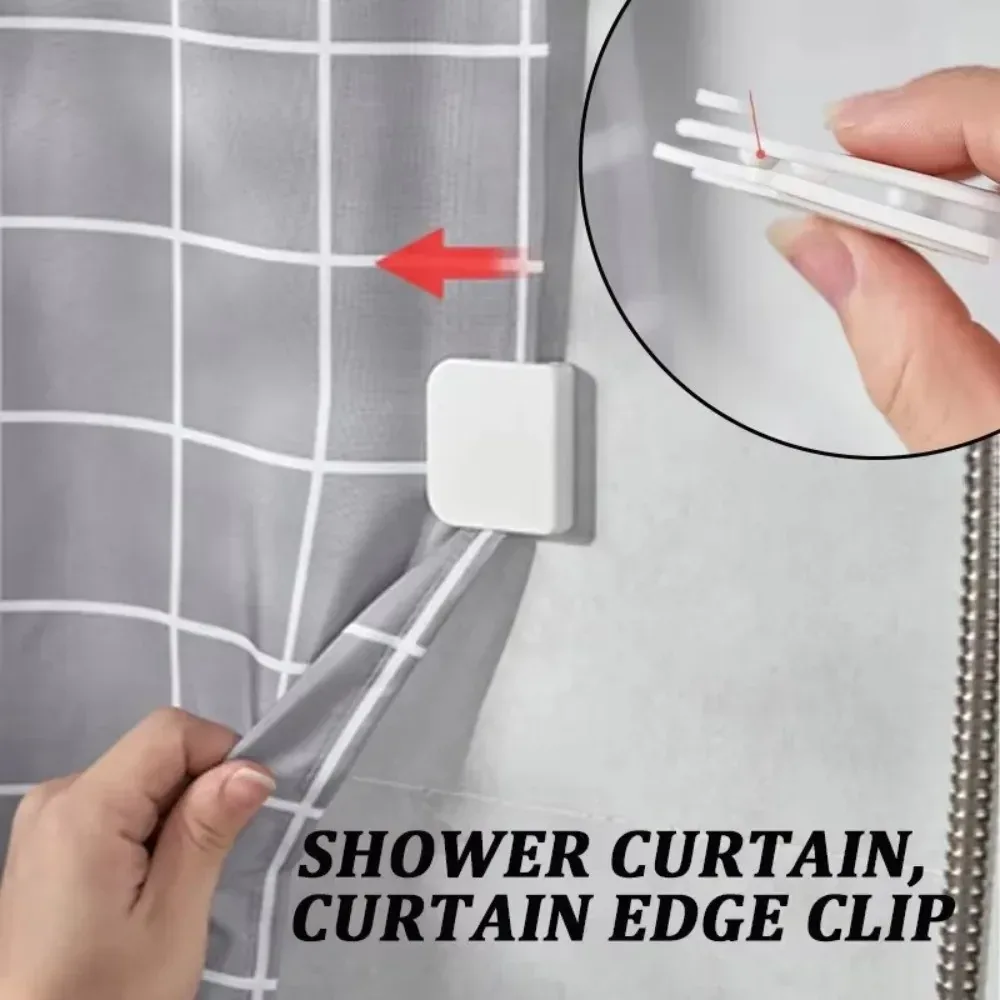
Transparent self-adhesive shower-liner clips
The listing image shows a small wall-mounted clip gripping the side of a shower liner. It may address edge movement on a smooth surface, but adhesive life, water resistance, release force, paint safety, and liner compatibility were not independently verified.
- Listing snapshot checked: August 5, 2026
- Marketplace signals displayed: 84 orders and a 93.3% positive rating
- Still verify: selected quantity, clip opening, adhesive dimensions, compatible surfaces, cure time, removal method, shipping, and returns
- Do not assume: that a clip described as waterproof will adhere indefinitely in steam, cleaner residue, or direct spray
Check clip size and surface requirements
Options, specifications, price, order count, rating, availability, shipping, and included parts can change after the research date.
Keep the fix clean and reversible
After each shower, release the liner if necessary and spread it so both sides can dry. Clean the lower edge and clips according to their materials. Inspect adhesive edges for lifting and remove a failing clip before it falls into the tub or tears the liner.
Start with the air gap and liner position. Add weight when the whole liner is too light, or small side clips when one edge is the repeat offender. The correct fix changes the movement without making the shower harder to enter, clean, or dry.