Ultralight Camping Lantern for Short Trips: What to Check Before Packing One
Quick Answer
For a short trip, start by deciding whether you need a walking beam, a tent light, or a soft shared-area light. A headlamp or existing flashlight often covers movement and emergencies. An ultralight lantern helps when hands-free, all-around light will be used repeatedly at camp or during a power outage. Skip it if your phone light is enough for a brief backup or the lantern duplicates another light already packed.
- Try first: Use your existing headlamp or flashlight during one evening setup.
- Consider one when: Several people need steady hands-free light in the same small area.
- Skip if: The trip stays in daylight, another light already covers the task, or charging becomes extra work.
What Is Actually Causing the Problem
Lanterns and flashlights solve different lighting problems. A flashlight sends light forward and helps you walk, inspect gear, or find a trail marker. A lantern spreads light around a tent, table, hotel room, or emergency space. Carrying both makes sense only when both jobs actually occur.
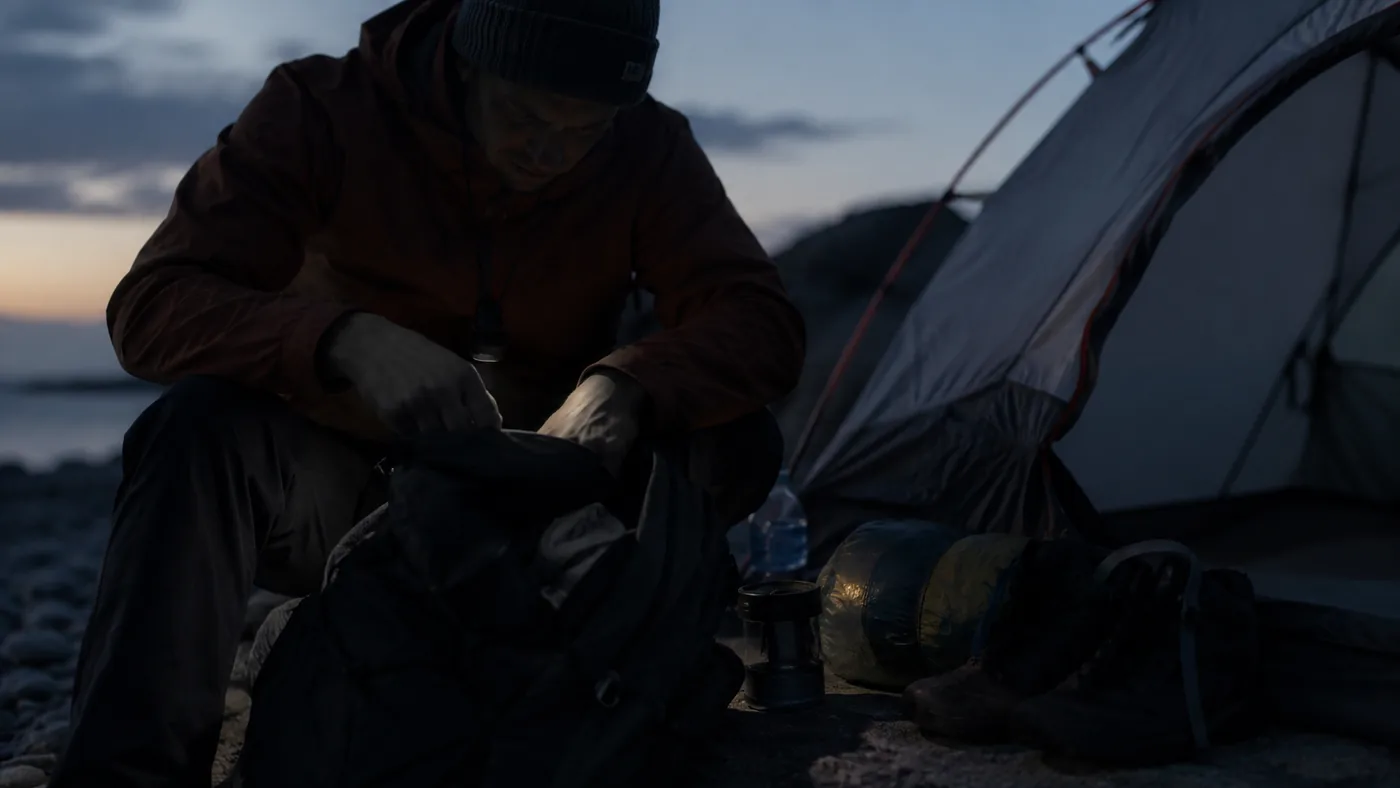
List the moments that need light: arriving after sunset, cooking, changing inside a tent, reading, finding a bathroom, or dealing with a power cut. Then decide whether that light must be directional, shared, or available for several hours. Weight matters, but a very light object is still unnecessary if it repeats a task handled by a headlamp.
- Walking need: A beam must move with your head or hand and show the path ahead.
- Shared-area need: Several people need a softer spread of light without aiming it.
- Backup need: Light must be easy to find and ready after sitting unused.
- Pack-weight concern: Every item must justify its battery, cable, and storage space as well as its listed weight.
Free Fixes to Try First
- Name the lighting jobs. Separate walking, camp setup, tent use, and emergency backup.
- Test the lights you own. Use a headlamp, flashlight, or phone light in a dark room or evening setup.
- Diffuse existing light. Aim a flashlight at a pale tent wall or ceiling to see whether reflected light is enough.
- Time the session. Estimate how long shared light is needed rather than assuming an all-night requirement.
- Count power systems. Prefer a charging cable or battery type already carried for another essential device.
- Choose a storage location. Emergency light should be reachable in the dark, not buried at the bottom of a pack.
Try before buying: If an existing headlamp aimed at a light surface creates enough shared light, keep the simpler kit. Add a lantern only when that workaround is awkward or needed often.
Choose by the Real Situation
You only need light while walking
- Start here: Use a headlamp or flashlight
- Product decision: No lantern needed
- Check before deciding: Beam, fit, and battery
A tent needs soft shared light
- Start here: Diffuse an existing light
- Product decision: A lantern gives easier area lighting
- Check before deciding: Low mode and hanging method
The trip ends before dark
- Start here: Carry one emergency light
- Product decision: No separate lantern required
- Check before deciding: Accessibility and stored charge
You need backup room lighting
- Start here: Identify the room and duration
- Product decision: A rechargeable lantern may help
- Check before deciding: Runtime, charging, and controls
Where One Gadget Can Help
An ultralight lantern becomes useful when a small group repeatedly needs hands-free area light and a directional beam feels awkward. It can earn its place during tent setup, meals, gear sorting, or a short power outage, especially when the lowest mode is comfortable enough to use for more than a few minutes.
The example below is presented as a 56 g, 300-lumen, IPX5-rated two-in-one camping light. Those numbers are useful starting points, but the real decision depends on runtime at the brightness you will use, how it hangs or stands, what the listed weight includes, and whether its water protection matches the trip.
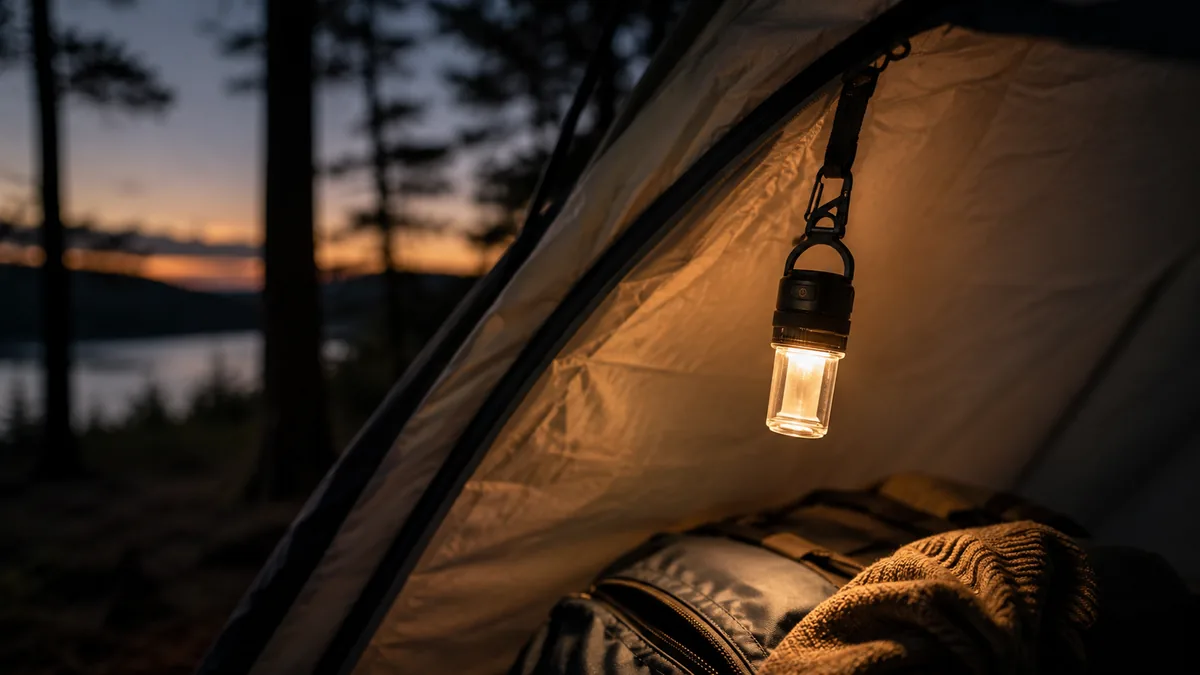
The single AliExpress listing below is one example of this tool type, not a best pick or a hands-on recommendation. Use it only as a reference, and verify the current specifications, compatibility, recent reviews, shipping, returns, and price yourself.

Skip the product if: Another packed light already handles both movement and shared-area use, the trip rarely reaches darkness, or you cannot keep another rechargeable device ready.
Verify These Details First
This listing presents the lantern as a very light, bright, water-resistant camping and emergency light. Before ordering, translate those headline figures into the modes, runtime, mounting, and weather conditions of a real trip.
- Weight: Check whether the stated figure includes the battery, hanger, shade, case, and any accessory needed for normal use.
- Brightness modes: Maximum output matters less than a comfortable low mode for a tent or close table.
- Runtime: Compare the stated duration at each mode with the hours of shared light expected per night.
- Charging: Match the port and required cable to the power system already carried, and check whether the light works while charging.
- Placement: Confirm how it hangs, stands, or attaches and whether the selected package includes every necessary part.
- IPX5 limits: This rating generally addresses water jets or rain exposure, not immersion; follow the current instructions and keep charging ports dry.
If the listing highlights maximum lumens but does not show runtime by mode or the complete hanging setup, do not choose it on brightness alone.
Common Setup Mistakes
- Packing light by weight alone. A tiny duplicate still adds a battery, cable, and item to track.
- Using maximum brightness in a tent. Glare can be more uncomfortable than a lower, longer-lasting mode.
- Confusing water resistance with waterproofing. Rain tolerance does not make a light safe for immersion.
- Ignoring the mounting method. A good light is awkward when there is nowhere secure to hang or stand it.
- Storing it empty. Emergency gear needs a simple charging check before travel and during long storage.
Common Questions
When is an ultralight camping lantern worth packing?
It is worth packing when shared, hands-free area light has a clear role that a headlamp or flashlight handles poorly. Repeated tent, table, or backup-room use is a stronger reason than the lantern’s low weight alone.
Who should skip a separate lantern?
Skip it if trips usually finish before dark, one existing light already covers walking and camp tasks, or another charging routine would be neglected. A smaller gear list is more reliable when every item has a distinct job.
Is 300 lumens necessary inside a tent?
Usually not for close use. A lower mode is often more comfortable and preserves battery life. Maximum output can help briefly during setup or emergencies, but runtime and low-mode quality matter more for normal tent lighting.
Affiliate Disclosure
This article includes one affiliate listing as an optional example. GadgetPickLab may earn a commission at no extra cost if you buy through the link. The lantern is not presented as hands-on tested; verify the selected package, runtime, charging, weight, and water-resistance limits.